









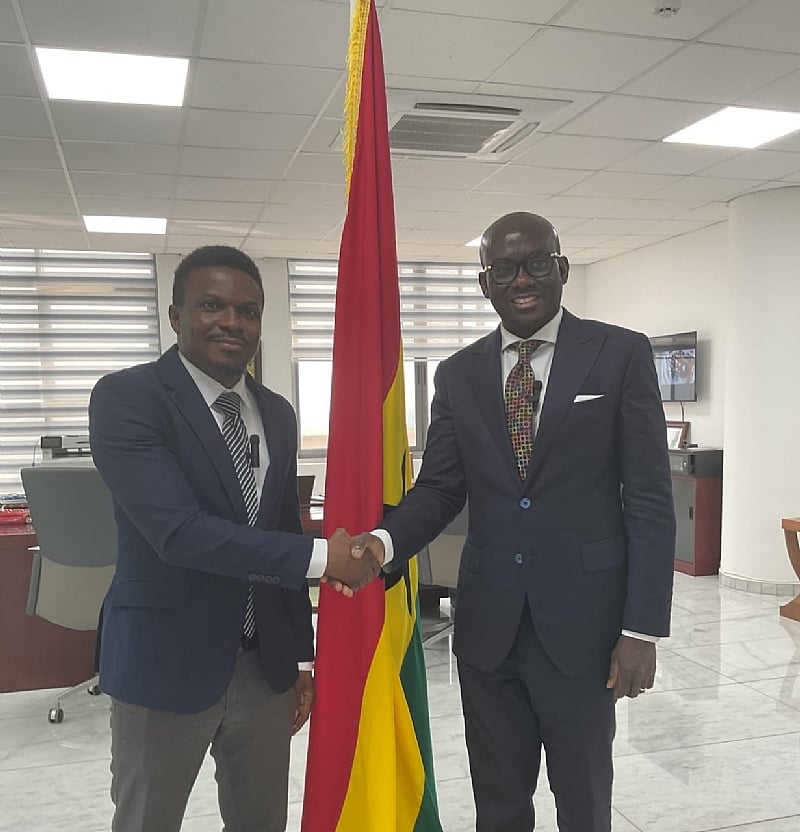
Godfred Yeboah Dame, Ghana’s Attorney General and Minister for Justice, articulates his perspective on public service during a meeting with Prof. Etse Sikanku, an Associate Professor at the University of Media Arts and Communication. Dame emphasizes that public service transcends immediate problem-solving and encompasses a profound responsibility to shape a positive legacy for future generations. He underscores the importance of considering the long-term impact of decisions made today, highlighting the need for public servants to act as stewards of the future. This perspective positions public service not merely as a job, but as a vocation imbued with the duty to build a better tomorrow for those who will inherit the consequences of today’s actions.
Dame’s philosophy of public service revolves around the core principles of duty, accountability, and service to the people. He believes that these tenets should guide every decision and action taken by those in public office. He posits that accountability ensures transparency and responsible governance, fostering trust between the government and the citizenry. Service to the people, the cornerstone of his perspective, emphasizes that public servants are ultimately entrusted with the well-being and progress of the nation and its people. This commitment to service necessitates a constant focus on the needs and aspirations of the populace.
The Attorney General’s comments gain added significance against the backdrop of Ghana’s upcoming elections, a period of heightened scrutiny of public leadership. He stresses the crucial role of vision and foresight in effective leadership, particularly in navigating complex challenges and charting a course for future prosperity. Dame argues that leaders must not only address immediate concerns but also anticipate future needs and lay the groundwork for sustainable development. This forward-thinking approach, he believes, is essential for ensuring the nation’s continued progress and resilience.
Dame’s meeting with Prof. Sikanku, who presented him with two books focused on political leadership – “Bawumia and the Modern Vice Presidency” and “The Afrocentric Obama and Lessons on Political Campaigning” – further underscores the theme of leadership and its impact on society. The books, which examine the leadership styles of Vice President Mahamudu Bawumia and former US President Barack Obama, provide a relevant backdrop for Dame’s reflections on public service. The discussion implicitly connects the theoretical exploration of leadership presented in the books with the practical application of these principles within the Ghanaian context.
The Attorney General explicitly expresses his support for Vice President Bawumia, highlighting him as a leader possessing the necessary qualities to guide Ghana’s future development. Dame commends Bawumia’s vision and commitment to serving the needs of the people, suggesting that these attributes align with his own philosophy of public service. This endorsement reinforces Dame’s earlier points about the importance of visionary leadership and underscores his belief in Bawumia’s ability to embody these qualities in service to the nation.
Dame’s articulation of his perspective on public service provides a valuable framework for understanding his approach to governance and his expectations of public officials. His emphasis on legacy, accountability, and service to the people underscores a commitment to responsible leadership and a deep concern for the future of Ghana. By framing public service as a duty to future generations, he elevates the role beyond its immediate responsibilities and imbues it with a profound sense of purpose. This perspective offers a compelling vision for public leadership and sets a high standard for those entrusted with the responsibility of serving the nation.









