









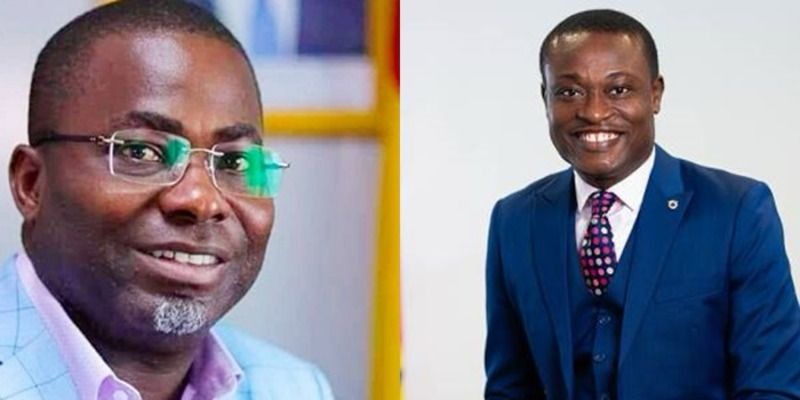
The Office of the Special Prosecutor (OSP) in Ghana has initiated legal proceedings against Charles Cromwell Nanabanyin Onuawonto Bissue, a former secretary of the Inter-Ministerial Committee on Illegal Mining (IMCIM), and Andy Thomas Owusu, for alleged corruption and misuse of public office. The charges stem from accusations that Bissue, also a former Western Regional Secretary of the ruling New Patriotic Party (NPP), leveraged his position within the IMCIM to expedite the renewal of mining licenses in exchange for illicit cash payments, circumventing established procedures and documentation requirements. This alleged misconduct violates sections 179C and 239 of the Criminal Offences Act, 1960 (Act 29), as amended, which address the abuse of public office for personal gain and corruption by public officials.
The OSP’s case against Bissue and Owusu comprises fifteen charges, with nine directed at Bissue and six at Owusu. The charges detail specific instances of alleged wrongdoing, outlining a pattern of illicit financial transactions and the exploitation of Bissue’s official capacity. The OSP contends that Bissue, during his tenure as IMCIM Secretary, received a series of payments to facilitate the irregular renewal of mining licenses. The charge sheet points to two specific incidents in January 2019: the receipt of GH¢15,000 from Benjamin Adjapong through Andy Thomas Owusu, and a subsequent receipt of GH¢10,000, both purportedly for expediting the renewal of an expired mining license for ORR Resources Enterprise without the necessary documentation. These actions, according to the OSP, constitute a clear abuse of Bissue’s public office for private financial gain.
While Bissue faces charges directly related to his official role, Owusu, a private citizen, is accused of complicity in these corrupt activities. The charges against Owusu allege his collaboration with Bissue in the misuse of public office, specifically by acting as a conduit for the illicit funds. The OSP asserts that Owusu received GH¢15,000 from Benjamin Adjapong, subsequently transferring the funds to Bissue as part of the scheme to expedite the license renewal. This involvement, the OSP argues, makes Owusu a party to the corrupt practices and subject to criminal prosecution.
The OSP’s case underscores the gravity of corruption within public institutions and the potential for abuse of power for personal enrichment. The charges against Bissue and Owusu paint a picture of a system vulnerable to manipulation, where individuals in positions of authority can exploit their influence for private gain, undermining the integrity of regulatory processes and potentially jeopardizing the public interest. The case also highlights the importance of holding both public officials and their collaborators accountable for corrupt practices.
The implications of these charges extend beyond the individuals involved, raising concerns about the effectiveness of oversight mechanisms within the IMCIM and the broader mining sector. The allegations suggest a potential failure of internal controls and the need for stronger safeguards against corruption and undue influence. The case could prompt a review of existing procedures for license renewals and other regulatory functions within the IMCIM to identify vulnerabilities and implement reforms to prevent future occurrences of similar misconduct.
The outcome of this case will have significant repercussions for the fight against corruption in Ghana. A successful prosecution would send a strong message of deterrence to other public officials and underscore the OSP’s commitment to upholding the rule of law. Conversely, an acquittal or dismissal of the charges could raise questions about the effectiveness of anti-corruption efforts and potentially embolden those engaged in corrupt practices. The trial, therefore, represents a crucial test of Ghana’s legal system and its capacity to address high-level corruption within government institutions.









