









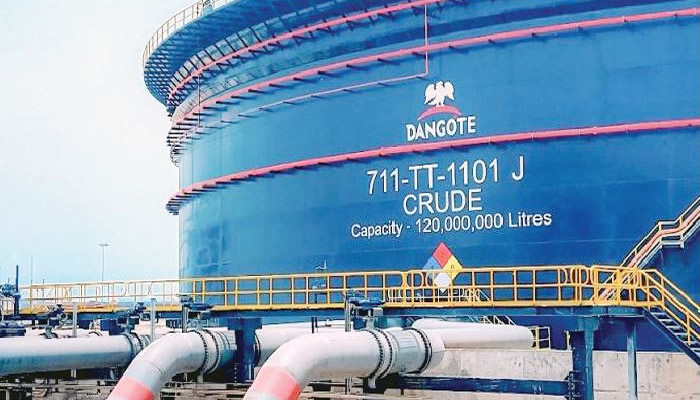
A public disagreement erupted between the Dangote Petroleum Refinery and the Nigerian National Petroleum Company Limited (NNPCL) concerning the nature and impact of a $1 billion investment by the NNPCL in the refinery. The NNPCL, during a stakeholders’ meeting, portrayed the investment as a crude-backed loan intended to support the refinery’s launch and touted it as an example of successful public-private partnership. This characterization, however, was swiftly refuted by the Dangote Refinery, which labeled the NNPCL’s statement as misleading and a misrepresentation of the actual circumstances surrounding the investment.
The core of the disagreement lies in the interpretation of the $1 billion transaction. Dangote Refinery insists that the sum represents an equity investment by the NNPCL, not a loan provided to alleviate liquidity challenges. They emphasized the substantial overall investment in the 650,000 barrels per day refinery, highlighting that the $1 billion from NNPCL constitutes only 5% of the total project cost, further solidifying their stance that the refinery was not facing financial difficulties. The Dangote Refinery’s statement explicitly addressed the NNPCL’s claims, aiming to clarify the situation for stakeholders and the public, who might have been misled by the initial portrayal of the investment.
The Dangote Refinery provided a detailed account of the investment agreement’s evolution. Initially, the agreement stipulated a 20% equity stake for NNPCL, valued at $2.76 billion. The payment structure involved an upfront payment of $1 billion, with the remaining balance to be offset by deductions from crude oil supplied by NNPCL to the refinery and from dividends accrued to NNPCL. This arrangement, according to Dangote Refinery, underscores their financial stability at the time, as they offered generous payment terms that would not be typical for a company facing liquidity issues. Moreover, the agreement was finalized in 2021 when the refinery was in its pre-commissioning phase, further reinforcing the argument against any financial distress.
A critical component of the initial agreement was NNPCL’s commitment to supply 300,000 barrels of crude oil per day to the refinery. However, the NNPCL failed to meet this obligation, attributing the shortfall to overcommitment of their crude cargoes to other financiers based on anticipated higher production levels that ultimately did not materialize. This failure to deliver the agreed-upon crude supply significantly altered the dynamics of the partnership. Dangote Refinery granted NNPCL a 12-month grace period to fulfill its financial obligations by paying the remaining balance in cash. This deadline, expiring on June 30, 2024, was also not met by NNPCL.
Consequently, due to NNPCL’s inability to meet its contractual obligations, the Dangote Refinery reduced NNPCL’s equity stake from the initially agreed upon 20% to 7.24%. This adjustment reflects the change in the financial contribution and operational involvement of NNPCL in the project. The Dangote Refinery’s statement meticulously outlined the sequence of events, emphasizing the contractual breaches by NNPCL and the subsequent adjustments made to the agreement.
The Dangote Refinery explicitly stated that it values its partnership with NNPCL and considers them a “partner in progress.” However, they stressed the importance of accurate reporting and adherence to the facts, urging all stakeholders, including the media, to present the narrative in its correct context to avoid misleading the public. This public statement serves as a clarification of the financial relationship between the two entities and underscores the importance of transparency and factual accuracy in reporting on such significant ventures. The Dangote Refinery’s detailed response aims to correct any misinterpretations arising from the NNPCL’s statement and to ensure a clear understanding of the investment’s nature and the evolving partnership between the two organizations.
The disagreement highlights the complexities of large-scale projects involving public and private entities. Clear communication and adherence to contractual agreements are crucial for maintaining a successful partnership and avoiding public misinterpretations. The Dangote Refinery’s insistence on clarifying the financial arrangements underlines their commitment to transparency and accountability, while also emphasizing the importance of accurate reporting in representing the true nature of their partnership with NNPCL. This incident serves as a reminder of the potential for misunderstandings and the need for clear and consistent communication in complex business dealings, especially those in the public eye.









