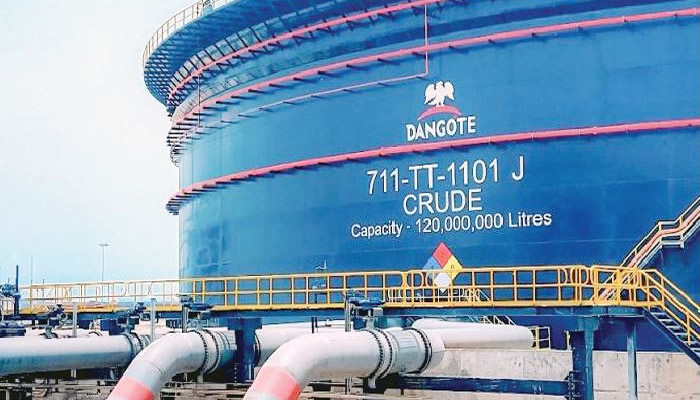
The Independent Petroleum Marketers Association of Nigeria (IPMAN) has commenced direct procurement of Premium Motor Spirit (PMS), commonly known as petrol, from the Dangote Petroleum Refinery, marking a significant shift in the Nigerian fuel supply landscape. This development follows a November agreement between IPMAN and the refinery, culminating in the delivery of millions of liters of petrol to IPMAN members. Initially, the distribution process involved MRS Oil as an intermediary, a temporary arrangement while the final details of the agreement were finalized. This interim measure ensured a continuous flow of product to IPMAN members while the direct purchase framework was being implemented. The arrangement through MRS Oil was not a middleman situation, but rather a strategic bridge to facilitate the commencement of direct purchases. This milestone signals a move towards greater efficiency and potentially lower prices for consumers.
The direct procurement of petrol by IPMAN members from the Dangote Refinery signifies a departure from the previous system where the Nigerian National Petroleum Company Limited (NNPC) acted as the sole off-taker. This older system had proven less efficient than anticipated, prompting independent marketers to lobby for direct access to the refinery’s output. This direct access allows IPMAN members to negotiate commercial terms directly with the refinery, potentially bypassing previous intermediaries and reducing costs. The Federal Government subsequently endorsed this shift, encouraging direct purchases to foster competition and improve market efficiency. This decision empowers marketers to secure petrol at potentially more favorable prices, which could translate to lower costs for consumers.
The price reduction implemented by Dangote Refinery, from N990 to N970 per liter, has spurred an increase in demand for PMS. This reduction, coupled with IPMAN’s direct purchase agreement, is expected to positively impact the Nigerian economy by stabilizing and potentially lowering fuel prices. The elimination of middlemen and the associated price markups contributes to this price reduction. The direct access to the refinery eliminates the layers of intermediaries, which streamlines the supply chain, reduces costs associated with multiple handlers, and ultimately benefits consumers.
Previously, the Dangote refinery, after resolving initial crude supply challenges, began selling petrol on September 15, 2024, exclusively to NNPC, which then distributed the product to marketers. This created an unnecessary layer in the supply chain, which impacted efficiency and potentially inflated prices. This led to calls for a more streamlined process, culminating in the government’s decision to allow direct purchases. The direct agreement between IPMAN and Dangote Refinery is a direct response to these concerns, offering a more efficient and potentially cost-effective method of fuel distribution.
The significance of this direct purchase agreement is further underscored by IPMAN’s stance on the Port Harcourt refinery’s pricing. IPMAN has stated it will not purchase PMS from the Port Harcourt refinery if the price remains at N1,030 per liter, deeming it too high. This underscores IPMAN’s commitment to sourcing fuel at the most competitive prices, leveraging the new agreement with Dangote Refinery to achieve this goal. This commitment to competitive pricing reinforces IPMAN’s dedication to securing the best possible deals for its members and, by extension, consumers.
Meanwhile, the National Bureau of Statistics (NBS) reported a significant import figure for PMS in the third quarter of 2024, totaling N3.32 trillion. This underscores the continued reliance on imported fuel, despite the commencement of local production by Dangote Refinery. Alongside this, diesel imports reached N1.33 trillion during the same period. However, the country also saw substantial export earnings from crude oil (N13.40 trillion) and liquefied natural gas (N2.10 trillion). These figures highlight the complex dynamics of Nigeria’s energy sector, balancing significant import costs with substantial export revenues. The NBS report further emphasizes that crude oil remains the dominant export commodity, constituting a significant portion of the country’s total exports. This reliance on crude oil underscores the importance of developing and maximizing local refining capacity to reduce import dependency and strengthen the national economy. The move towards local sourcing through agreements like the one between IPMAN and Dangote Refinery represents a critical step towards achieving this goal.