





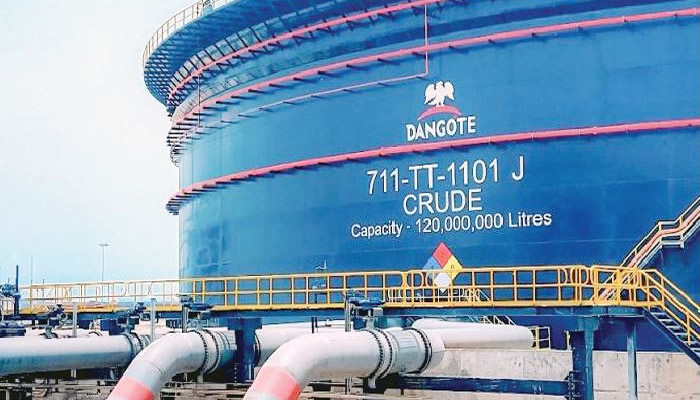
The Dangote Petroleum Refinery has publicly expressed disappointment with the Federal Government’s inability to supply adequate crude oil under the naira-for-crude initiative. The refinery has pointed out that the quantities received from the Nigerian National Petroleum Company Limited (NNPCL) are significantly lower than required. According to a statement made by Devakumar Edwin, the Vice President of Dangote Industries Limited, the refinery has not received the agreed minimum of 385,000 barrels per day (bpd) since the program’s launch in October, and highlighted the urgent need for 650,000 bpd to ramp up its operations. This situation poses a considerable challenge to the refinery’s goal of enhancing the production of refined products, critical for Nigeria’s domestic energy needs.
Initially, the Nigerian government implemented the naira-for-crude strategy to alleviate challenges arising from access to foreign currency for local refineries. This arrangement was aimed at allowing domestic refineries to purchase crude oil in local currency, thus supporting their operations and reducing reliance on imported petroleum products. However, despite starting in October, the system appears to be struggling, with reports indicating that only four crude cargoes have reached the Dangote refinery, and these amounts are described as insufficient. The refinery is now looking elsewhere for supplies, including the United States, as it anticipates ongoing issues with getting crude from NNPCL.
The Dangote refinery, ambitious with an estimated $20 billion investment, is intended to enhance Nigeria’s oil industry competitiveness, particularly against European refiners. However, its ability to function optimally is heavily reliant on securing enough crude supply. The current deliverables from NNPCL have been characterized only as “peanuts” by Dangote’s management. The shortfall remains unaddressed, and while NNPCL has an obligation to supply local refineries, this requirement has not been met satisfactorily, pushing the Dangote refinery towards international sourcing for its crude needs.
Related to these supply chain issues is the plight of other local refineries, highlighted by Mathins Obaze, the acting Executive Director of the Crude Oil Refinery-Owners Association of Nigeria. He noted that the Dangote refinery is the sole beneficiary of the naira-denominated crude arrangement, leaving other operational refineries with limited access to the crude oil needed to function. Industry stakeholders are in discussions with the government to seek solutions to these challenges. Given the strategic importance of local refineries to Nigeria’s economy, the apparent failure of the naira-for-crude initiative raises concerns about the administration’s ability to support the refining sector adequately.
Further complicating matters, in August, the Dangote refinery urged the Nigerian Upstream Petroleum Regulatory Commission (NUPRC) to enforce regulations requiring oil producers to prioritize supplying local refineries. This plea demonstrates the refinery’s effort to ensure a stable supply, but a lack of response from NUPRC signals potential regulatory inaction on an issue critical to the local oil sector’s sustainability. The disconnect in the communication and action between the refinery and regulatory bodies illustrates an alarming breakdown in the mechanisms designed to support domestic oil production and processing.
As market conditions evolve, the Dangote refinery is actively seeking alternative sources for crude oil, including importing from international markets. The recent purchase of two million barrels of US WTI Midland crude indicates a shift in strategy to address domestic supply shortages effectively. This pivot highlights not only the immediacy of the operational challenges the refinery faces but also sheds light on the broader implications for Nigeria’s energy sector should local refineries remain underserved amidst fluctuating global oil prices. Concurrently, NNPC is exploring new markets for its crude, reflecting the dynamic nature of the oil market and the urgent need for systemic reforms that will allow local refineries to thrive, ensuring energy security for Nigeria in the long term.








