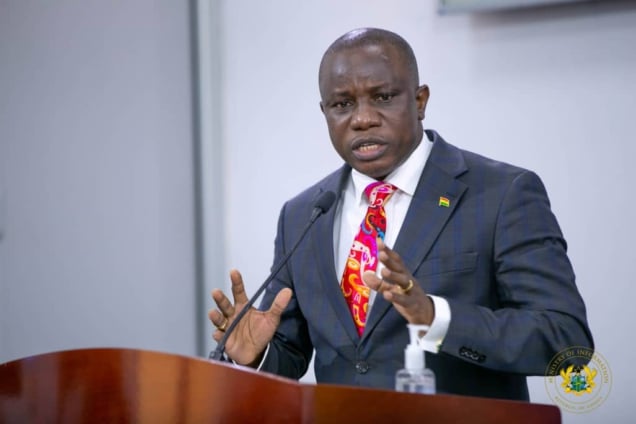
The 2024 general elections in Ghana, while largely peaceful, were marred by isolated incidents of violence and vandalism, prompting parliamentary discussions and concerns about the oversight of security arrangements during the electoral process. Defense Minister Dominic Nitiwul addressed these concerns head-on, emphatically denying any involvement of government ministers or appointees in managing election security. He clarified that the responsibility rested solely with the National Elections Security Task Force, led by Inspector General of Police (IGP) Dr. George Akuffo Dampare. This clarification aimed to dispel any notions of political interference in security operations during the elections and to underscore the independence of the security forces in carrying out their duties.
Nitiwul’s statement emphasized the principle of separating executive power from the direct management of election security. He argued that it was crucial for the executive branch to remain detached from these operations to ensure impartiality and avoid any perception of bias. The principle, he explained, was akin to avoiding being a judge in one’s own court. This separation of powers, he asserted, was essential for maintaining the integrity of the electoral process and public trust in the outcome. He reiterated that any parliamentary briefing on election security should come directly from the IGP and his team, as they were the sole authority responsible for these matters.
The Minister’s clarification came in response to parliamentary deliberations on the reported incidents of violence and vandalism during and after the elections. These incidents, though isolated, raised questions about the effectiveness of security arrangements and the potential for political influence. Nitiwul’s statement aimed to reassure the parliament and the public that the security operations were handled independently by the designated task force, free from any political interference from government ministers or appointees. This clarification was crucial for maintaining public confidence in the integrity of the electoral process and the impartiality of the security forces.
The National Elections Security Task Force, under the IGP’s leadership, was responsible for all aspects of election security, both in the pre-election period and the aftermath. This included maintaining law and order, preventing and responding to any instances of violence, and ensuring the safety of voters, electoral officials, and election materials. The Minister’s statement confirmed that the IGP and his team held full authority and accountability for all security-related decisions and actions during the election period. This reinforces the importance of an independent and impartial security apparatus in safeguarding the democratic process.
The incidents of violence and clashes, though localized, underscored the challenges faced in ensuring a completely peaceful election. These incidents, which resulted in injuries and property damage, prompted the parliamentary discussions and the need for clarification on the oversight of security arrangements. The Minister’s statement served to address these concerns and to reiterate the government’s commitment to ensuring free, fair, and peaceful elections. It also highlighted the importance of continuous improvement in election security planning and execution to prevent future occurrences of violence and disruption.
By categorically denying any involvement of government ministers and appointees in election security, and by emphasizing the sole responsibility of the IGP and the National Elections Security Task Force, the Defense Minister aimed to reinforce the principle of separation of powers and the importance of an independent security apparatus in overseeing elections. This clarification was vital in addressing concerns about potential political interference and in maintaining public trust in the integrity and fairness of the electoral process. The incidents of violence, though isolated, served as a reminder of the ongoing need to strengthen election security measures and to ensure peaceful and credible elections in the future.