









Paragraph 1: Divergent Perspectives on Borno’s Security Situation
A clash of opinions emerged between Governor Babagana Zulum of Borno State and the Federal Government regarding the resurgence of Boko Haram attacks. Governor Zulum expressed grave concern, asserting that the state was "losing ground" to the terrorists, citing recent assaults on military formations, killings, and abductions. He emphasized the increasing frequency of attacks on communities, often occurring daily without adequate military response. Conversely, the Federal Government, through Information Minister Mohammed Idris, maintained that security forces were diligently working to control the situation, highlighting the synergy among security agencies and substantial investments in equipment. This contrasting viewpoint set the stage for a deeper debate about the effectiveness of current counter-terrorism strategies.
Paragraph 2: Escalating Violence and Governor Zulum’s Plea
Recent attacks underscore the governor’s concerns. Boko Haram militants targeted two military bases in Borno State in March 2024, dislodging troops and inflicting casualties. Earlier, in January, suspected Boko Haram and Islamic State of West African Province (ISWAP) members killed approximately 40 farmers and kidnapped many others in Kukawa Local Government Area. Governor Zulum, despite acknowledging his administration’s financial support to the military, voiced dissatisfaction with the security situation. His appeal for enhanced efforts, specifically the deployment of technological warfare, reflects the urgency of the situation in Borno, a state bordering three African countries, making it vulnerable to cross-border infiltration.
Paragraph 3: Federal Response and Military Assessment
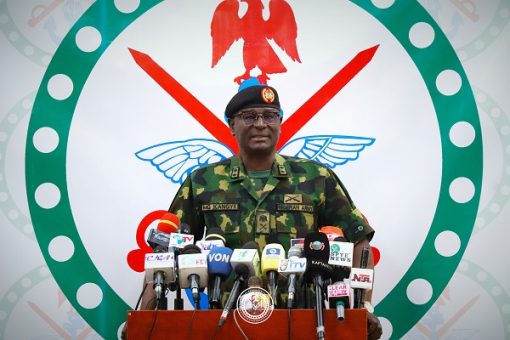
The Federal Government responded to Governor Zulum’s concerns by emphasizing its commitment to eradicating banditry and terrorism nationwide, pointing to perceived successes over the past 18 months as evidence of returning normalcy. The government called for collaboration between national and sub-national entities to eliminate remaining criminal elements. The Defence Headquarters echoed this sentiment, highlighting the military’s sacrifices and ongoing efforts to restore peace in Borno and other troubled states. Major General Markus Kangye, Director of Defence Media Operations, defended the military’s performance, asserting they were doing their best under challenging circumstances.
Paragraph 4: Local Perspectives and Criticisms of Counter-terrorism Strategies
The Shehu of Borno, Abubakar El-Kanemi, acknowledged the efforts of security agencies but pointedly stated that several Local Government Areas, including Guzamala, Marte, Abbadam, and parts of Mobbar, remained under Boko Haram control, lacking civil authority. This local perspective reinforces Governor Zulum’s assessment and exposes the disconnect between the Federal Government’s narrative and the ground realities. Retired Brig. Gen. Peter Aro criticized the government’s narrative of success, arguing that the governor’s admission of losing ground cannot be ignored. He highlighted the frequent attacks, abductions, and killings in rural communities, contrasting them with the relative calm in urban centers, and emphasizing the sustained offensive by emboldened terrorists.
Paragraph 5: Policy Contradictions and the Reintegration Debate
Aro pointed to a critical policy contradiction: the reintegration of "repentant" Boko Haram fighters without adequate accountability. He argued that this policy, while implemented under Governor Zulum’s administration, has emboldened impunity and undermined justice for victims. The return of former insurgents to communities they had previously attacked creates a sense of insecurity and raises questions about the effectiveness and ethical implications of the reintegration program. This policy, according to Aro, constitutes “political theatre” rather than genuine restorative justice, potentially contributing to the resurgence of terrorist activities.
Paragraph 6: Calls for Action and the Chief of Army Staff’s Response
Retired DIG Adedayo Adeoye stressed the gravity of Governor Zulum’s alarm, advocating for the swift and massive deployment of both air and ground troops to Borno State. Brig. Gen. Bashir Adewinbi (retd) suggested that the rise in attacks had political undertones, aimed at undermining the government’s image. He also highlighted the need for border security and citizen involvement in combating insecurity. In response to the escalating situation, Chief of Army Staff Lt. Gen. Olufemi Oluyede urged troops to intensify their efforts, emphasizing the link between security and development. He acknowledged the challenges faced by the army while highlighting government support and initiatives to improve soldiers’ welfare. This multi-faceted response, encompassing calls for increased military presence, policy adjustments, and improved welfare, underscores the complex nature of the security crisis in Borno State and the urgent need for a comprehensive and effective strategy.









