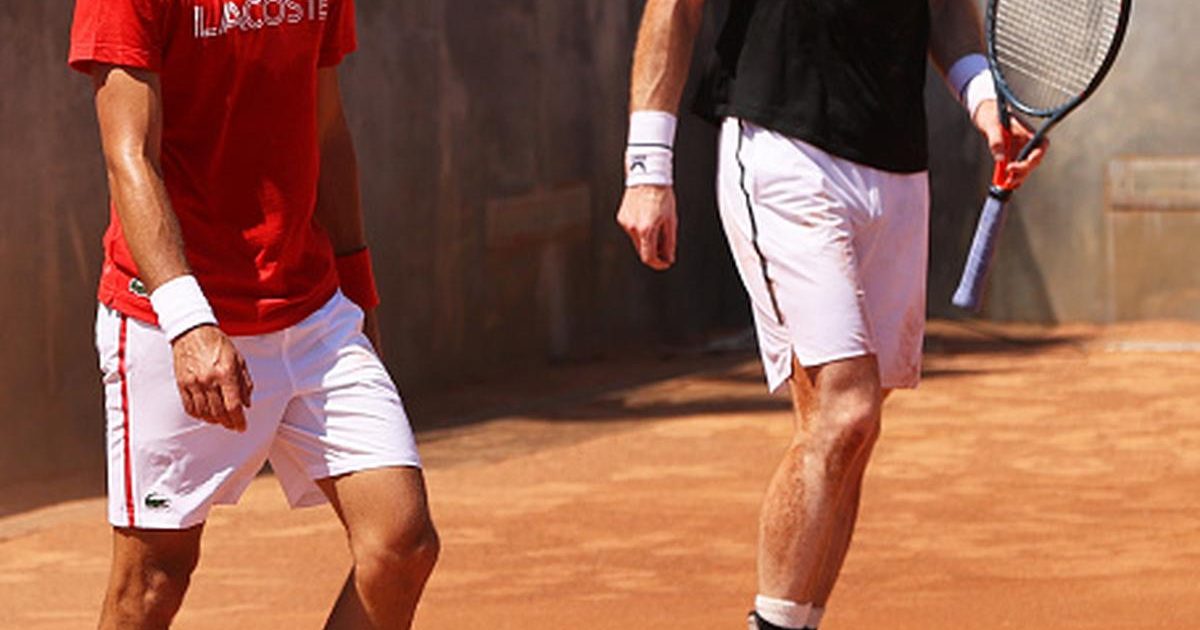
Novak Djokovic’s recent decision to collaborate with Andy Murray as a coach was framed by Djokovic as an ideal partnership for the upcoming season, especially as he vies for his 25th Grand Slam title in Australia in January. Murray, a celebrated three-time Grand Slam champion, retired after the Paris Olympics at 37, signaling the end of his arduous struggle with injuries. This pairing was a surprise announcement, one which Djokovic hinted caught Murray off guard as well. The two share a unique camaraderie as they were born only one week apart, enabling them to connect quickly and establish a rapport that could bear fruit in Djokovic’s pursuit of further accolades.
Reflecting on his career trajectory, Djokovic disclosed that he had taken a considerable hiatus after parting ways with his long-time coach Goran Ivanisevic in March. This time away from formal coaching allowed him to contemplate the type of guidance he needed as he transitioned into this new phase of his career. As the selection process unfolded, Djokovic concluded that the best coach for him would be someone who understands the intricacies of elite competition and the weight of experiences associated with being a multiple Grand Slam winner and former world number one. This line of thinking naturally led to the consideration of Murray, whose firsthand knowledge of the pressures and triumphs of top-level tennis made him a compelling choice.
The Serbian tennis star recently achieved a significant milestone by winning his first Olympic gold medal in Paris this year. However, the dawn of 2024 marks a unique shift, as it is the first year since 2017 that Djokovic enters a season without having secured a Grand Slam title the previous year, placing additional pressure and urgency upon him. Despite this stark realization, Djokovic remains confident in his physical condition and competitive drive, emphasizing his unwavering motivation to reclaim Grand Slams and inscribe more historic achievements into his career. Djokovic’s acknowledgment of his ongoing aspirations hints at a fiery determination that fans can expect to see as the new season unfolds.
Competing in an era where new players such as Jannik Sinner and Carlos Alcaraz have begun to carve their niches at the top of men’s tennis adds layers to Djokovic’s quest. Despite the changing dynamics of the sport, Djokovic’s readiness to adapt his strategies with Murray’s insights reflects a belief in both their compatibility and his own resilience. While their collective experiences could transform Djokovic’s approach, the partnership is also viewed as a mutual venture to navigate the complexities of elite competition, especially as both athletes grapple with their legacies and evolving roles within the sport.
As members of the so-called “Big Four,” which also included retired legends Rafael Nadal and Roger Federer, Djokovic and Murray carry the weight of substantial expectations as they continue to influence a generation of players. The legacy of the Big Four, characterized by their dominance and rivalry, sets a high standard in tennis. Their combined experiences not only foster a rich history but also create a mentorship dynamic that could benefit emerging players in the circuit. With Nadal and Federer stepping away from professional play, Djokovic and Murray’s collaboration signifies a potential shift in mentorship roles within tennis, further enriching the sport’s competitive landscape.
In summary, Djokovic’s collaboration with Murray is not merely a strategic move but also a testament to their shared history and mutual respect. As Djokovic prepares for the upcoming Australian Open, he views this partnership as pivotal in overcoming new challengers and rejuvenating his career aspirations. Both players will undoubtedly draw upon their past experiences, blending their knowledge to enhance Djokovic’s game. As they embark on this new journey together, the tennis world watches in anticipation, eager to witness how this innovative coaching arrangement will unfold in the competitive arena.