









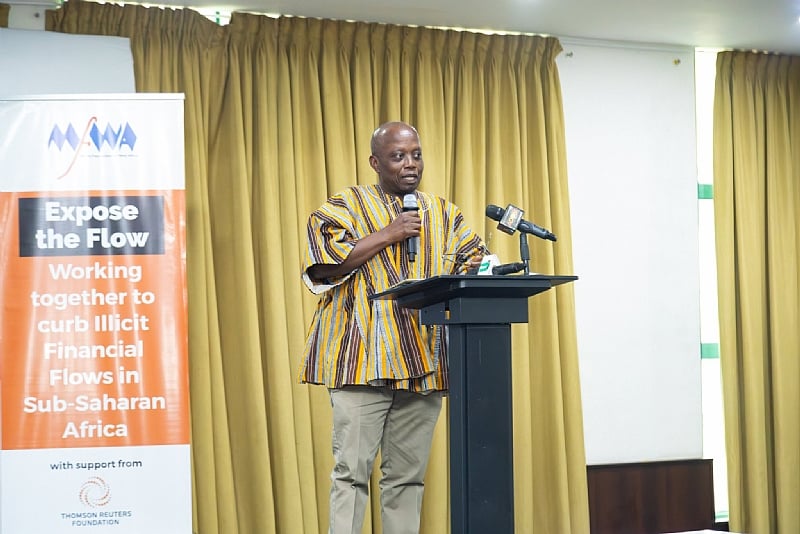
Former Auditor General Daniel Yao Domelevo has made a compelling argument for a complete revamp of Ghana’s anti-corruption framework. During a keynote address at a public forum focusing on illicit financial flows, he emphasized the urgent need to enhance the country’s asset declaration system, which he believes has become ineffectual in holding public officials accountable. Domelevo pointed out that the existing system lacks sufficient punitive measures for those who do not accurately declare their assets or fail to declare them altogether. He highlighted a significant gap in Ghana’s approach, noting that without penalties, public officials have little incentive to comply effectively with asset declaration protocols.
Domelevo’s critique extends to the failure of high-profile individuals, including former Chief Justices, to properly declare their assets and liabilities without facing any consequences. He asserted that without a mechanism to enforce accountability, the asset declaration process loses credibility and becomes a mere formality. In his view, the lack of repercussions for non-compliance fosters an environment where public officials can misuse the system, hiding their wealth through family and associates to circumvent scrutiny. This manipulation allows them to amass significant resources without accountability, thereby undermining public trust and the integrity of the governance system.
To address these loopholes, Domelevo has proposed the introduction of lifestyle audits as a necessary complement to the asset declaration process. He argued that lifestyle audits would help identify discrepancies between a public official’s declared assets and their actual wealth, thereby reversing the onus of proof. Instead of requiring authorities to prove wrongdoing, the burden should shift to the officials to demonstrate how they acquired their wealth. This systematic inversion of responsibility is meant to deter corruption and ensure that public officials operate transparently.
Drawing parallels with the Anti-Money Laundering Act, he emphasized that lifestyle audits should not be relegated to isolated cases but should become an integral practice within the broader anti-corruption strategy. Domelevo contended that the ability to conceal wealth through relatives and friends makes it essential to introduce thorough investigations into the lifestyle of public officials, as their assets may not be directly traceable to them. He underscored the importance of extensive scrutiny, arguing that those who handle or benefit from hidden wealth could be anyone, complicating accountability efforts.
In addition to the reforms in asset declaration and lifestyle audits, Domelevo has also called upon the media to assume a proactive role in exposing cases of unaccounted wealth among public officials. He believes that a vigilant press is crucial for reinforcing the anti-corruption fight by raising awareness and generating public discourse on integrity and accountability. A strong media presence can serve to hold public officials accountable, acting as a watchdog that can help to illuminate financial discrepancies and foster a culture of transparency.
In conclusion, Domelevo’s proposals reflect a profound concern for the integrity of Ghana’s governance and the fight against corruption. By advocating for punitive measures linked to asset declaration, the introduction of lifestyle audits, and an active media presence in oversight efforts, he presents a holistic approach aimed at fortifying Ghana’s anti-corruption framework. These reforms, if implemented, could significantly enhance accountability among public officials, helping to restore public trust in government institutions and ensuring that those in positions of power are held to the highest standards of ethical conduct.









