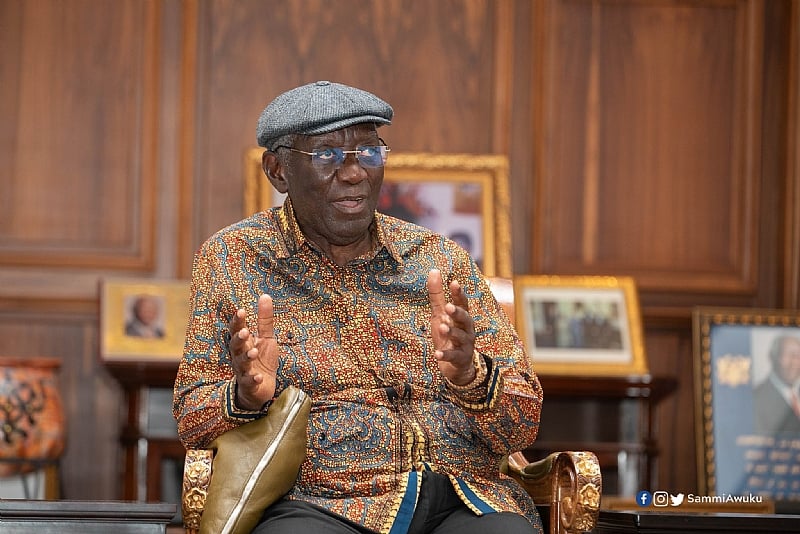
The New Patriotic Party’s (NPP) defeat in the 2024 election has sparked internal debate and scrutiny, particularly focusing on the role of former President John Agyekum Kufuor in the campaign. Kufuor, a highly respected figure in Ghanaian politics, traditionally seen as a unifying force transcending party lines, took an active role in endorsing Dr. Mahamudu Bawumia, the NPP’s presidential candidate. This overt partisan involvement has drawn criticism from analysts who believe it damaged the party’s relationship with its core support base and contributed to its electoral loss. The central argument is that Kufuor’s endorsement, while intended to bolster Bawumia’s standing, particularly in the crucial Ashanti Region, ultimately backfired by alienating segments of the NPP’s traditional stronghold who felt neglected by the party’s leadership.
The Ashanti Region, historically a bedrock of NPP support, has shown increasing signs of discontent in recent years. The party’s perceived neglect of the region, coupled with internal dissatisfaction and perceived leadership missteps, has eroded the once unwavering support it enjoyed. Dr. Jonathan Asante Okyere, a political analyst, argued that Kufuor’s involvement, including his public endorsement of Bawumia, was a strategic miscalculation aimed at appeasing the Ashanti base. However, this strategy seemed to exacerbate the existing discontent, as it appeared to confirm the perception that the party leadership was out of touch with the concerns of its grassroots supporters. Instead of unifying the party, Kufuor’s active participation in the campaign may have inadvertently deepened the divide between the leadership and the base, contributing to the NPP’s electoral downfall.
The criticism of Kufuor’s involvement revolves around the idea that a statesman of his stature should remain above partisan politics, serving as a unifying figure for the nation as a whole. By actively campaigning for Bawumia, he arguably diminished his own standing as a neutral figure respected across the political spectrum. This, coupled with the perception that his endorsement was a desperate attempt to salvage support in the Ashanti Region, likely backfired by further alienating voters who felt their concerns were being dismissed. The attempt to leverage Kufuor’s influence to shore up support in the Ashanti Region suggests a misreading of the underlying issues fueling the discontent. The region’s disaffection was not simply a matter of needing to be persuaded to support Bawumia; it stemmed from deeper issues of perceived neglect and dissatisfaction with the party’s direction.
The NPP’s overreliance on the Ashanti Region and its failure to adequately address the growing discontent within this crucial voting bloc contributed significantly to its electoral defeat. The party’s strategy, according to Dr. Asante Okyere, seemed to prioritize short-term gains by attempting to leverage Kufuor’s influence rather than addressing the fundamental issues driving the discontent in the Ashanti Region. This approach ultimately proved counterproductive, highlighting the party’s disconnect from its grassroots base. The attempt to use Kufuor as a quick fix overlooked the deeper-seated issues that required a more comprehensive and strategic approach to address.
Dr. Asante Okyere emphasized the need for the NPP to learn from the National Democratic Congress’s (NDC) response to its 2016 electoral defeat. Following that loss, the NDC commissioned a thorough review led by the late Professor Kwesi Botchwey. This comprehensive review process allowed the NDC to identify the root causes of its defeat, reconnect with its grassroots base, and ultimately regain power. The NPP, according to Dr. Asante Okyere, needs to undertake a similar process of self-reflection and internal reform to address the underlying issues that led to its 2024 defeat. This should involve actively engaging with its base, particularly in regions like Ashanti, to understand their concerns and rebuild trust.
The NPP’s path to recovery requires a fundamental shift in strategy, moving away from quick fixes and towards a genuine engagement with its support base. This involves acknowledging the mistakes made, addressing the concerns of neglected regions, and fostering a more inclusive and responsive leadership. The party needs to move beyond simply relying on historical loyalty and actively work to regain the trust of its supporters. A critical self-assessment, similar to the NDC’s post-2016 review, is crucial for the NPP to understand the root causes of its decline and chart a path towards future electoral success. This introspection should focus not only on campaign strategies but also on the broader issues of party governance, leadership, and responsiveness to the needs of its constituents.