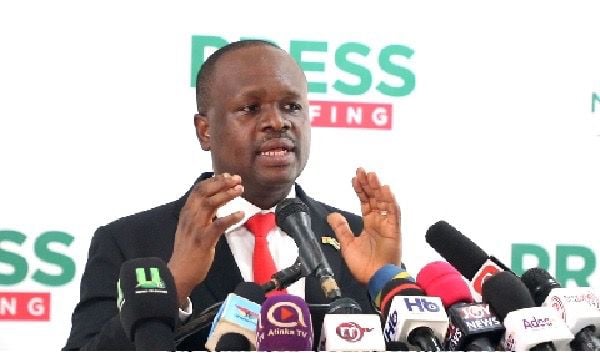
Dr. Edward Omane Boamah, the Director of Elections and IT for the National Democratic Congress (NDC), has launched a scathing critique of the New Patriotic Party (NPP), accusing them of prioritizing political power over the well-being of Ghanaians. He contends that the NPP’s focus on the 2028 general elections, barely six months after their electoral defeat and amidst continuing economic hardship, demonstrates a callous disregard for the struggles faced by ordinary citizens. Dr. Boamah argues that the NPP, instead of reflecting on their past performance and offering apologies for the economic difficulties experienced under the Akufo-Addo administration, is already preoccupied with regaining power. This preoccupation, he suggests, underscores the NPP’s self-serving nature and their disconnect from the realities faced by the Ghanaian populace.
The crux of Dr. Boamah’s criticism stems from the NPP’s recent announcement of their timetable for the 2028 presidential primaries. The party’s National Executive Committee (NEC) declared that the election to select their flagbearer will be held on January 31, 2026. This announcement, coming so soon after the previous election cycle, has been interpreted by Dr. Boamah as a sign that the NPP is more concerned with internal political maneuvering than addressing the pressing needs of the nation. He highlights the economic hardships faced by various segments of the population, including pensioners, people with disabilities, women, and youth, during the NPP’s previous tenure, suggesting that the party should be focused on atonement and remedial action rather than election strategizing.
Dr. Boamah’s accusations paint a picture of an NPP that is out of touch with the suffering of Ghanaians. He underscores the perceived insensitivity of launching into election preparations while the effects of the previous administration’s economic policies continue to burden the population. This, he argues, reinforces the perception that the NPP is driven by a desire for power rather than a genuine commitment to serving the interests of the people. By highlighting the plight of vulnerable groups, Dr. Boamah seeks to portray the NPP as a party that prioritizes its own political ambitions over the welfare of those most in need.
The NPP’s early commencement of their election preparations stands in stark contrast to what Dr. Boamah believes should be their primary focus: addressing the economic challenges inherited from the previous administration. He criticizes what he perceives as a lack of remorse or accountability for the economic difficulties faced by Ghanaians during the NPP’s time in power. By focusing on the 2028 elections so early, Dr. Boamah suggests, the NPP is signaling that they have learned nothing from their previous electoral defeat and are not genuinely committed to understanding and addressing the concerns of the electorate.
This early focus on the next election cycle, according to Dr. Boamah, demonstrates a disconnect between the NPP and the lived experiences of ordinary Ghanaians. He argues that the party’s actions betray a lack of empathy and a failure to recognize the depth of the economic challenges facing the nation. By prioritizing internal political processes over addressing the needs of the people, the NPP risks further alienating segments of the population and reinforcing the perception that they are more interested in power than in serving the public good.
Dr. Boamah’s critique serves as a call for the NPP to prioritize the welfare of Ghanaians over their political ambitions. He calls on the party to demonstrate genuine remorse for the economic hardship experienced under the previous administration and to focus on implementing policies that address the needs of the population. By shifting their focus from electioneering to addressing the concerns of the people, the NPP, according to Dr. Boamah, can begin to rebuild trust and demonstrate a genuine commitment to serving the interests of the nation. He implies that continuing down the path of prioritizing political power over the well-being of the citizenry will further erode public trust and ultimately lead to further electoral setbacks.