









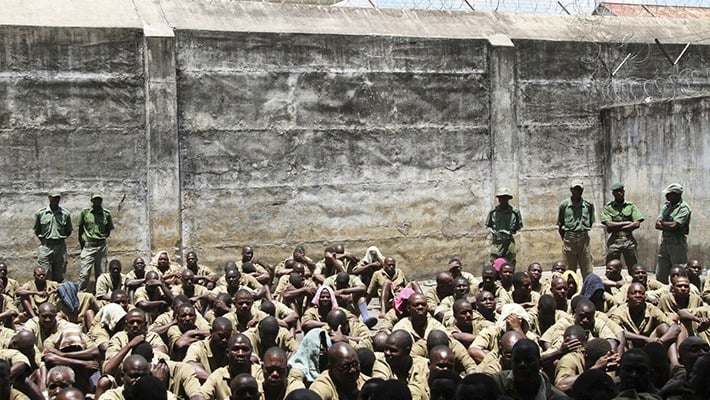
The Democratic Republic of Congo (DRC) is poised to carry out a mass execution of over 170 individuals convicted of armed robbery, a move that has ignited a firestorm of debate across the nation and beyond. This controversial decision, confirmed by Justice Minister Constant Mutamba, involves the transfer of 70 prisoners to the high-security Angenga prison in northern Mongala province, where they will join 102 others already awaiting their fate. These convicted individuals, predominantly young men aged between 18 and 35, are known locally as “Kulunas,” a term often used to describe urban bandits or street criminals. While the Minister has confirmed the impending executions, the exact timing remains undisclosed, leaving the condemned and their families in a state of agonizing uncertainty. The decision reflects a hardening stance against crime in the DRC and signals a potential shift in the government’s approach to law and order.
The planned executions have elicited a complex tapestry of reactions within the Congolese society. A significant segment of the population, weary of escalating crime rates and the pervasive sense of insecurity, perceives the measure as a necessary step towards restoring order and public safety. Citizens like Fiston Kakule from Goma, who express the fear that grips many communities, particularly after nightfall, exemplify this sentiment. The palpable relief among some citizens highlights the deep-seated anxieties fueled by the activities of the Kulunas, whose actions have disrupted daily life and fostered a climate of fear. For many, the executions represent a decisive response to a persistent social problem and a symbolic assertion of the government’s commitment to protecting its citizens.
However, the impending executions have also drawn sharp criticism from human rights organizations and activists, both within the DRC and internationally. These concerns revolve around several critical issues, including the potential for miscarriages of justice, the irreversible nature of the death penalty, and the broader implications for human rights in the country. Activists like Espoir Muhinuka argue that the executions represent a simplistic and ultimately ineffective approach to tackling complex social issues. They emphasize the need for comprehensive strategies that address the root causes of urban crime, including poverty, unemployment, and social exclusion, rather than resorting to punitive measures that fail to address the underlying societal problems.
The DRC’s history with the death penalty is marked by shifts and contradictions. Initially abolished in 1981, it was reinstated in 2006, albeit with infrequent executions. The last known execution took place in 2003, indicating a period of relative dormancy in its application. The recent announcement of the resumption of the death penalty, not only for armed robbery but also for treason and other severe crimes, signifies a significant policy shift and raises concerns about the future trajectory of human rights within the country. This decision places the DRC in a minority of countries globally that still retain and actively apply capital punishment, raising questions about its alignment with international human rights norms and standards.
The planned executions of the Kulunas have brought the complex interplay between justice, security, and human rights in the DRC into sharp focus. The government’s decision reflects a delicate balancing act between responding to public demands for enhanced security and upholding its international commitments to human rights. The case of the Kulunas also exposes the limitations of a purely punitive approach to addressing social problems. While acknowledging the need to address the legitimate security concerns of its citizens, critics argue that the government’s reliance on the death penalty risks exacerbating societal inequalities and undermining efforts to build a more just and equitable society. They contend that a focus on addressing the socio-economic factors that contribute to crime, alongside robust law enforcement and judicial reforms, offers a more sustainable and effective path towards achieving lasting security and stability.
Ultimately, the decision to execute the Kulunas underscores the challenges faced by the DRC in its ongoing efforts to consolidate peace, stability, and respect for human rights. The international community’s response to this controversial decision will be crucial in shaping the future trajectory of human rights in the country. The case also serves as a stark reminder of the ongoing debate surrounding the death penalty globally, raising fundamental questions about its effectiveness as a deterrent, its moral implications, and its compatibility with contemporary notions of human dignity and justice. The situation in the DRC requires careful consideration of all perspectives, including the voices of victims, the concerns of human rights advocates, and the government’s responsibility to maintain order and protect its citizens. A nuanced and comprehensive approach is essential to address the complex web of factors that contribute to crime and insecurity, while simultaneously upholding fundamental human rights principles.









