









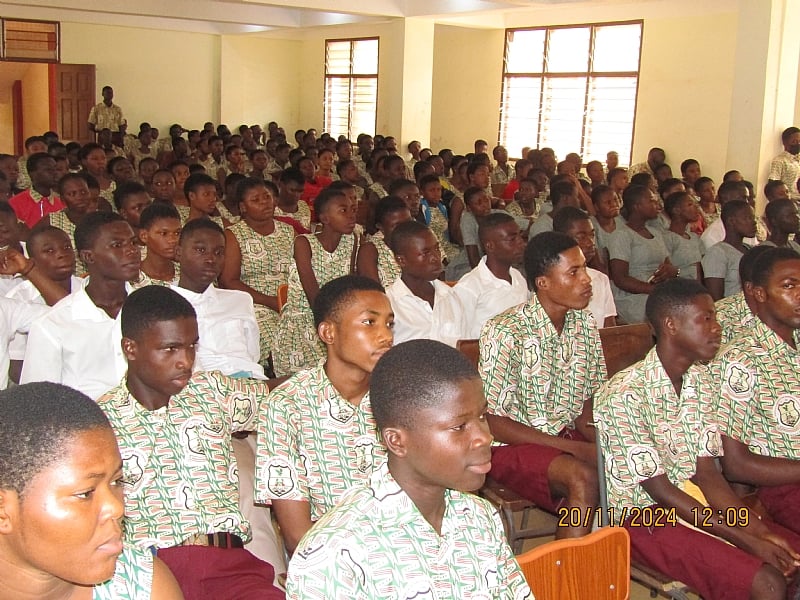
On November 20, 2024, the Eastern Regional Command (ERC) Education Unit of the Narcotics Control Commission (NACOC) conducted a sensitization program at Apesua Community Senior High School. This educational event aimed to inform students about the detrimental effects of illicit drug use and was held in partnership with the school’s Guidance and Counseling Unit. By engaging students directly, the program sought to raise awareness and emphasize the dangers associated with drug use and abuse, fostering an understanding of both personal and societal repercussions.
During the presentation, ANCO Habiba Muntari delivered compelling insights into the adverse effects of illegal drugs and other substances. She emphasized that the impact of substance abuse extends beyond individual users, affecting families and communities and burdening the entire nation. Muntari detailed the health risks linked to the non-medical use of legal and prescription drugs, as well as the substantial dangers posed by illicit drugs such as cannabis, cocaine, and heroin. Her presentation highlighted how persistent drug use can lead to significant damage to crucial organs, including the kidneys, liver, heart, and lungs, underscoring the comprehensive health implications of drug abuse.
In addition to discussing health risks, the program also covered the legal ramifications associated with drug-related offenses. Attendees were made aware of the severe consequences of cultivating, trading, possessing, and using narcotic substances. Muntari specifically cautioned the audience regarding the dangers of derivatives of illegal drugs, such as crack cocaine and various cannabis products, including weed toffee and tinctures, which pose serious health risks. The emphasis on the legal implications aimed to foster a deeper understanding among students of the potential long-term consequences of engaging in drug-related activities.
The response from both students and faculty was overwhelmingly positive, with many expressing gratitude to the NACOC team for the informative session. Participants acknowledged the importance of such initiatives in educating young people about the realities of drug use and its associated perils. They encouraged NACOC to conduct regular sensitization sessions, reinforcing the necessity to maintain awareness and understanding of the risks involved with drugs and promoting healthier lifestyle choices among students.
The program featured notable dignitaries, including the Headmaster of Apesua SHS, Mr. Robert Vicente Oduro; local law enforcement representatives, Inspector Asanatu Shaibu and Corporal Poatia Owusu Sekyere from the Drug Law Enforcement Unit; and Counselor Lydia Agyeiwaa Danquah. The presence of these officials underscored the collaborative efforts between NACOC, the educational institution, and law enforcement in addressing the issue of drug abuse. Their involvement also lent authority to the message being delivered and illustrated a unified commitment to combating the drug epidemic affecting the youth.
Overall, the sensitization program served as a vital platform for raising awareness about the dangers of drug use and abuse among students at Apesua Community Senior High School. Through informative presentations and active engagement, the NACOC educated attendees on the myriad health risks, legal consequences, and broader societal impacts of drug abuse. By fostering an understanding of these issues, the program aimed to empower students to make informed choices and encourage a drug-free lifestyle, demonstrating the critical role of educational initiatives in the fight against substance abuse in communities.









