





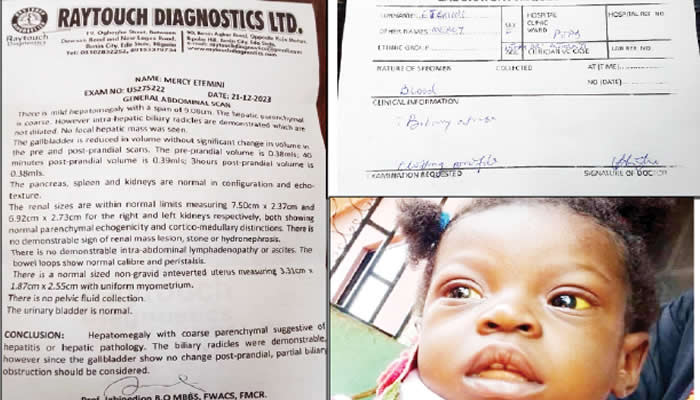
In a heartfelt plea for assistance, Isoken Etemini from Edo State has reached out to compassionate Nigerians regarding her daughter Mercy, who is suffering from biliary atresia, a rare and severe liver disease. Mercy, only two years old, was diagnosed shortly after her birth, marking the beginning of a challenging journey for the family. As a primary caregiver, Etemini is distraught over the mounting medical expenses, which total approximately $21,000. Despite securing a promise of €10,000 from an international organization in Germany for her daughter’s treatment, Etemini’s efforts to collect the remaining $13,000 needed for a liver transplant abroad have been met with difficulty.
The harrowing ordeal began shortly after Mercy’s birth on September 14, 2022, when Etemini noticed her daughter’s jaundice. Seeking guidance, she followed the midwife’s advice to expose Mercy to sunlight and administer glucose mixed with water. However, as her condition worsened with alarming symptoms, including bleeding from the navel, urgent medical intervention was required. Etemini recounted a painful experience at the University of Benin Teaching Hospital, where her daughter was turned away due to full capacity in the children’s ward, prompting them to seek care from a private hospital instead.
Despite receiving care at the private facility, Mercy’s condition showed no signs of improvement. Weeks passed, filled with anxiety and fear, leading Etemini to return to UBTH, where scans confirmed the diagnosis of biliary atresia. Faced with this diagnosis, she was devastated to learn that the required surgical procedure, known as the Kasai operation, had become impossible due to the advanced age of her baby. In dire circumstances, Etemini learned that the only remaining option for her daughter was a liver transplant outside the country.
As Etemini navigated this overwhelming reality, she faced significant challenges in securing necessary funds. Alongside the $21,000 required for the surgery, there are numerous associated costs, including travel, accommodation, and visa fees, all of which have compounded her worries. The emotional toll on her family has been great, as they watch their once-vibrant child struggle with pain and developmental delays. At over a year and a half old, Mercy is only experiencing critical milestones like crawling or standing, and her health continues to deteriorate, characterized by an enlarged spleen, weight loss, itchy skin, and sleep disturbances.
In her distress, Etemini has turned to the public for help, appealing to the kindness and generosity of fellow Nigerians. She underscores the rarity and severity of biliary atresia, a life-threatening condition that has no known cause and requires immediate treatment to prevent further decline in her daughter’s health. With each passing day, she fears for Mercy’s life, realizing the urgency of acquiring the remaining funds required for her medical care. As a mother, she experiences continual heartache, juxtaposed with hope that the community will rally around their cause and contribute towards saving her daughter’s life.
The situation highlighted by Etemini exemplifies a broader issue within the healthcare system in Nigeria and the challenges families face when dealing with rare medical conditions. Mercy’s story is a call not just for funds, but also for broader awareness and support for families enduring similar struggles. Etemini’s passionate plea emerges not only as a desperate request for financial aid but also as an appeal to the collective humanity of Nigerians, asking for solidarity in the face of adversity and the hope for a brighter future for her daughter. With the potential support of the community, Etemini believes they may still secure the essential treatments that could save Mercy’s life, reminding us of the power of compassion and collective action when faced with dire circumstances.








