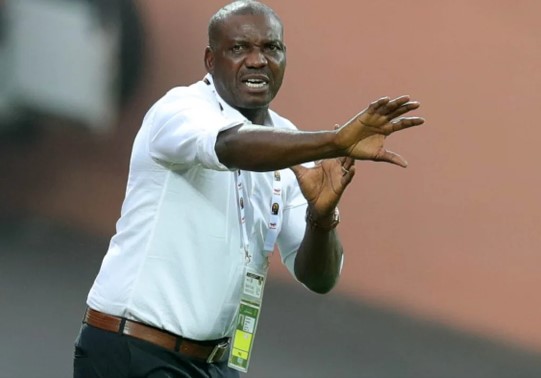
Super Eagles interim coach Austin Eguavoen has recently shed light on a distressing situation involving Nigeria’s senior men’s national football team during their trip to Libya for a 2025 Africa Cup of Nations (AFCON) qualifying match against the Mediterranean Knights. The team arrived in Libya on Sunday afternoon, only to be met with a series of logistical nightmares that left them feeling unsafe and neglected. The original plan was for the Nigerian team to play at the Martyrs of Benina Stadium situated just 10 kilometers from Benghazi. However, their flight was diverted to Al Abraq Airport, which is located over 200 kilometers away, leading to an unnecessarily long and arduous transit for the players and officials.
Once at Al Abraq Airport, the situation took a turn for the worse. Eguavoen described the airport, normally utilized for hajj operations, as lacking basic facilities, which added to the discomfort and frustration experienced by the team members. The Niger Football Federation, expecting a welcoming reception from the Libyan Football Federation, found itself without transportation or even basic accommodations, which left the Nigerian squad effectively stranded. Consequently, they had to arrange alternate travel plans in a desperate bid to reach their intended campsite. This turn of events led to the team being confined to the airport for over 20 hours without access to food or water, compounding the ordeal they were facing.
The “hostage-like” predicament took a significant toll on the players’ physical and mental well-being. Eguavoen expressed greater distress over the incident, stating, “We were held hostage; we could not have played this match under these conditions.” The ordeal not only raised concerns about the safety and well-being of the players but also illuminated the stark realities of international sports logistics, where political and operational failures can lead to such dangerous and debilitating situations. According to the team’s doctor, several players experienced health issues as a direct result of the neglect they suffered.
Due to the treatment the team endured, the AFCON qualifier match scheduled for Tuesday was ultimately abandoned. This decision not only marked a disruption in the sporting schedule but also emphasized the gravity of the situation that unfolded. The Confederation of African Football (CAF) acknowledged the severity of the incident and announced that it would conduct an investigation, pledging to address the situation in due course. Eguavoen expressed hope for a comprehensive investigation by CAF, indicating that he believed that football should serve as a vehicle for unity rather than division or hostility.
The incident has garnered significant attention on a global scale, attracting condemnation from various quarters including fellow athletes, international media, and human rights organizations. The story has resonated with many, highlighting how such events can overshadow the spirit of sport and provoke serious concerns regarding the treatment of athletes on international platforms. Football, often seen as a unifying force, was starkly contrasted by the experience of the Nigerian squad, prompting discussions around the respect and values that should be upheld in international competitions.
In sum, the harrowing experience of the Super Eagles during their trip to Libya has exposed questionable practices surrounding sporting events and initiated broader discussions about athlete welfare in international fixtures. With CAF promising to investigate the circumstances and public support rallying behind the Nigerian team, this incident may serve as a critical point of reflection for the future of international football, emphasizing the need for better logistical planning and respect for players as individuals worthy of dignified treatment.