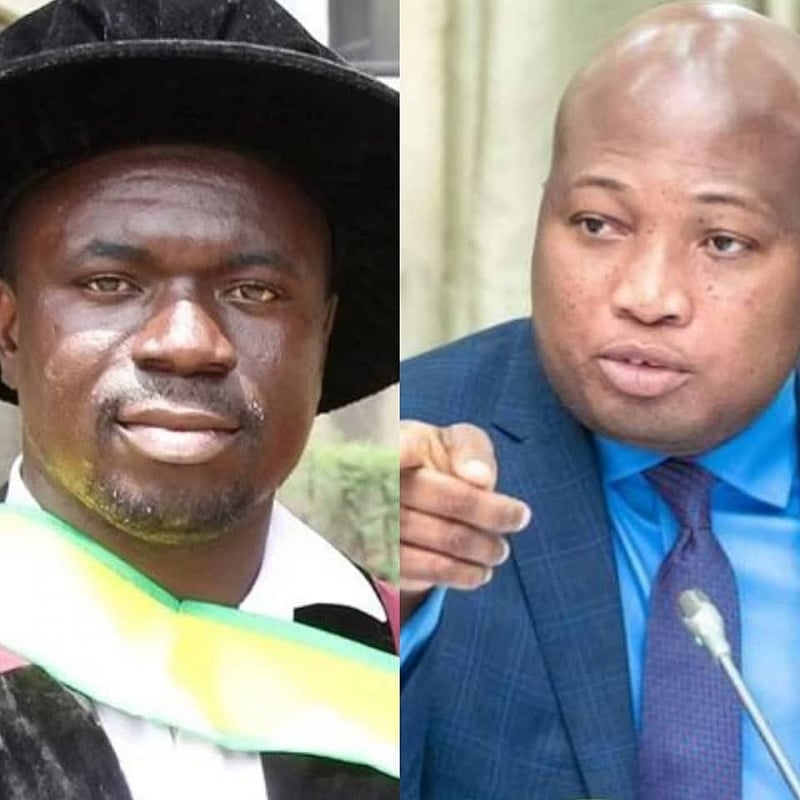
In the lead-up to Ghana’s 2024 presidential elections, the political landscape is heating up as various surveys and analyses emerge to gauge electoral sentiments. A recent survey conducted by political analyst Prof. Smart Sarpong has put Vice President Dr. Mahamudu Bawumia at the forefront of the race, garnering a significant 49.1% support, while the National Democratic Congress (NDC) flagbearer, John Dramani Mahama, follows with 36.1%. The findings have initiated a wave of discussions and reactions, particularly from members of the NDC, raising questions about the credibility of the survey and its implications for the upcoming elections.
North Tongu Member of Parliament, Samuel Okudzeto Ablakwa, has explicitly criticized the survey conducted by Prof. Smart Sarpong, categorizing it as not only misleading but fundamentally flawed. During his appearance on Oyerepa Breakfast Time with host Kwesi Parker Wilson, he characterized the survey as a “joke,” further insisting that it lacks any credibility and is effectively “bogus, discredited, and totally useless.” His dismissive remarks highlight the NDC’s skepticism towards the poll and its assertions regarding the competitive landscape of the 2024 presidential race.
Ablakwa’s rebuttal is based on alternative data that the NDC has gathered through its internal polling mechanisms and reputable external surveys. He cites credible polling organizations such as Fetch, the Economist Intelligence Unit (EIU), and Global InfoAnalytics, which point towards a favorable outcome for the NDC and John Mahama. He emphasizes that these organizations provide a more accurate reflection of the public sentiment and political dynamics than the controversial survey conducted by Prof. Sarpong, which he deems an outlier. The confidence expressed by Ablakwa regarding the NDC’s electoral prospects underscores ongoing party discipline and strategy ahead of the general election.
The political divide manifested in this debate serves to underline deeper issues regarding public trust in polling data and the influence of such surveys on voter behavior. Given the reliance of parties on polling results to strategize and campaign effectively, any disparities between different polls can create significant tensions. The NDC’s stance, as articulated by Ablakwa, signals a broader narrative of confidence in their alignment with the electorate’s preferences, countering the narrative pushed by the Sarpong survey that seems to favor the ruling New Patriotic Party (NPP).
As the political discourse unfolds, Ghanaians are encouraged to scrutinize and critically analyze the various polls and pictures painted by political analysts. The contrasting views of the NDC and Prof. Smart Sarpong’s survey reveal the complexities of political campaigning and the strategic measures parties employ to bolster their positions. Ablakwa’s urgent call for the public to disregard the Sarpong survey emphasizes the need for credible and transparent polling processes that reflect true public sentiment and can validly inform the electoral outcomes.
As the election draws nearer, the implications of these polling debates extend beyond mere numbers; they encapsulate the very essence of political strategy, voter engagement, and the legitimacy of electoral processes. The eventual outcome of the 2024 elections will hinge not only on the political parties’ campaigns and public sentiments but also on the public’s perception of polling credibility. As parties like the NDC solidify their internal strategies and confidence while challenging competing narratives, it remains crucial for the electorate to remain informed and discerning amidst a flurry of differing opinions and projections in the political arena. Thus, the context of political surveys, their interpretations, and subsequent reactions encapsulate a pivotal aspect of the broader electoral process in Ghana.