Summary of Abraham Amaliba’s Skepticism Regarding the 2024 Election Peace Pact
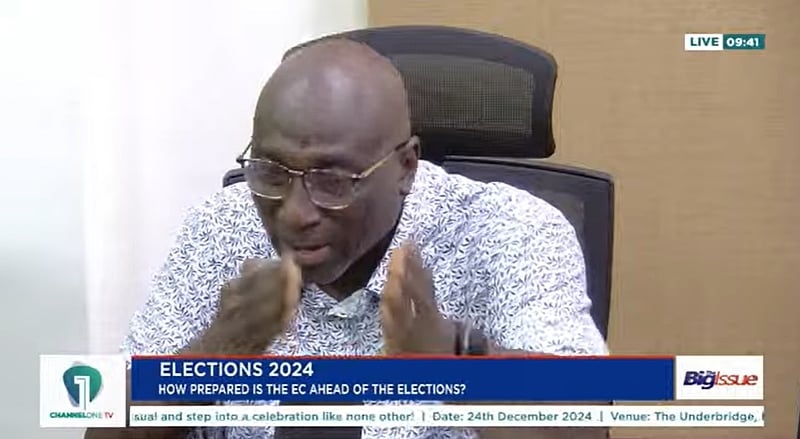
Abraham Amaliba, the Director of Conflict Resolution for the National Democratic Congress (NDC), has voiced significant reservations regarding the anticipated effectiveness of the 2024 election peace pact in Ghana. His critique comes after the NDC’s presidential candidate, John Dramani Mahama, participated in signing the agreement, contrasting earlier speculations about the party’s possible non-participation. The peace pact, which has been a conventional effort to cultivate a peaceful electoral environment in the country, was formally endorsed by various political parties with support from the National Peace Council and the Institute for Democratic Governance (IDEG). Amaliba’s insights, shared during an appearance on The Big Issues on Channel One TV, underscore a belief that the agreement may fall short of producing the intended positive impact on electoral duress.
One of the core arguments made by Amaliba is that the peace pact neglects to tackle the fundamental sources of electoral violence. He contends that while the agreement obliges political leaders to commit to non-violence, it fails to confront the actions and roles of security forces commonly involved in electoral altercations. He emphasized that the effectiveness of any peace initiative inherently requires addressing the behavior and conduct of these security entities, as their interactions during elections often catalyze conflict rather than abate it. This highlights a notable gap in the pact, which appears to overlook the critical influence of state actors on the integrity of Ghana’s electoral processes.
Moreover, Amaliba criticized the structural aspects of the pact, arguing that it was signed by parties who do not hold sway over the security mechanisms deployed during elections. This oversight raises questions about the pact’s implementation and its potential for real change. He pointed out that those who are responsible for directing security forces—the military and police—were absent from the signing ceremony. This disconnect implies a lack of accountability; political leaders may issue commitments to non-violence, yet without the ability to control how security forces behave, the intentions of the pact become questionable. In this light, Amaliba suggests that the equals responsibilities should extend beyond mere political promises to encompass those vested with operational power over security and law enforcement.
In his critique, the director notes specific incidents, such as those that occurred in Techiman South and parliament, as evidence of the ineffective or even harmful involvement of security forces during electoral events. Amaliba posits that until there is a concerted effort to hold security agencies accountable and to reform institutional norms surrounding their operations, the peace pact will likely remain symbolic rather than consequential. His comments highlight a crucial aspect of electoral violence in Ghana: that it is no longer solely a political contest but involves unintended yet destructive participation by state mechanisms, significantly complicating the landscape of electoral integrity and security.
The emphasis on a more comprehensive approach is a key aspect of Amaliba’s stance. He advocates for systemic reforms that incorporate all dimensions of the electoral process. Addressing the deep-seated issues of violence necessitates delving into the governance structures that guide the behavior of security agencies and enhancing the principles of accountability within them. By fostering a more inclusive strategy that draws in various stakeholders—particularly those wielding authority over security forces—Ghana could mitigate the potential for violence during elections considerably more effectively.
In conclusion, Amaliba’s skepticism regarding the peace pact reflects broader anxieties about the state of electoral democracy in Ghana. His remarks serve as a call to action for policymakers to reassess the frameworks governing election management and security, ensuring that peace initiatives are grounded in reality and take into account the complexities of who holds power and how it is exercised. Without such reform, the efficacy of the peace pact remains in jeopardy, leaving the specter of election-related violence unresolved. This discourse sheds light on critical considerations that must be addressed to foster a truly peaceful electoral environment in the forthcoming elections.