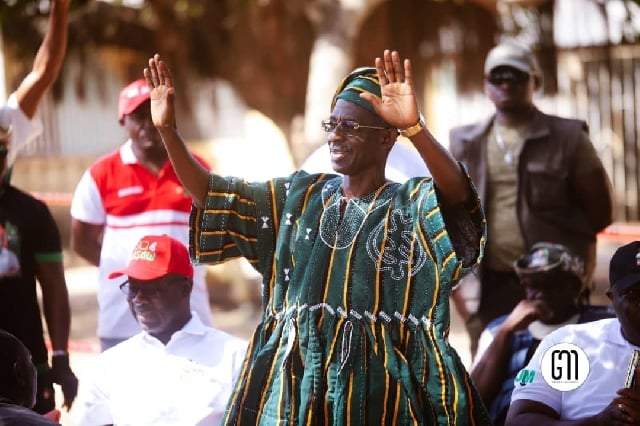
The National Chairman of the National Democratic Congress (NDC), Johnson Asiedu Nketia, has embarked on a vigorous campaign in the Ashanti Region, drawing a parallel between his efforts and that of “John the Baptist.” He believes his work is laying the groundwork to support the former President John Mahama, whom he regards as the “Saviour” for the upcoming elections. Asiedu Nketia made these comments while concluding the NDC’s Ashanti Regional Phase III retail campaign at Ahenbronum in the Old Tafo Constituency. His campaign journey took him through all 47 constituencies in the region, where he engaged with a broad spectrum of local constituents, including chiefs, traders, drivers, and artisans, all to garner support for Mahama and the NDC’s parliamentary candidates.
Throughout the campaign, Asiedu Nketia outlined key elements of the NDC’s manifesto, particularly focusing on reforms to the Free Senior High School (SHS) policy. He proposed to eliminate the double-track system, which has been a point of contention, and to empower headmasters with increased control over the school feeding program. His agenda also emphasized the party’s commitment to resume stalled projects, except for the controversial National Cathedral, and to improve essential infrastructure in areas such as roads, electricity, and telecommunications. These engagements showcased the NDC’s plans to tackle pressing issues that resonate with the electorate.
On the final day of the campaign, Asiedu Nketia visited several constituencies, highlighting his dedication to directly connecting with the electorate. In Bantama, he met with residents in Ohwin, joined by local leaders, and continued his interactions in Suame and Asawase communities. His engagements included addressing issues with the local chiefs and community members, demonstrating the NDC’s grassroots approach. His conclusion at Ahenbronum in the Old Tafo constituency was a culmination of intense advocacy, with additional appearances by parliamentary candidates affirming their commitment to enhancing their constituencies.
In his addresses, Asiedu Nketia called on Ashanti Region voters to rethink their loyalty to the New Patriotic Party (NPP), underscoring the perceived stagnation in development over the NPP’s eight years in power. He encouraged constituents to consider their lived experiences, such as the state of roads, access to clean water, sanitation issues, and the rising cost of living. By highlighting these points, Asiedu Nketia positioned Mahama and the NDC as the preferable alternative capable of resolving these longstanding challenges faced by the electorate.
Local chiefs echoed Asiedu Nketia’s sentiments, commending the NDC for its previous accomplishments and expressing hope for future development under a Mahama-led administration. Meanwhile, the NDC’s parliamentary candidates presented their visions for improving local conditions, reinforcing the party’s message of change and progress. This collaborative effort aimed to build a sense of community engagement and a collective hope for a better future under the NDC.
Ultimately, Asiedu Nketia concluded the campaign with a strong sense of optimism about winning both the Presidential and Parliamentary elections, citing the enthusiastic reception from communities throughout the Ashanti Region as an encouraging sign. His comprehensive campaign efforts reflect a strategic maneuver not only to sway undecided voters but also to rally long-time supporters for what he believes will be a significant shift in voter sentiment come election day. The groundwork laid by Asiedu Nketia, filled with direct interactions and clear policy proposals, aims to position John Mahama and the NDC as catalysts for change in the region.