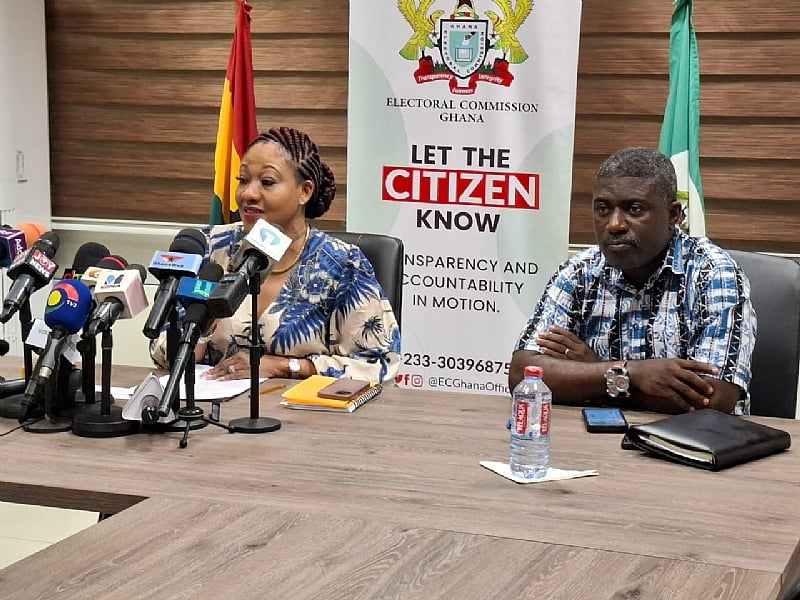
The Electoral Commission (EC) of Ghana recently addressed concerns regarding the printing of additional ballot papers in the Volta and Bono regions, clarifying that this was a standard procedure meant to enhance accountability and manage potential shortfalls in the electoral process. During an Inter-party Advisory Committee (IPAC) meeting in Accra, EC officials explained that upon the arrival of ballot papers in various districts, agents from political parties worked alongside district officers to verify the accuracy and completeness of the materials prior to Election Day. Dr. Bossman Asare, the Deputy EC Chair in Charge of Corporate Services, emphasized that the decision to print additional ballots arose from discrepancies identified during a thorough review and was part of a broader accountability mechanism to ensure the integrity of the electoral process.
Dr. Asare elaborated that shortfalls were not only detected in the Volta and Bono regions but had also been observed in areas such as Greater Accra, Western North, and Bono East. The Commission took proactive steps to inform political parties about these shortfalls and encouraged them to send representatives to observe the printing of the additional ballots. This transparency was aimed at ensuring that all procedures surrounding the ballot papers were open to scrutiny, thereby reinforcing the trust of the electorate in the election’s integrity. Such measures align with the EC’s commitment to upholding accountability during elections, and they assured stakeholders of their rigorous practices to guarantee that all ballots are accurate and accountable on Election Day.
In addition to addressing ballot paper concerns, the EC informed participants at the IPAC meeting about the appointment of Collation Officers tasked with electronically compiling election results at both the Constituency and Regional Collation Centres. These officials will operate independently yet under the oversight of Presiding Officers, with the intent of enhancing the reliability and efficiency of the results collation process. Dr. Asare stated that the Collation Officers would be selected based on their qualifications, predominantly from accountancy backgrounds, highlighting the Commission’s goal to bolster the integrity of the election result collation process.
Despite the Commission’s assurances, representatives from various political parties voiced apprehensions regarding this new addition of Collation Officers. They raised concerns that the presence of these officers might weaken the authority of Presiding Officers, thus leading to potential overlaps in responsibilities. Dr. Edward Omane Boamah, the National Democratic Congress’s Director of Elections, cautioned the EC about the implications of appointing Collation Officers, suggesting it indicated a lack of confidence in the existing Returning Officers. He further argued that the inclusion of these officers was a departure from established electoral law, as C.I. 127 only designated collating responsibilities to specific regions.
Political stakeholders also highlighted the need for improvement in the printing processes to mitigate ballot shortages and prevent wasteful expenditures. Mr. Evans Nimako, Director of Elections for the New Patriotic Party, specifically requested that the EC provide the finalized list of agents representing their party ahead of the scheduled Special Voting, set for December 2, 2024. In response, Deputy EC Chair Samuel Tettey assured party representatives that an updated list would be sent promptly, reinforcing the Commission’s commitment to maintain open communication with all political entities involved in the electoral process.
Looking ahead, the elections on December 7, 2024, will see eligible Ghanaian voters selecting a President and 276 Members of Parliament. Prior to this, a Special Voting Exercise is slated for December 2, 2024, aimed at facilitating voting for electoral officers, security personnel, and journalists. This exercise is vital for ensuring that those engaged in the electoral process have the opportunity to cast their votes, thereby facilitating a comprehensive and inclusive electoral experience. The EC’s efforts to address concerns regarding ballot integrity, transparency in processes, and communication with political parties illustrate their ongoing commitment to conducting credible elections and strengthening democracy in Ghana.