





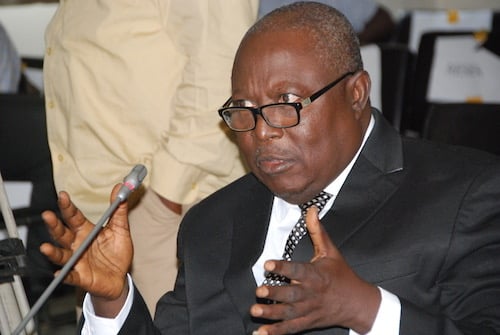
Former Special Prosecutor Martin Amidu has made serious allegations against President Nana Addo Dankwa Akufo-Addo, claiming that he has deliberately appointed members of the Electoral Commission (EC) to create what he describes as an “election-winning long game.” According to Amidu, these actions are intended to ensure electoral success for his Vice President, Dr. Mahamudu Bawumia, ahead of the 2024 elections. His criticisms come in the wake of concerns voiced by civil society organizations (CSOs) regarding troubling recent decisions made by the EC, such as limiting media access to collation centers and rejecting certain CSOs from observing the electoral process. Amidu argues that these moves threaten the transparency and integrity of the elections scheduled for December 7.
In his commentary, Amidu characterized the current composition of the EC as a product of strategic appointments by President Akufo-Addo, facilitated through an unconsulted selection process that undermines the integrity essential to free and fair elections. He singled out the exclusion of organizations like the Centre for Conflict Resolution-Ghana (CENCOR) as discriminatory, suggesting it reflects a broader intention to silence critical voices. Amidu urged civil society and citizens to remain vigilant to protect the upcoming elections, reinforcing the need for the public’s will to be respected in the electoral process.
Reflecting on his past warnings, Amidu recounted how the political environment has evolved in Ghana, stressing the negative consequences of ignoring government power abuses. He lamented that citizens had empowered the current government by failing to oppose unconstitutional actions. He recalled his sentiments from previous years that cautioned against acquiescing to executive overreach, suggesting that such complacency has led to the current precarious electoral landscape. He argued that if citizens do not proactively protect their democratic rights, the potential for electoral malpractice will increase, particularly as they approach the December elections.
Amidu noted recent developments, such as calls from civil society demanding assurances that internet access would not be restricted on Election Day, indicating growing anxieties about potential electoral manipulation. The EC’s decision to limit the number of media organizations allowed into collation centers was particularly alarming for observers, raising concerns about the impartiality of the electoral process. He emphasized that these recent actions are part of a broader scheme to facilitate electoral rigging, asserting that Stakeholder consultation and public participation in appointing the EC’s members were glaringly absent, which he sees as a betrayal of constitutional principles.
In his discussions, Amidu also elaborated on the implications of the 2020 elections, recalling conflicts and disputes that arose under the leadership of the EC chairperson, Jean Mensa. He highlighted the ongoing questions about the validity of past elections and the importance of accountability in maintaining public trust in the electoral system. Referring to his keynote address at a university event, Amidu reiterated that civic engagement and citizen action are vital to ensure proper adherence to the constitutional framework and maintain the integrity of the electoral process as they approach the crucial elections.
Throughout his commentary, Amidu called upon Ghanaians to unite and advocate for their democratic rights. He expressed optimism that citizens could defend the 1992 Constitution, emphasizing that the resilience of Ghana’s democracy relies on free, fair, and transparent elections. He urged citizens to oppose any actions by the government that could undermine the integrity of the electoral process, asserting that local CSOs and media must be allowed to observe the elections freely to prevent manipulation. He concluded with a rallying cry for vigilance, encouraging Ghanaians to ensure that their collective will prevails in shaping the future of their governance, as the stability of the democratic framework hinges on the integrity of the upcoming elections.








