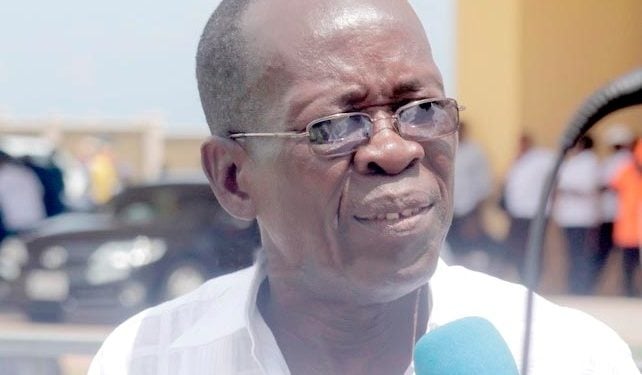
The Ghana Federation of Labour (GFL) has called upon workers to unify and take significant action by voting against the ruling New Patriotic Party (NPP) government in the upcoming elections on December 7. GFL Secretary General Mr. Abraham Koomson articulated this message during a media gathering in Tema, where he highlighted the detrimental impact the current administration has had on local businesses and the livelihoods of workers. He emphasized that the policies implemented by the NPP have led to economic hardships, job losses, and instability across various sectors, making this election critical for the future of national development. Koomson urged workers to view this electoral moment as crucial for enacting real change and resetting Ghana’s economy towards more worker-friendly policies.
In his remarks, Mr. Koomson recounted the alleged failures of the NPP over the past eight years, insisting on the necessity of voting the party out of power. He pointed out that the economic mismanagement characterized by the government has created dire conditions for many workers, particularly noting the significant number of job losses in the financial sector due to the closure of several banks. According to him, these closures have exacerbated the existing struggles in the workforce, calling for workers to unite and leverage their collective power at the polls. He expressed a strong belief that by standing together, Ghanaian workers could effectively contribute to a political shift that favors their needs and opportunities.
The call to action highlighted by Mr. Koomson reflects a broader sentiment within Ghanaian labor circles that the current government has not adequately represented or addressed workers’ rights and experiences. He made a clarion call for a government that genuinely understands the struggles of its workforce, emphasizing the need for policies that prioritize workers and aim to create an inclusive and equitable economic environment. Koomson’s assertion reflects a growing discontent among workers against the governance style of the NPP, which they feel has continuously marginalized their needs. He believed this election provides workers an essential opportunity to demand accountability and change.
In addition to the political focus, Mr. Koomson also addressed critical issues surrounding the organizational frameworks of labor unions in Ghana. He pointed out the inadequate structures that prevent effective functioning within labor organizations, attributing these challenges to changes in labor laws that have led to confusion regarding the representation of workers. He traced these issues back to the amendment of the Industrial Relations Act of 1965 and the establishment of the Labour Act 651 in 2003, which he claims did not provide clear definitions or roles for organized labor after the amendments. This legal context has put organized labor at a disadvantage, complicating their ability to effectively advocate for workers’ rights.
Moreover, Mr. Koomson noted ongoing legal disputes wherein the GFL is challenging the mandate of the Trades Union Congress (TUC) as the primary representative of Ghanaian workers. He indicated that the current legal framework lacks clarity, which has muddled the representation of various worker groups. In response, Koomson stated that the GFL is in the process of consulting with various union leaders to establish frameworks that would enhance the organizational capacity and effectiveness of labor unions across the country. He emphasized the importance of creating well-defined structures that can operate consistently from district through national levels.
In conclusion, Mr. Koomson’s call for unity among workers is not only about voting out the NPP government but also about redefining labor representation in Ghana. By advocating for stronger organizational structures and mechanisms within labor unions, he seeks to empower workers for effective advocacy and to promote worker-friendly policies in governance. This two-pronged approach—political action through voting and structural reform within labor organizations—aims to ensure that Ghanaian workers have a voice and a fighting chance against the challenges they face. Koomson’s confidence that collective action can lead to change paints a hopeful vision for a better economic future where the rights and needs of workers are upheld and prioritized.