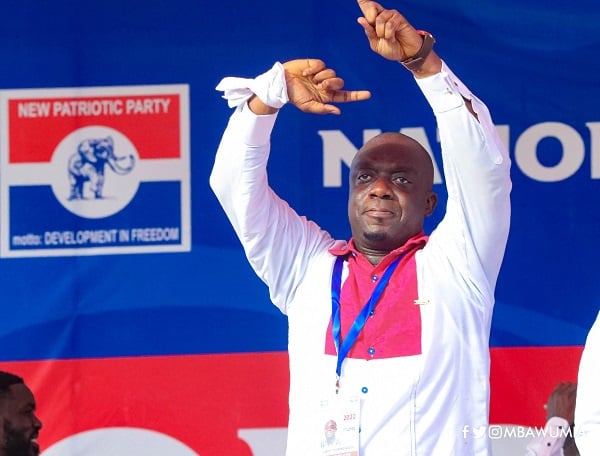
During a recent campaign tour in Challu within the Sissala East Municipality, Mr. Justin Frimpong Kodua, the General Secretary of the New Patriotic Party (NPP), made an impassioned appeal to the Muslim community to rally behind Dr. Mahamudu Bawumia in the upcoming elections. He emphasized the historical significance of the moment, stating that since Ghana’s independence in 1957, the presidency has been held exclusively by Christians. Mr. Kodua asserted that it is time to break this trend by electing a Muslim president, reflecting a unifying vision for the country where all religious groups coalesce in the spirit of national progress. He cited the importance of collective identity, suggesting that if God encompasses all, then it is also fitting for a Muslim to assume the highest office in the land.
In his address, Mr. Kodua underscored the notion that Ghana’s governance history has two leading candidates for this election, both from the Northern regions. He, being an Ashanti and a Christian himself, noted that the election results could affirm a significant historical milestone—namely, that Christians are advocating for a Muslim president. He urged the Muslim electorate to take a proactive stance in supporting Dr. Bawumia, warning that failing to do so could mean waiting another 60 years for such an opportunity to arise again. Here, Mr. Kodua not only addressed political strategy but also called for unity across religious lines, arguing that Muslims should support Dr. Bawumia as a reflection of brotherhood and shared aspirations.
Drawing parallels with Nigeria, where leadership is alternately shared between Muslims and Christians, Mr. Kodua strongly suggested that Ghana could benefit from a similar model. His call was not just a plea for votes; it was a broader commentary on political diversity and inclusivity, advocating for a system where leadership reflects the varied demographics of the nation. In his mind, the electing of a Muslim president could bolster national unity as well as foster a political environment more representative of Ghana’s diverse populace. He expressed a desire for the elections to occur immediately to demonstrate the support for Dr. Bawumia and his running mate, Chinnia Issahaku, from the National Democratic Congress (NDC).
Moreover, Mr. Kodua highlighted the implications of voting for Dr. Bawumia beyond mere political affiliation. He framed the election as a critical juncture that could secure a better future for the younger generation, encouraging not just party loyalists but all constituents, including potentially NDC supporters within the Muslim community, to consider their vote as a step toward progress. His message stressed that backing Dr. Bawumia would entitle the Muslim community to representation in the highest offices of the land, showcasing a new era for leadership and diplomacy in Ghana.
As part of a broader campaign effort, Mr. Amidu Chinnia Issahaku, the Member of Parliament for Sissala East, echoed Mr. Kodua’s sentiments, appealing to constituents to vote decisively not only for Dr. Bawumia but also for himself in order to continue implementing development initiatives within the constituency. This duality in campaign focus reveals a strategy that interlinks personal political aspirations with national progress, suggesting that local governance and national leadership are intricately connected. Their combined efforts aimed to consolidate support from the electorate, leveraging both personal credibility and the promise of change.
In conclusion, the political discourse led by Mr. Justin Frimpong Kodua and supported by Mr. Amidu Chinnia Issahaku is emblematic of a pivotal moment in Ghana’s electoral history. Their appeal to the Muslim community stands as both a recognition of the historical constraints on leadership diversity and a call for unity beyond religious boundaries. They articulate a vision of a future where Ghanaian leadership mirrors the country’s rich mosaic of cultures and beliefs, potentially setting a precedent for inclusive governance that values all citizens equally. The upcoming elections thus represent a significant opportunity for Ghana to redefine its political narrative and foster an environment where leadership is not limited by the predominant faith of past presidents.