





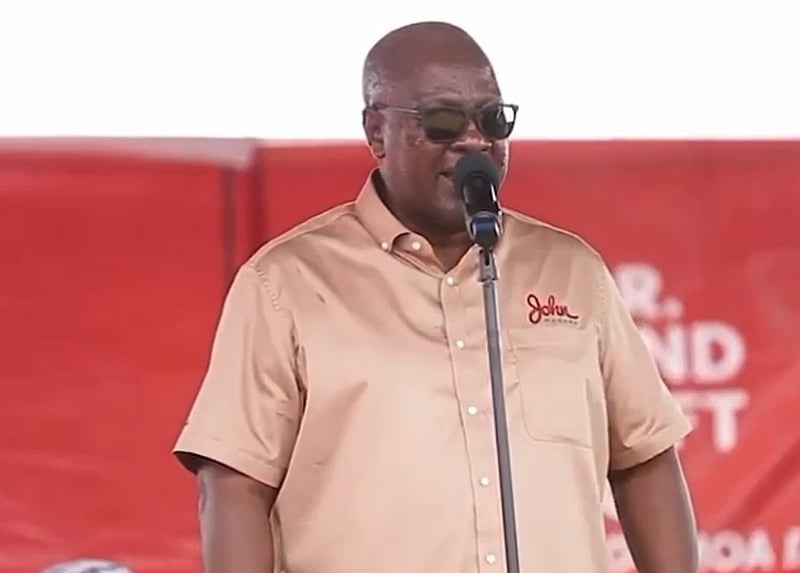
In the lead-up to the 2024 general elections, John Dramani Mahama, the Presidential Candidate of the National Democratic Congress (NDC), has openly criticized the current administration led by President Nana Akufo-Addo and Vice President Mahamudu Bawumia. In a striking Facebook post dated November 25, Mahama expressed his discontent with the government’s performance, arguing that they have prioritized catchy slogans over tangible actions that address the pressing needs of the Ghanaian populace. His remarks indicate a growing dissatisfaction among citizens regarding governance, particularly as critical sectors, such as agriculture, have reportedly been neglected.
Specifically, Mahama highlighted the plight of farmers as a central concern, emphasizing that the current government has failed to implement policies that bolster agricultural productivity. He firmly stated that if elected, his administration would take decisive steps to support farmers, thereby enhancing their livelihood and productivity. His assurances include an ambitious plan to improve the production capacities of key commercial crops, notably shea, oil palm, cashew, rubber, coconut, citrus, coffee, and mango. This pledge indicates a strategic focus on agriculture as a means to revitalize the economy and provide sustainable livelihoods for many Ghanaians reliant on farming for their income.
Furthermore, Mahama’s critique extends beyond agriculture; he accused the Akufo-Addo administration of presiding over a period marked by economic decline and increased hardship for ordinary Ghanaians. He argued that the government’s policies have led to skyrocketing food prices and stunted development in local communities. Mahama’s assessment reflects a broader sentiment among Ghanaians who are increasingly concerned about the country’s economic trajectory and the effectiveness of the current leadership in addressing these challenges.
In highlighting the factors contributing to the nation’s economic difficulties, Mahama pointedly accused the Akufo-Addo/Bawumia government of a “criminal supervision of the destruction of our economy.” This rhetoric underscores a deepening frustration with the ruling party’s approach to governance and economic management. His comments resonate with citizens who have been grappling with the implications of rising inflation and the struggles faced by many families during these turbulent economic times.
By contrasting his vision with that of the current administration, Mahama is positioning the NDC as a party dedicated to driving real change and addressing the fundamental issues plaguing Ghanaians. His commitment to prioritizing farmers and supporting agricultural production forms a key part of his campaign strategy, aiming to resonate with the electorate who rely on agriculture as a primary source of income and sustenance. This approach may not only appeal to rural voters but also address the larger concerns of economic recovery that many urban dwellers share.
In summary, as Mahama gears up for the upcoming elections, his critique of the current government reflects a populist strategy aimed at re-engaging with disillusioned citizens. By calling attention to the struggles of farmers and promising tangible policies aimed at economic improvement, he is attempting to capture the public’s desire for effective governance. As the elections approach, the efficacy of his message and the NDC’s ability to resonate with voters remain pivotal challenges that could shape the political landscape of Ghana in the near future.








