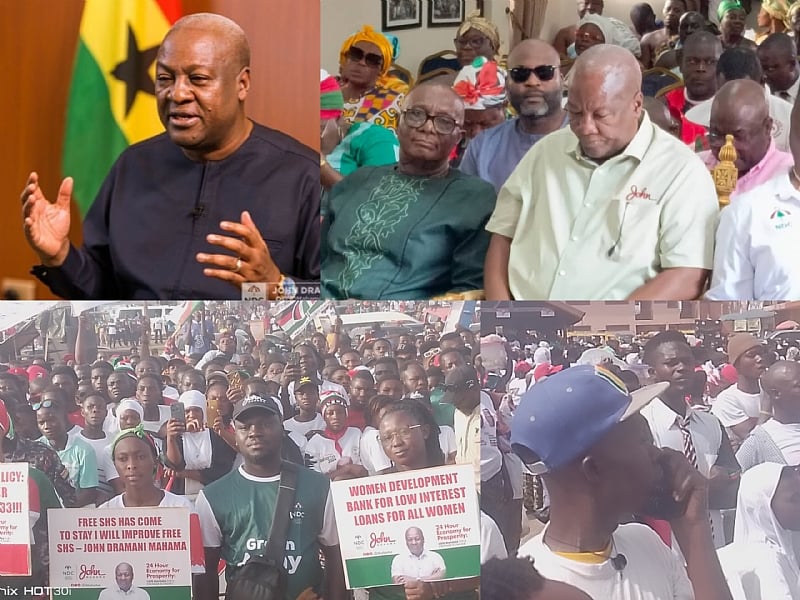
Former President John Dramani Mahama has embarked on a notable six-day tour of the Ashanti Region, challenging the long-standing dominance of the New Patriotic Party (NPP) in this politically significant area. His tour commenced in Ejura Sekyere-Dumase, where he was greeted by a large and fervent crowd, echoing chants of “change.” This enthusiastic reception set the tone for his campaign, indicating a potential shift in the political dynamics of the region traditionally known for its loyalty to the NPP. As he continued his journey through various towns such as Mampong, Afigya Kwabre North, and Afigya Kwabre South, the momentum only grew stronger, highlighting Mahama’s increasing support among the electorate.
One of the most striking moments of Mahama’s first day was the attendance in Wiamoase, located in the Sekyere East Constituency, where the crowd exceeded expectations to an unprecedented level. The sheer size of the gathering made movement difficult, showcasing an unusual level of enthusiasm for Mahama in a region that has historically favored the NPP. This remarkable turnout marks a significant change, as past campaigns have not seen such overwhelming support for the National Democratic Congress (NDC) leader in a stronghold of the opposition party.
Throughout his campaign events, Mahama addressed the passionate crowds, emphasizing the pressing need for change in the upcoming elections. He articulated the economic difficulties faced by Ghanaians under the current administration led by President Nana Addo Dankwa Akufo-Addo and Vice President Mahamudu Bawumia. Mahama warned that neglecting the opportunity to vote for change could have dire consequences for the nation’s future. By focusing his message on the struggles of everyday Ghanaians, Mahama successfully resonated with a populace seeking solutions to their hardships.
In addressing the audience, Mahama brought to light critical issues affecting the nation, including economic hardship and unemployment, which he attributed to poor governance. His campaign promises included the introduction of a “24-hour economy” aimed at generating jobs and stimulating economic growth. This policy is seen as part of a broader strategy to uplift the standard of living for Ghanaians, demonstrating the NDC’s commitment to proactive governance and accountability. By emphasizing infrastructure development as a core component of his plan, Mahama sought to instill confidence in voters regarding the NDC’s vision for the future.
The significant turnout and fervent support for Mahama on the first day of his Ashanti Region tour has caught many observers by surprise, igniting discussions on the potential for an electoral shift within this traditionally NPP-strong area. The overwhelming crowds illustrate a growing desire for change among constituents who may be dissatisfied with their current representation. Mahama’s approach has reinvigorated the political landscape, encouraging voters to reconsider their loyalty and align with a party that promises to address their needs.
Overall, Mahama’s tour is not merely a campaign but a reflection of a restless electorate yearning for change amidst economic challenges. As the former president actively engages with the people, his message has found resonance in a community long dominated by the NPP. The next few days of his tour will be crucial in maintaining this momentum and translating enthusiastic support into electoral success for the NDC. The outcome of the upcoming elections could redefine the political affiliations in the Ashanti Region and reshape the future of Ghanaian governance.