









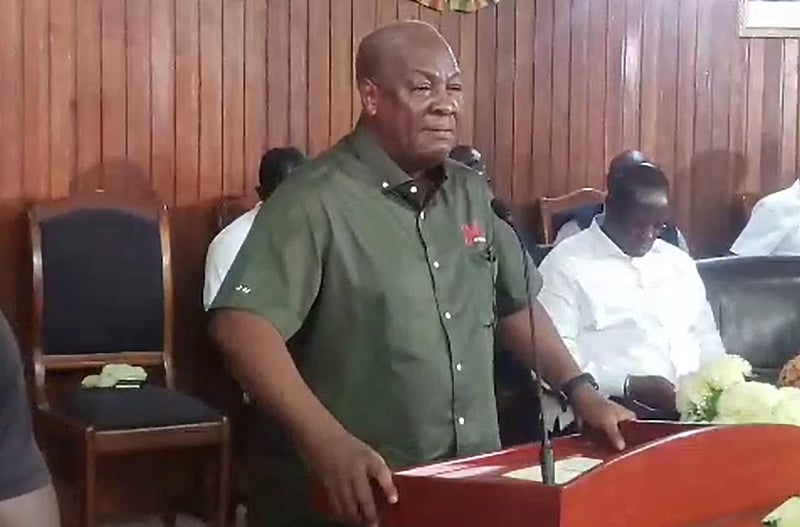
During a recent visit to the Western Region of Ghana, John Dramani Mahama, the flagbearer of the National Democratic Congress (NDC), made significant claims about the country’s declining petroleum production, which he attributed to government corruption. He pointed out that Ghana has experienced a 35% drop in oil output, leading investors like ExxonMobil to exit the country in favor of more favorable conditions in neighboring Ivory Coast. Mahama emphasized that certain government officials have been extorting large sums from potential investors, which he argues has created an environment of distrust and instability within the petroleum sector. This systemic corruption, he contended, has undermined the gains achieved during his own presidency, when efforts were made to attract and retain investment in Ghana’s oil industry.
In his discussions with the Western Regional House of Chiefs in Sekondi, Mahama recounted the proactive measures taken during his tenure to foster growth in the petroleum sector. He expressed a strong desire to return to those strategies, arguing for a new approach that would help restore investor confidence and revitalize Ghana’s oil industry. Acknowledging the challenges ahead, he underscored the necessity for a concerted effort by his future administration to overcome the obstacles posed by corruption and a lack of transparency. Mahama made it clear that there will be no easy solutions, but he remains optimistic that the NDC has the talent and determination to tackle these issues comprehensively.
Mahama’s visit coincided with broader concerns voiced by local leaders, such as the Paramount Chief of Lower Axim, Awulae Attribrukusu, and the Paramount Queen Mother of Shama, Nana Akosua Gyamfiaba, regarding critical issues like healthcare and the negative impact of illegal mining, or “galamsey,” on communities. They urged Mahama to take decisive action by instituting a ban on the production and importation of Changfans, machines used in illegal mining operations, should he regain the presidency. This highlights the growing frustration among the populace regarding the degradation of local resources and the pressing need for sustainable governance and local development initiatives.
In addition to addressing investment challenges in the petroleum sector and responding to social concerns, Mahama engaged with various stakeholders during his tour, including discussions with the Western Regional Clergy. These interactions underline his strategy of building a coalition of support across different segments of society as he approaches the upcoming elections. Mahama’s plan includes visiting all 17 constituencies in the Western Region, indicating a methodical and grassroots approach to reconnecting with constituents who may feel disillusioned by the current government’s performance.
The former president’s comments regarding the urgency of adapting to global energy shifts, such as climate change and the rise of electric vehicles, further illustrate his vision for the future of Ghana’s petroleum industry. He recognizes that there is a critical window in which Ghana must strategically position itself within the global energy market to maximize benefits from its oil resources. Mahama emphasized the need for prompt action, warning that failure to do so could result in a diminished interest in oil investments as the world transitions towards cleaner energy alternatives.
Overall, John Dramani Mahama’s remarks during his tour of the Western Region reflect a commitment to addressing corruption and fostering economic recovery in Ghana’s petroleum sector. His approach entails not only reviving investor confidence but also attending to the broader welfare of citizens, particularly in healthcare and environmental management. As he embarks on his campaign, Mahama aims to present a coherent strategy that resonates with the needs and aspirations of Ghanaians, asserting that the NDC is equipped to guide the country back onto a path of prosperity and integrity.









