









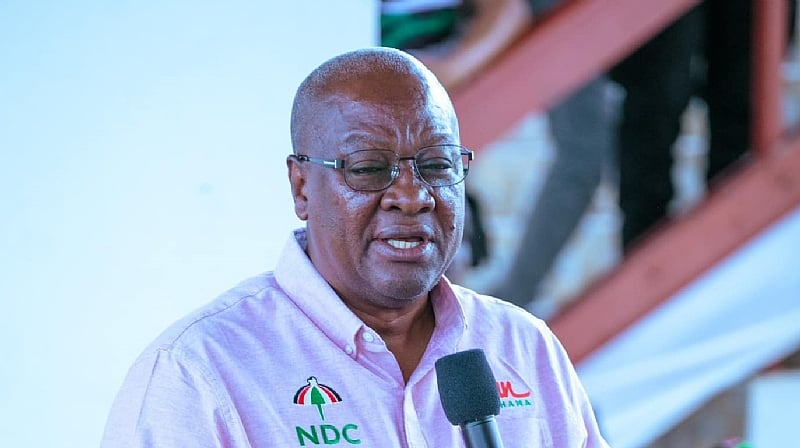
During a recent campaign tour in the Upper West Region, former President John Dramani Mahama, the flagbearer of the National Democratic Congress (NDC), outlined his government’s plans to enhance healthcare education by potentially establishing a medical school in the region. This initiative marks a significant step in addressing the shortage of medical professionals in Ghana, emphasizing Mahama’s commitment to improving healthcare accessibility for the populace. Noting the presence of an existing medical school in Tamale, Mahama expressed confidence that the Upper West Region presented a unique opportunity for further development in medical education, which he deems necessary for meeting local healthcare demands.
While addressing the Upper West Region House of Chiefs, Mahama elaborated on his broader vision for the region and the country at large. He indicated that alongside the proposed establishment of a medical school, there are plans to upgrade the Upper West Regional Hospital into a Teaching Hospital. This upgrade would allow medical students to gain practical experience and clinical exposure within the region, fostering a more robust healthcare workforce. Mahama’s emphasis on medical education highlights the NDC’s priority of bolstering regional capacities to train healthcare professionals to ensure efficient service delivery to citizens.
Mahama also took the opportunity to present various policy proposals that will feature prominently in the NDC’s 2024 election manifesto. He sought the support of traditional leaders to help manifest these development initiatives which, aside from the medical school and hospital upgrades, include the establishment of a Women’s Development Bank aimed at empowering women economically. Other proposals encompass comprehensive educational reforms, including the absorption of school fees for first-year tertiary students, and urgent infrastructure projects such as the rehabilitation of the Wa-Bole-Techiman Road. These initiatives reflect the NDC’s commitment to holistic regional and national development strategies that respond to the immediate needs of the population.
Beyond healthcare and education, Mahama also addressed the pressing issues of public sector integrity and financial stewardship. He assured the House of his intention to introduce a stringent code of conduct for public sector workers, aiming to prevent government appointees from misusing state resources while in office. His statements included a critique of President Akufo-Addo’s governance, specifically pointing out excessive borrowing and misappropriation of funds, leading to high inflation and long-term economic burdens for the country. Mahama acknowledged the challenging economic landscape facing any incoming government, suggesting a thorough and cautious approach to governance would be necessary.
Naa Puowelle Karbo III, the Paramount Chief of the Lawra Traditional Area, acknowledged the importance of a peaceful electoral process as the region prepares for the December 7, 2024 elections. He emphasized collective responsibility among chiefs, religious institutions, youth leaders, and political candidates to ensure a stable election atmosphere. His call for unity and peace reflects a desire to maintain order and cooperation during the critical electoral season, underscoring the pivotal role of traditional leadership in shaping civic discourse and election-related activities.
Focused on local economic revitalization, Mahama also underscored initiatives aimed at promoting agricultural development, notably his pledge to revitalize the Tumu Cotton Ginnery during his tour of the Sisala West Constituency. This commitment reflects the NDC’s broader strategy to enhance local economies, create jobs, and support farmers in the region. As Mahama seeks to rally support for his vision for the Upper West Region and Ghana, the emphasis on enhancing healthcare education, infrastructure, and agricultural initiatives indicates a multifaceted approach to governance that responses to the immediate and long-term needs of the populace. This comprehensive plan is crucial as Ghana navigates its challenges in pursuit of sustainable development.









