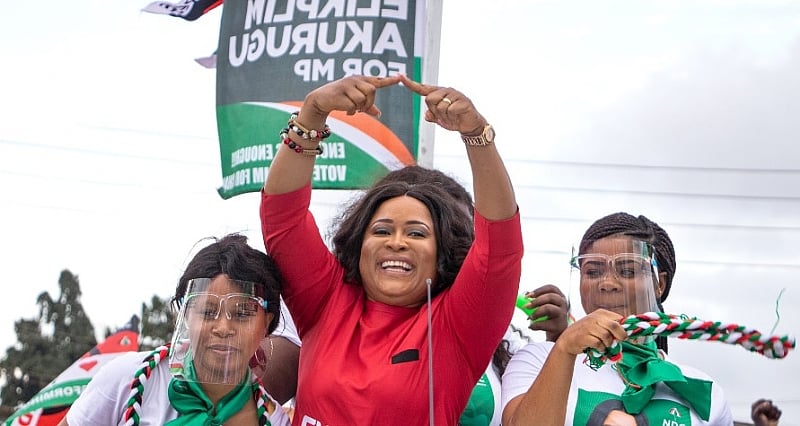
Faustina Elipklim Akurugu, the parliamentary candidate for the opposition National Democratic Congress (NDC), is optimistic about her prospects of winning the Dome Kwabenya parliamentary seat in the forthcoming elections. During a recent media event at the Atomic Police Station’s special voting center, she expressed her determination to liberate the constituency from what she termed the “shackles of the NPP.” Drawing a parallel between her political mission and the biblical story of Moses leading the Israelites out of the wilderness, Akurugu asserted her confidence, stating, “I’m not a prophetess, but looking at the work we have done, we are going to win the seat.” She emphasized her commitment to listening to constituents and aligning her campaign with their needs.
Akurugu’s assertion of gaining the seat comes from her extensive engagement efforts throughout the constituency. She has made it a priority to interact with diverse groups, indicating that this close contact has bolstered her confidence in her electoral chances. “I have interacted with all the groups, and that is why I’m confident that I will win,” she remarked, signaling her multifaceted approach to outreach. By emphasizing her grassroots strategy, she aims to connect with the constituents on a personal level and demonstrate her understanding of their challenges. Her passion and determination radiate through her words, framing her candidacy as a pivotal moment in the political landscape of Dome Kwabenya.
The NDC’s ambition to wrest control of the Dome Kwabenya seat reflects a broader strategy to expand their influence, especially in areas traditionally dominated by the ruling New Patriotic Party (NPP). This race is significant not only for Akurugu personally but for the party, which sees a potential for historic change in a constituency that has remained a stronghold of the NPP for an extended period. Akurugu’s leadership might represent a transformative moment in local governance, as she pledges to bring a new approach that resonates with the electorate’s demands. This attempt to flip the constituency is crucial for the NDC’s overarching strategy in the elections and highlights their commitment to representing the voices of the populace.
In her speeches and interactions, Akurugu has underscored the themes of change and empowerment, resonating with voters who may feel disenchanted with the current administration. By framing her campaign as a continuation of historical narratives of liberation and change, she taps into the collective consciousness of the electorate, positioning herself as a modern-day leader aspiring for their freedom from economic and social challenges. Her resolve to align her actions with the desires of her constituents demonstrates a significant shift from conventional political narratives, wherein candidates often prioritize party loyalty over community engagement.
Additionally, the local dynamics within Dome Kwabenya may influence the outcome of the elections. Factors such as socio-economic conditions, public sentiment towards the incumbent party, and the electorate’s perception of Akurugu contribute to the evolving political atmosphere. Her approach to engaging directly with various demographic groups within the constituency, including youth and community leaders, signifies her understanding of the multifaceted challenges faced by the residents. This strategic maneuvering aims to build a coalition of support that transcends traditional party lines, making her a compelling candidate in the eyes of the constituents.
As election day approaches, Akurugu’s campaign encapsulates the essence of grassroots political engagement, resonating deeply with an electorate yearning for change. Her biblical analogy serves as a strong narrative tool, enhancing her message of hope and deliverance. By effectively combining community outreach with a clear vision for the future, Akurugu positions herself as a genuine contender in a historically competitive constituency. The potential success of her campaign could not only reshape the political landscape in Dome Kwabenya but also have significant ramifications for the NDC’s future, signaling a new direction in Ghanaian politics that emphasizes the empowerment of local voices and experiences.