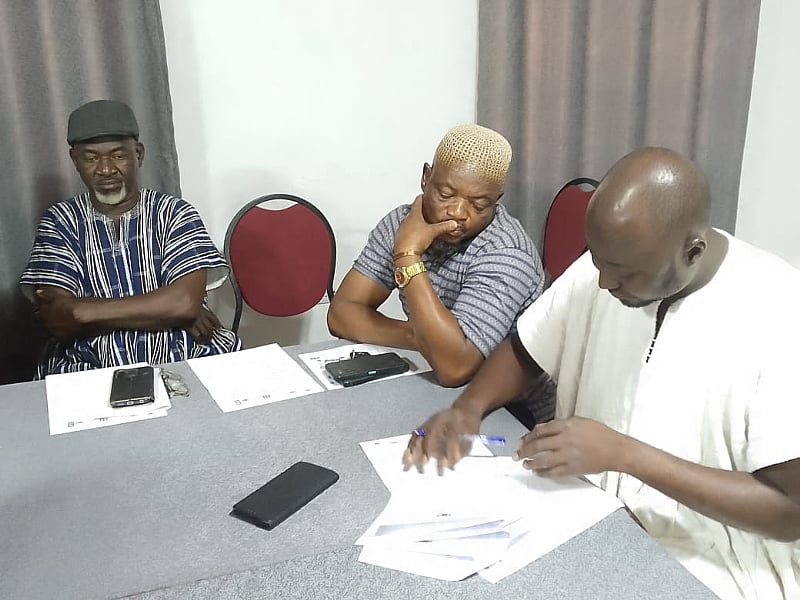
In a significant development for the political landscape of the Gushegu Constituency in Northern Region, representatives from the New Patriotic Party (NPP) and the National Democratic Congress (NDC) have formally signed a peace pact aimed at fostering a peaceful environment ahead of the 2024 general elections. This initiative underscores the parties’ commitment to promoting tranquility before, during, and after the elections, emphasizing the importance of prioritizing peaceful dialogue and tolerance over violent confrontations. The agreement symbolizes a collaborative effort between the two major political entities, signaling a mutual understanding of the need for a peaceful electoral process in a historically polarized political environment.
The peace agreement was facilitated by the Northern Regional Peace Council and represents a significant undertaking to address potential tensions in the constituency, which has been identified as a hotspot for electoral disputes. The pact emphasizes that any grievances related to the elections should be resolved through constitutional and legal channels. Both parties have expressed commitment to advocating against violence among their supporters, highlighting the critical role that peace plays in ensuring a democratic and fair electoral process. The signing ceremony, which took place in Gushegu, included key stakeholders such as the Electoral Commission, National Commission for Civic Education, and security agencies, showcasing a united front towards achieving a peaceful electoral atmosphere.
The participation of Father Thaddeus Kuusah, the Executive Secretary of the Northern Regional Peace Council, further underscores the pact’s significance. His statements reinforced the aim of encouraging political tolerance, building consensus among parties, and promoting decency in media discussions related to the elections. His call to action implores both parties to adhere to the terms of the peace pact, recognizing the vital role of such agreements in consolidating Ghana’s democratic values. This proactive approach is essential in nurturing an environment where political rivalry does not devolve into violence, which historically has marred electoral processes in various regions.
Moreover, the support and readiness of the security agencies, as stated by Superintendent of Police Thomas Tulasi, the Gushegu Municipal Police Commander, are pivotal in ensuring a peaceful electoral process. His appeal for cooperation between the political parties and the security forces highlights the necessity of a collaborative approach to manage potential instances of unrest. The involvement of law enforcement not only aims to provide security for voters but also serves as a deterrent for any planned disruptions. The alignment between the parties and the police is crucial in fortifying the safety of the democratic process, emphasizing that peace is a collective responsibility.
Additionally, the involvement of various stakeholders, including traditional leaders and civil society organizations, further bolsters the mission for peace. Their engagement indicates a broader societal understanding of the need for cooperation and consensus-building in maintaining stability during a contentious electoral period. The collective effort of various community members and organizations not only returns focus to the pressing electoral issues but also enhances community trust and cooperation among the constituents. This integrated approach is imperative in addressing the socio-political challenges that could arise during an election cycle.
In conclusion, the peace pact signed by the NPP and NDC in the Gushegu Constituency stands as a symbol of hope for sustainable peace and stability in the upcoming 2024 general elections. By prioritizing dialogue, constitutional channels for addressing grievances, and resistance to violent confrontations, both parties are taking commendable steps toward ensuring that the electoral process is conducted in a peaceful environment. As they move forward, adherence to the principles laid out in the agreement will be critical in reinforcing Ghana’s democratic framework, enabling voters to participate freely and safely in the electoral process without fear of violence or intimidation. This strategic partnership between political entities and the active involvement of security and civil society indicates a promising trajectory toward a more peaceful and democratic future in the region.