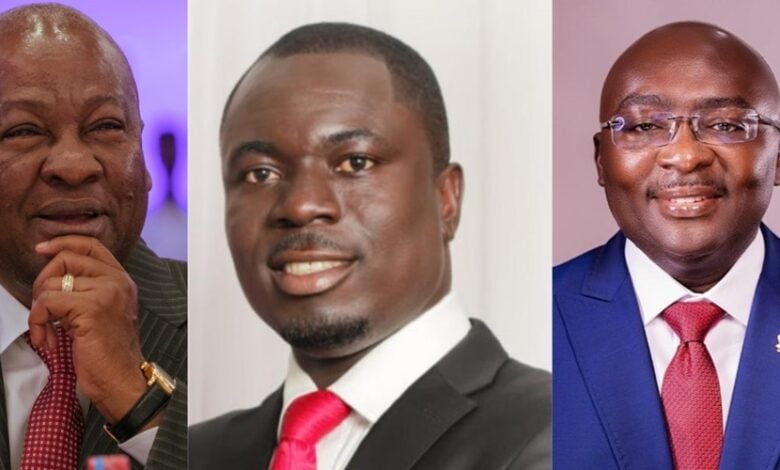
Professor Smart Sarpong, the Director of Research and Innovation at Kumasi Technical University, has provided crucial insights into the political landscape in Ghana as the country prepares for the upcoming general elections. According to Sarpong’s analysis, Dr. Mahamudu Bawumia, the flagbearer for the New Patriotic Party (NPP), is currently leading the polls in the Ashanti Region, securing 75.9% of the vote. Despite this strong showing, Sarpong pointed out that Bawumia’s numbers fall short of the party’s ambitious target of 85% in its traditional stronghold. This discrepancy raises questions about the NPP’s ability to mobilize its base effectively as election day approaches.
In contrast to Bawumia’s performance in the Ashanti Region, Sarpong highlighted that former President John Dramani Mahama, representing the National Democratic Congress (NDC), has polled 22.1% in the same area. This stark difference in regional support illustrates the polarized political landscape in Ghana. Additionally, when examining the Greater Accra Region, Mahama holds a considerable lead with 52.3% of the votes, while Bawumia trails at 40.5%. These regional dynamics underscore the importance of tailoring campaign strategies to address the unique concerns and preferences of voters in different areas.
The data presented by Professor Sarpong offers a more comprehensive view of the electoral landscape, particularly with respect to nationwide trends. A recent nationwide poll revealed that Dr. Bawumia leads with 49.1% of the overall voter preference, while Mahama follows closely at 45.8%. This close contest highlights the highly competitive nature of the upcoming elections, as both major parties vie for the support of the electorate. The poll also included independent candidates such as Nana Kwame Bediako, who garnered 2.2%, and Alan Kyerematen, who secured 1.2%. The inclusion of these candidates indicates that the political scene in Ghana is not solely dominated by the two main parties, pointing to an increasingly diversified electorate.
Furthermore, Professor Sarpong’s analysis suggests that the competitive nature of the elections could result in one of the leading political parties winning in the first round. In a press statement released on November 21, Sarpong emphasized the likelihood of the NPP securing a first-round victory based on their current standing and voter sentiment. This assertion resonates with the historical context of Ghanaian elections, where decisive early leads can translate into electoral success, thereby setting critical precedents for governance.
As the December elections draw nearer, the findings presented by Sarpong underscore the urgency for both the NPP and the NDC to refine their campaign strategies to address voter concerns effectively. Given the fluctuations in regional support, especially in key areas like Greater Accra and the Ashanti Region, party leaders must engage more deeply with constituents to solidify their bases and attract undecided voters. Similarly, independent candidates may play a crucial role in shaping the electoral outcome, as their presence signals a shift in voter attitudes and the potential for a more nuanced electoral decision-making process.
In conclusion, the data released by Professor Smart Sarpong paints a vivid picture of a highly competitive electoral environment in Ghana, characterized by shifting loyalties and diverse voter preferences. As both the NPP and the NDC strategize for the upcoming elections, it is essential to consider these polling trends and regional dynamics to ensure a successful campaign. The December elections could not only determine the leadership for the next term but also indicate broader trends influencing the political landscape in Ghana. With an electorate that is becoming increasingly engaged and discerning, the implications of this election extend far beyond the immediate contest, highlighting the evolving nature of Ghanaian democracy.