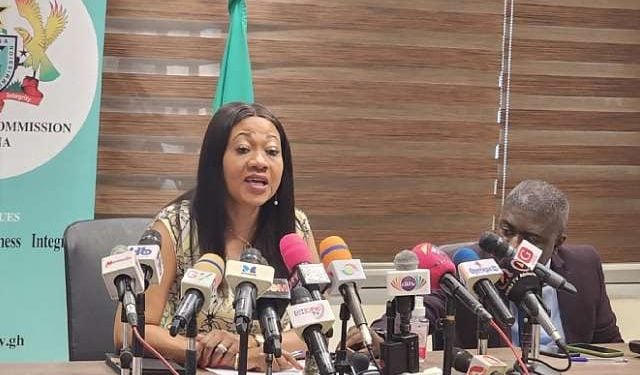
The Electoral Commission of Ghana (EC) has recently emphasized its core mandate as the body responsible for declaring the results of elections rather than determining or appointing the country’s president. During a live broadcast of the Inter-Party Advisory Committee (IPAC) meeting held on October 15, 2024, EC Chairperson Madam Jean Mensa presented a clear message that the Commission’s role is solely to reflect the choices made by voters. This declaration underscored the EC’s neutrality in the electoral process, aiming to dispel any misconceptions about its powers and functions.
Madam Mensa underscored this point by reminding stakeholders that the EC does not have the authority to influence electoral outcomes. The Commission’s responsibility is to ensure the integrity and transparency of the electoral process by accurately reporting the results of voters’ choices, which she reiterated is essential for maintaining the public’s trust. This commitment to neutrality is significant as Ghana prepares for the upcoming general elections in December 2024, with the EC maintaining that it will serve as a fair arbiter in the electoral process.
In her remarks, Madam Mensa called on political parties to avoid spreading misinformation regarding the EC’s role. She emphasized the importance of clarity around the Commission’s limited authority, urging political entities to refrain from creating narratives that might mislead the public about how the electoral process functions. By encouraging accurate communication, the EC aims to foster a better understanding of its position within the electoral framework and to counteract any allegations that it wields undue influence over election results.
Madam Mensa quoted Dr. Hassan Ayariga to emphasize the point that “the EC can never make anybody a president.” This statement reflects a critical understanding shared among the members of the IPAC: it’s ultimately the Ghanaian voter who exercises the power to elect their president. The Commission’s role is to publicly declare the outcome of that decision, thereby reinforcing the principle that the democratic process is driven by the electorate rather than by institutional authority.
The emphasis on voter choice and the EC’s declarative role serves as an essential reminder of the democratic principles at play in elections. By asserting that the Commission exists to serve the electorate, Madam Mensa reinforced the notion that the will of the people is paramount in democratic governance. This approach nurtures civic engagement, as the public is reminded that their participation and votes significantly influence the direction of the country’s leadership.
As the countdown to the December 2024 elections continues, the statements made by Madam Mensa are pivotal. They not only clarify the EC’s responsibilities but also aim to strengthen the relationship between the Commission and the political parties involved. By asking for a collective understanding of the electoral process, the EC is encouraging a set of fair practices and fostering an environment that prioritizes transparency and accountability in Ghana’s democratic evolution.