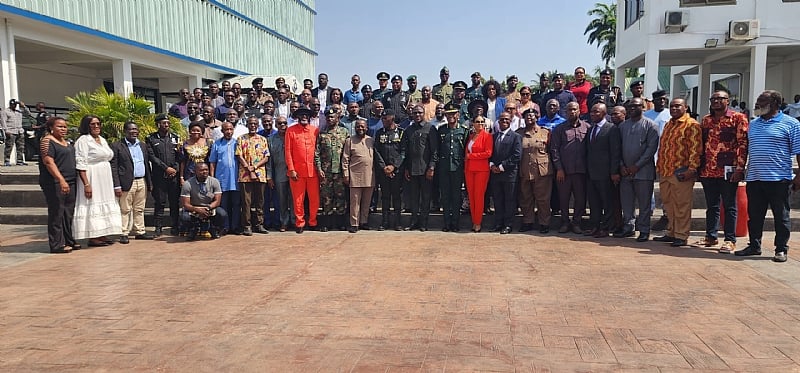
The National Election Security Task Force (NESTF) has taken proactive measures to assure the Ghana Union of Traders Association (GUTA) of a secure and violence-free electoral process ahead of the upcoming elections. This engagement aims to bolster trust among the business community and to highlight the preparedness of the task force in maintaining safety during the electoral period. Dr. George Akuffo Dampare, the Chairman of the Task Force, emphasized the importance of the business sector remaining confident in the nation’s security arrangements as they continue to make strategic business decisions. He reaffirmed the commitment of the task force to protect the integrity of Ghana’s democracy, stating that the efforts put in place are not only for the present but are intended to secure the future for upcoming generations.
During the discussions, Dr. Dampare noted the task force’s commitment to addressing security comprehensively, indicating a shift from traditional one-time event approaches to a more continuous and systematic outlook on election security. By engaging various stakeholders prior to the elections, the NESTF intends to improve upon past security measures and implement new strategies that will enhance overall electoral safety. This initiative reflects a recognition of the complexities involved in securing a democratic process and illustrates a commitment to sustained dialogue and collaboration among key sectors of Ghanaian society. Dr. Dampare specifically called on business leaders to stay positive and continue investing in their communities, reinforcing the notion that economic vitality is linked to national stability.
Dr. Humphrey Ayim Darke, President of the Association of Ghana Industries (AGI), acknowledged the historical progress Ghana has made in organizing peaceful elections over the years. He emphasized the significance of collective efforts from various stakeholders that have contributed to the nation’s reputation for electoral stability. Darke’s remarks underscored the importance of self-appreciation within the business community for their role in fortifying the democratic process. He applauded the NESTF for taking steps to ensure stakeholders are adequately informed about the measures established to maintain peace during the electoral period, which enhances collective responsibility in ensuring a successful electoral environment.
The engagement and interaction with leaders of the business community is part of NESTF’s broader strategy to foster collaboration and create a network of support for safeguarding Ghana’s democratic process. By reaching out to various segments of society, including traders and industry representatives, the Task Force aims to build a robust support system that enhances public trust and encourages civic participation in the electoral process. Stakeholder engagement is crucial not only for informing the business sector about security measures but also for soliciting their input and involvement in security frameworks.
Moreover, the dialogue represents a commitment to transparency and inclusivity in the electoral preparation process. The NESTF’s focus on continuous engagement with stakeholders illustrates an understanding that effective security operations require the commitment and involvement of all segments of society, particularly those that are economically active. The implications of businesses feeling secure and hopeful extend beyond mere economic projections; it promotes a sense of national unity and cooperation, which is vital as the nation approaches the elections.
In summary, the engagement between the National Election Security Task Force and the Ghana Union of Traders Association serves as an important step toward ensuring a peaceful electoral process in Ghana. With their assurance of a secure environment, alongside the encouragement for businesses to engage in their economic pursuits, both parties recognize the interconnectedness of security and economic stability. Moreover, the emphasis on ongoing security strategies and active stakeholder involvement heralds a new era of collaboration that may well be essential for safeguarding the democratic values that underpin Ghanaian society. By placing trust in these systems, the nation moves closer to successful elections that reflect the will and aspirations of its citizens.