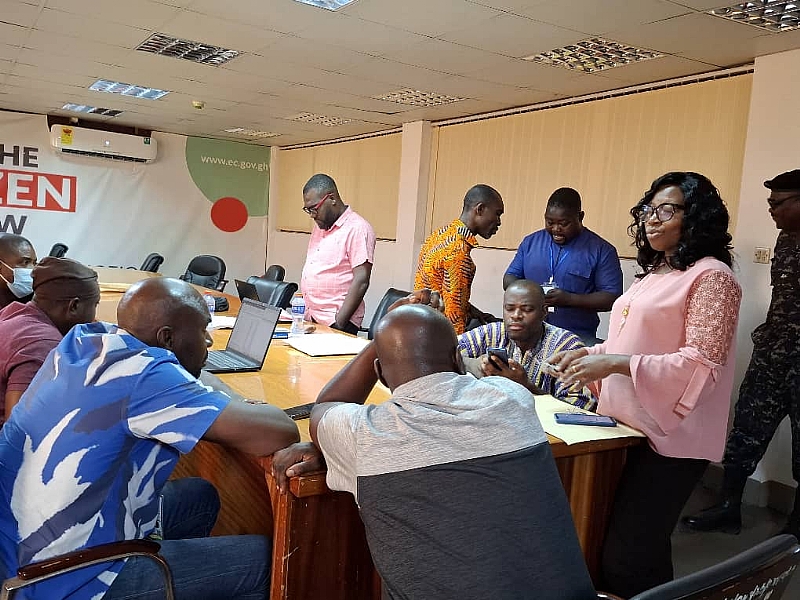
The Electoral Commission (EC) of Ghana embarked on a crucial undertaking on Saturday, December 14, 2024, resuming the collation of parliamentary results for nine constituencies whose initial declarations had been invalidated due to irregularities and security concerns. These constituencies, scattered across various regions of the country, included Nsawam Adoagyiri, Ahafo Ano South West, Ahafo Ano North, Obuasi East, Okaikwei Central, Ablekuma North, Tema Central, Techiman South, and Dome Kwabenya. The re-collation process, aimed at rectifying the earlier flawed declarations and ensuring the integrity of the electoral process, represented a significant step towards finalizing the parliamentary results of the December 7, 2024, general elections.
The initial attempts to re-collate the results had encountered significant obstacles. The EC had initially chosen the Tesano Police Depot in Accra as the venue for the exercise. However, the process was abruptly suspended due to serious security breaches, with supporters of various political parties disrupting the collation center and jeopardizing the safety of EC officials. This unfortunate incident underscored the heightened political tensions surrounding the elections and the vulnerability of the electoral process to interference and intimidation. The suspension necessitated a reassessment of security arrangements to guarantee the smooth and peaceful completion of the re-collation exercise.
Following the disruption at the Tesano Police Depot, the National Elections Security Taskforce, recognizing the imperative to finalize the outstanding results, approved the resumption of the collation process. A new venue, the EC’s Greater Accra Regional Office, was selected, and stringent security measures were implemented to prevent a recurrence of the earlier chaos. A heavy police presence was deployed at the venue on Saturday morning to deter any potential disturbances by political party supporters and to ensure the safety and security of EC officials conducting the re-collation.
The re-collation exercise commenced on Saturday amidst tight security, with the EC determined to conclude the process and declare the final results for the affected constituencies. Benjamin Bano-Bioh, the EC’s Director of Electoral Services, addressed the media, confirming the resumption of the process and expressing confidence that the re-collation of results from the nine outstanding constituencies would be completed by the end of the day. He stressed the importance of finalizing the results to ensure the integrity of the electoral process and to facilitate the smooth transition of power.
A notable aspect of the re-collation process was the initial absence of agents representing the National Democratic Congress (NDC), one of the major political parties contesting the elections. Mr. Bano-Bioh clarified that the EC had duly notified all political parties to send their representatives to observe the re-collation proceedings. Despite the NDC’s initial absence, the EC proceeded with the exercise, emphasizing that the re-collation would continue as scheduled, regardless of the presence or absence of party agents. This decision underscored the EC’s commitment to adhering to the established electoral timetable and ensuring the timely completion of the process.
The re-collation of the outstanding parliamentary results carried significant weight, not only for the constituencies involved but also for the broader political landscape of Ghana. The outcome of the re-collation would determine the final composition of the parliament, potentially influencing the balance of power and shaping the legislative agenda for the upcoming term. Moreover, the successful completion of the re-collation process, despite the earlier challenges, served as a testament to the resilience of Ghana’s democratic institutions and the commitment of the EC to upholding the integrity of the electoral process. The final results from these nine constituencies would play a crucial role in shaping the political future of the country and ensuring a smooth transition to the newly elected government.