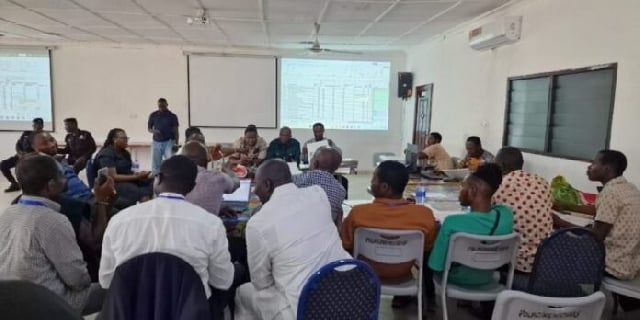
The Electoral Commission (EC) of Ghana has temporarily halted the re-collation of parliamentary results for several constituencies due to escalating disputes between political parties, primarily the New Patriotic Party (NPP) and the National Democratic Congress (NDC). The re-collation exercise, initiated to address discrepancies in results from constituencies including Suhum, Nsawam-Adoagyiri, Fanteakwa North, and Akwatia in the Eastern Region, was taking place at the National Police Training School in Tesano, Accra. However, the process was marred by escalating tensions and disagreements between the two major parties, forcing the EC to suspend proceedings to facilitate further consultations and ensure a transparent and credible outcome. The disagreements centered around alleged discrepancies in the pink sheets, the official documents used to record results at polling stations. The suspension underscores the challenges faced by the EC in navigating the complex political landscape and maintaining public trust in the electoral process.
The re-collation exercise was intended to address inconsistencies and ensure the accurate reflection of the votes cast in the affected constituencies. The EC, recognizing the sensitivity of the situation, implemented enhanced security measures at the Tesano venue with the support of the Ghana Police Service. These measures aimed to safeguard personnel involved in the process and create a conducive environment for the peaceful execution of the re-collation. However, despite these efforts, tensions between the NPP and NDC continued to escalate, leading to significant disruptions and ultimately, the suspension of the exercise. The core issue revolved around the interpretation and validity of the pink sheets, with each party accusing the other of attempting to manipulate the results in their favor.
The NDC raised concerns about alleged discrepancies in the pink sheets from specific constituencies, claiming irregularities that could potentially impact the final outcome. They demanded a thorough investigation and rectification of these perceived discrepancies before the re-collation could proceed. Conversely, the NPP expressed frustration with what they perceived as unnecessary delays and inefficiencies in the EC’s handling of the re-collation process. They argued that the delays were politically motivated and designed to undermine the integrity of the elections. These opposing viewpoints created a deadlock, making it impossible for the re-collation exercise to continue constructively.
The EC, acknowledging the gravity of the situation, released a statement explaining the rationale behind the suspension. They emphasized the importance of transparency and fairness in the electoral process and highlighted the need for further stakeholder engagement to resolve the outstanding issues and restore public confidence. The commission assured the public that the re-collation would resume once all parties reached a consensus and the identified concerns were addressed satisfactorily. The EC’s decision to suspend the process demonstrates their commitment to upholding the integrity of Ghana’s electoral system and ensuring that the final results accurately reflect the will of the people.
The contested results from these constituencies have significantly heightened political tensions in the country following the December 7 general elections. Both the NPP and the NDC are vying for control of these crucial parliamentary seats, with each accusing the other of attempting to manipulate the electoral process for their own political gain. The tight margins in these constituencies make the re-collation exercise particularly critical, as even minor discrepancies could significantly impact the distribution of parliamentary seats and the balance of power. The EC’s decision to suspend the re-collation is an attempt to de-escalate the rising political tensions and create an environment conducive for a peaceful resolution of the disputes.
The suspension of the re-collation exercise underscores the importance of dialogue and consensus-building in resolving electoral disputes. It highlights the critical role of the EC in mediating between competing political interests and ensuring the integrity and transparency of the electoral process. The ability of the EC to successfully navigate these challenges and deliver a credible outcome will be crucial for maintaining public trust in the democratic process and ensuring the peaceful transition of power. The resumption of the re-collation exercise will depend on the willingness of all stakeholders to engage in constructive dialogue and find common ground to resolve the outstanding issues. The outcome of this process will have significant implications for the political landscape of Ghana and the stability of the country’s democratic institutions.