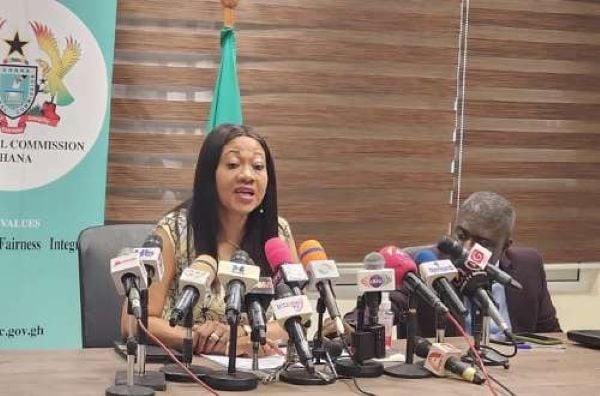
The Electoral Commission (EC) of Ghana has taken the decisive step of nullifying the parliamentary election results for three constituencies: Dome Kwabenya, Okaikwei Central, and Ablekuma North. This action follows a thorough review of the collation process, which revealed significant irregularities and procedural breaches that compromised the integrity of the elections in these areas. EC Chairperson Jean Mensa, in a press briefing, highlighted the gravity of the situation, emphasizing that the irregularities were so severe as to warrant the invalidation of the declared results. The EC’s commitment to upholding the principles of transparency and fairness in Ghana’s electoral processes drove this decision.
Central to the EC’s decision was the discovery of incomplete and improperly collated results in Okaikwei Central and Ablekuma North. Mrs. Mensa revealed that the declarations of winners in these constituencies were made without incorporating the data from a substantial number of polling stations. In Okaikwei Central, 31 polling stations were excluded from the final tally, while in Ablekuma North, a staggering 62 polling stations were omitted. This blatant disregard for established procedures raised serious concerns about the accuracy and legitimacy of the declared results, prompting the EC’s intervention to rectify the situation.
Adding to the gravity of the situation, Mrs. Mensa revealed that the flawed declarations were made under duress. EC officials faced threats and intimidation during the collation process, creating an environment that undermined the integrity and independence of the electoral procedures. The EC chairperson condemned these actions, emphasizing that such behavior is unacceptable and would not be tolerated. The commission’s commitment to conducting free and fair elections necessitates a secure and unbiased environment for its staff to carry out their duties without fear or coercion.
The EC’s investigation into electoral irregularities extended beyond these three constituencies. Initially, twelve constituencies were flagged for re-collation due to various concerns about the accuracy of their results. Of these, the re-collation process has been successfully completed in Suhum, Akwatia, and Fanteakwa North, with the revised results reflecting a more accurate representation of the votes cast. However, the situations in Okaikwei Central and Ablekuma North remain unresolved, primarily due to the substantial omissions and the coercive circumstances surrounding the initial declarations.
The nullification of the results in Dome Kwabenya, Okaikwei Central, and Ablekuma North underscores the EC’s commitment to ensuring the integrity of Ghana’s electoral processes. By taking this decisive action, the EC has demonstrated its resolve to uphold the principles of transparency, fairness, and accountability. The irregularities identified, particularly the exclusion of significant numbers of polling stations and the threats against EC staff, represent serious breaches of electoral protocol and cannot be overlooked. The EC’s ongoing investigation and its commitment to re-collation in affected areas demonstrate its dedication to ensuring that the final results accurately reflect the will of the people.
The next steps in addressing the unresolved situations in Okaikwei Central and Ablekuma North will be crucial. The EC will need to determine how to best rectify the irregularities and ensure that the final results are a true reflection of the votes cast. This may involve a thorough re-collation of all votes in the affected polling stations, or potentially even new elections in these constituencies. The EC’s commitment to transparency and accountability will be essential in navigating these complex issues and restoring public confidence in the electoral process. The challenges faced in these constituencies highlight the importance of robust electoral procedures and the need for continued vigilance in safeguarding the integrity of democratic processes.