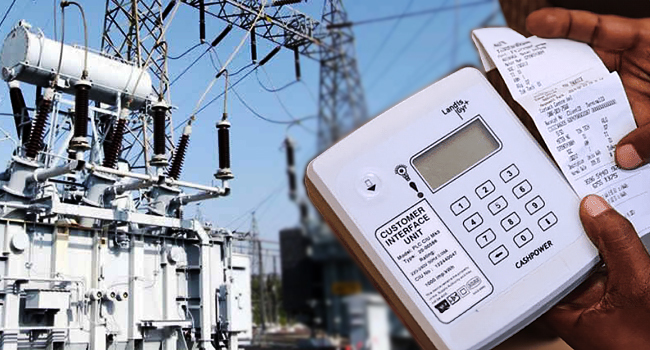
In 2024, the Nigerian Federal Government’s spending on electricity subsidies rose significantly, reaching an unprecedented N1.91 trillion over the first 11 months. This surge in expenditure was reported by the Nigerian Electricity Regulatory Commission (NERC), which noted that power distribution companies (Discos) had collected a remarkable total revenue of N1.23 trillion during the first nine months of the year. This figure not only marks an increase in revenue from the previous year’s total of N1.08 trillion but also highlights continued financial reliance on subsidies despite attempts to curtail them, especially for Band A customers. The staggering growth in subsidy costs showcases an alarming trend in Nigeria’s electricity sector, with the total subsidy expenditure reflecting a 204.15 percent increase from the N628.61 billion spent in 2023.
Examining the monthly breakdown, the first quarter of 2024 saw an electricity subsidy incurrence of N633.30 billion, though this figure reduced to N380 billion in the second quarter. However, third-quarter subsidy costs surged again, reaching N518.55 billion. The costs for October and November remained stable at N380.06 billion, despite challenges such as national grid collapses during this period. Early in April, the NERC’s decision to eliminate subsidies for Band A customers aimed to reduce the subsidy burden, which subsequently drove tariffs for this category up to over N200 per kilowatt-hour from previously set rates of N68. This move was part of broader efforts to align electricity tariffs with generation costs in order to create a more sustainable energy market.
The financial distress within the sector is evident as the government attempts to maintain stability through subsidies amid escalating electricity generation costs. The Minister of Power, Chief Adebayo Adelabu, announced a projected N2.9 trillion subsidy for the sector throughout 2024, without raising electricity tariffs. The administrative complexities of these subsidies entail that they are only applicable to generation costs owed by Discos to the Nigerian Bulk Electricity Trading (NBET) at source. Disturbingly, despite the increase in operational costs, the remittance obligations of Discos to cover generation costs are often unmet, primarily because of the significant gap between cost-reflective tariffs and what consumers actually pay.
As of November 2024, generation costs were incurred at N67.095 billion, while Discos were permitted to recover only N39.24 billion. This disparity indicates that many energy providers remain financially constrained, which adversely affects their operational capacities and long-term sustainability. The government’s subsidy framework is designed to provide a gradual transition to cost-reflective tariffs with considerations for economically vulnerable consumers; nonetheless, gaps in subsidy payments have led to continued shortfalls that threaten to accumulate over time.
Critically, leaders within the electricity distribution sector voiced concerns about the government’s commitment to fulfilling its subsidy obligations, particularly for customers in Bands B to E. According to Sunday Oduntan, Executive Director of the Association of Nigerian Electricity Distributors, the reality reflects a stark inequality in electricity pricing, with Band A customers paying market rates while the government heavily subsidizes other categories, ultimately covering around 67 percent of electricity costs for consumers outside Band A. This has created a growing backlog of unpaid subsidies, leaving many in the distribution sector grappling with cash flow issues and operational difficulties as these long-standing problems remain unaddressed.
Despite these challenges, electricity distribution companies have managed to increase revenue collection dramatically, reaching N1.23 trillion in total for the first nine months of 2024. This figure indicates a successful turnaround in revenue performance compared to previous years, in which collection figures have shown a steady upward trajectory, rising from N526.8 billion in 2020 to N1.1 trillion in 2023. Yet, the disparity in revenue collection efficiency highlights systemic issues within the industry, as many Discos struggle to bill and collect effectively amidst rising operational costs and financing challenges. Efforts to rectify tariff structures and improve financial health within the energy sector remain urgent, as the government must navigate the complexities of subsidy commitments while ensuring energy access and reliable service for all Nigerians.