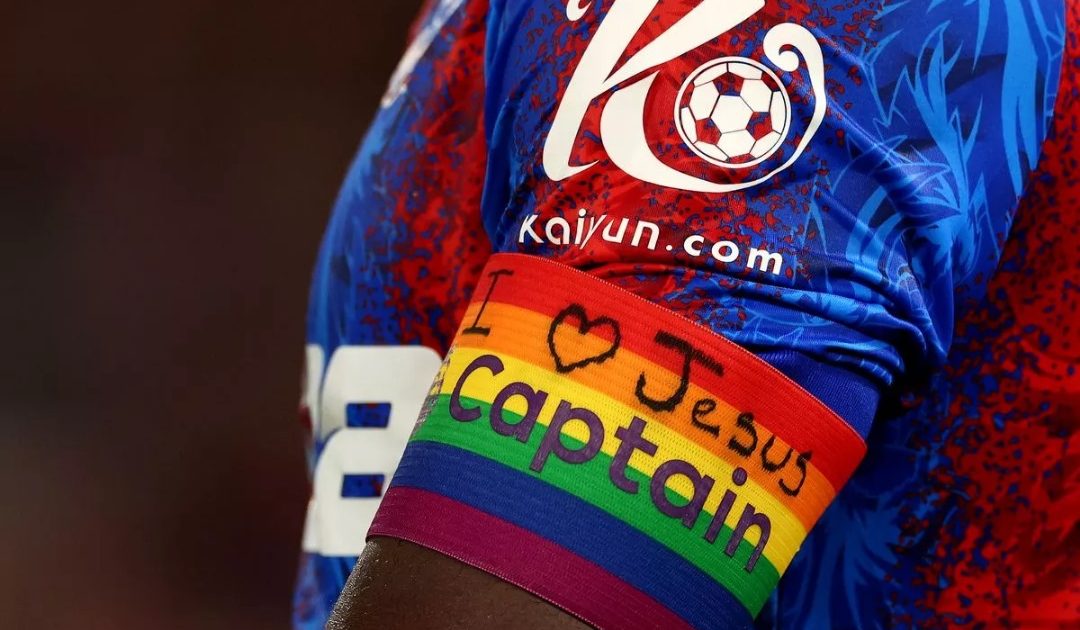
Crystal Palace captain Marc Guehi has recently attracted attention for adding a religious message to his rainbow armband, which has resulted in mixed reactions but, notably, no formal action from the Football Association (FA). The controversy began when Guehi wore an armband inscribed with “I love Jesus” during a Premier League match against Newcastle that ended in a 1-1 draw. In accordance with the FA’s regulations, which prohibit religious messages on player armbands, Guehi and the club were reminded of these guidelines. Despite this, Guehi continued to express his faith by wearing another armband that read “Jesus loves you” during a subsequent match against Ipswich Town, which his team won 1-0. Although he faced initial scrutiny, reports confirm that the FA will not impose any disciplinary action.
The situation highlights an ongoing tension between religious expression and sports regulations. Premier League captains have been donning rainbow armbands for inclusion in support of the LGBTQ+ community through the Rainbow Laces campaign, organized in collaboration with the charity Stonewall. This initiative is designed to promote equality and acceptance within sports, and it underscores the complex landscape football clubs navigate when addressing issues related to beliefs, identity, and inclusivity. Palace manager Oliver Glasner urged for “calm” following the club’s latest victory, advocating for mutual respect of differing opinions, emphasizing that Guehi, like others, is entitled to express his beliefs while being part of a broader movement for inclusion.
Despite the FA’s reminders about kit regulations, the governing body refrained from intervening in a similar instance involving Ipswich captain Sam Morsy, who opted for a standard armband due to his personal values. This discrepancy raised queries about the consistency of the FA’s enforcement of its rules regarding religious expression. Guehi has remained undeterred, using his position to express faith in a manner that he believes is important. His father, John Guehi, a church minister, criticized the FA’s restrictions, arguing that Marc did nothing offensive by expressing his beliefs. He pointed out the irony in the FA celebrating religious songs during national events while reprimanding his son for a personal expression of faith.
John Guehi emphasized the peaceful nature of his son’s messages, arguing that the biblical principle “Jesus loves everyone” was not meant to offend but to uplift. He questioned the logic behind the FA’s reminders when instances in professional football frequently feature religious symbolism, such as hymns associated with official events or national anthems. This call for understanding from John reflects a broader dialogue about the rights of athletes to express their individuality in a world increasingly scrutinizing personal beliefs. Guehi’s actions appear to align with a mission that encompasses love and acceptance, suggesting that genuine expressions of faith should not be equated with exclusions related to LGBTQ+ initiatives.
The contrasting viewpoints of those supporting Guehi and the regulating bodies regarding religious expression in sports exemplify the evolving discussions around identity, acceptance, and expression in contemporary society. Stonewall, the charity involved in the Rainbow Laces campaign, acknowledged the significant backing from football clubs at all levels in efforts to foster a more inclusive environment. Support for such initiatives is pivotal for creating safe spaces within sports, ensuring that all players feel welcomed irrespective of their identities or beliefs. At the same time, the conversation surrounding Guehi raises questions about how to harmonize religious beliefs with the inclusive framework established in modern sports settings.
In conclusion, Marc Guehi’s situation encapsulates a significant intersection of faith, individual expression, and the broader movement for inclusivity in sports. While his actions have reaffirmed his commitment to his beliefs, he has also underscored the challenges faced by athletes who navigate the complexities of personal and collective identities within professional sports. The dialogue prompted by this incident has the potential to foster greater understanding and acceptance across various divides, encouraging discussions that can enhance both personal freedoms and the progression of inclusion efforts in sports and society at large. As the Rainbow Laces campaign concludes, the reflections on Guehi’s choices may serve to illuminate paths toward a more integrated environment, honoring both individual beliefs and collective identity.