





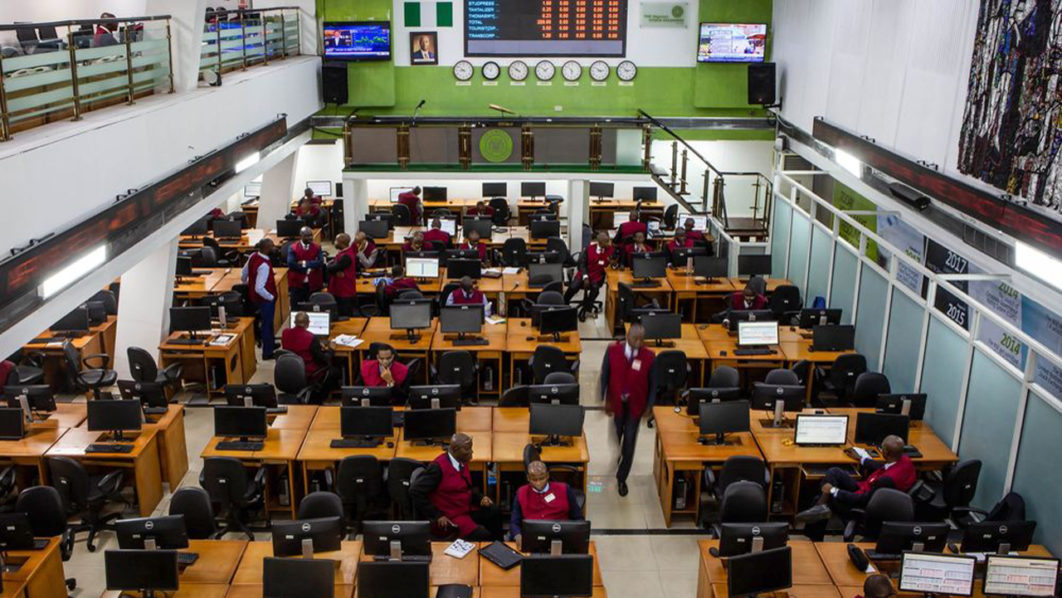
The Nigerian equity market experienced a slight downturn on the first trading day of the week, interrupting a recent positive trend. The market capitalization, a measure of the total value of listed companies, decreased by N63 billion, settling at N59.47 trillion. This decline was reflected in the All-Share Index (ASI), a key indicator of overall market performance, which fell by 0.11 percent to close at 98,107.52 points. Despite this daily dip, the market maintained a positive trajectory over broader timeframes, exhibiting gains of 0.38 percent over the past week, 0.75 percent over the past four weeks, and a substantial 31.21 percent year-to-date. This suggests that while the market experienced a temporary setback on Monday, the overall trend remains bullish, indicating sustained investor confidence in the Nigerian economy.
Trading activity on Monday witnessed a decrease in both volume and value compared to the previous trading day. A total of 436 million shares were traded, representing a 58 percent drop in volume, and the total value of these trades amounted to N12.86 billion, marking a 26 percent decline in turnover. However, the number of deals executed increased by 31 percent, suggesting a higher frequency of smaller-value transactions. These fluctuations in trading activity can be attributed to various factors, including investor sentiment, prevailing economic conditions, and company-specific news. The market breadth, measured by the number of advancing and declining stocks, indicated a bearish sentiment, with 19 gainers and 36 losers out of the 126 equities traded.
Among the gainers, the Nigerian Exchange Group led the pack with a 10 percent surge in its share price, closing at N27.50 per share. Other notable performers included Golden Guinea Breweries and Tantaliser, both recording a 10 percent and 9.92 percent increase, respectively. Africa Prudential also saw a significant price appreciation of 9.72 percent. These gains reflect positive investor sentiment towards these specific companies, possibly driven by strong financial performance, positive industry outlook, or strategic corporate developments.
Conversely, Secure Electronic Technology experienced the steepest decline, with its share price plummeting by 10 percent to close at N0.63. Guinea Insurance and Deap Capital Management & Trust also suffered significant losses, dropping by 8.93 percent and 8.4 percent, respectively. Daar Communications also witnessed a substantial decline of 7.02 percent. These losses could be attributed to various factors, including company-specific challenges, negative news, or profit-taking by investors. Analyzing the performance of individual stocks provides valuable insights into investor sentiment and the underlying dynamics of specific sectors.
Trading volume was dominated by financial institutions, with FCMB Group leading the way with 61.7 million shares traded, followed by Access Holdings, United Bank for Africa, and Guarantee Trust Holding. The high trading volume in these banking stocks underscores the significance of the financial sector in the Nigerian economy and its influence on overall market performance. Monitoring the trading activity of these major players can provide valuable insights into market trends and investor preferences.
A broader sectoral analysis revealed mixed performances across various indices. The Top 30 Index, representing the largest and most liquid companies, experienced a marginal decline of 0.05 percent on Monday but maintained a positive year-to-date gain of 32.9 percent. The Oil & Gas Index, reflecting the performance of companies in the energy sector, saw a modest increase of 0.44 percent, with a remarkable year-to-date gain of 140.41 percent. This impressive performance in the oil and gas sector likely stems from rising global oil prices and increased investor interest in the energy sector. Other indices, including the Main Board Index and Consumer Goods Index, registered minor declines, while the Banking Index and Pension Index demonstrated positive year-to-date returns of 15.4 percent and 33.53 percent, respectively. These varying sectoral performances highlight the diverse dynamics at play within the Nigerian equity market. The previous week witnessed significant gains in the Nigerian equity market, adding N319 billion to its market capitalization. This positive momentum was driven by the appreciation of 51 stocks, pushing the All-Share Index up by 0.72 percent to close at 98,210.75.
The information provided offers a snapshot of the Nigerian equity market’s performance on a specific trading day and within broader timeframes. Analyzing these trends, including daily fluctuations, weekly performance, and year-to-date gains, provides a more comprehensive understanding of market dynamics. Furthermore, examining the performance of individual stocks and sector-specific indices sheds light on investor sentiment, industry trends, and the overall health of the Nigerian economy. This detailed analysis allows investors to make more informed decisions and navigate the complexities of the equity market effectively.








