Paragraph 1: Overview of Market Performance
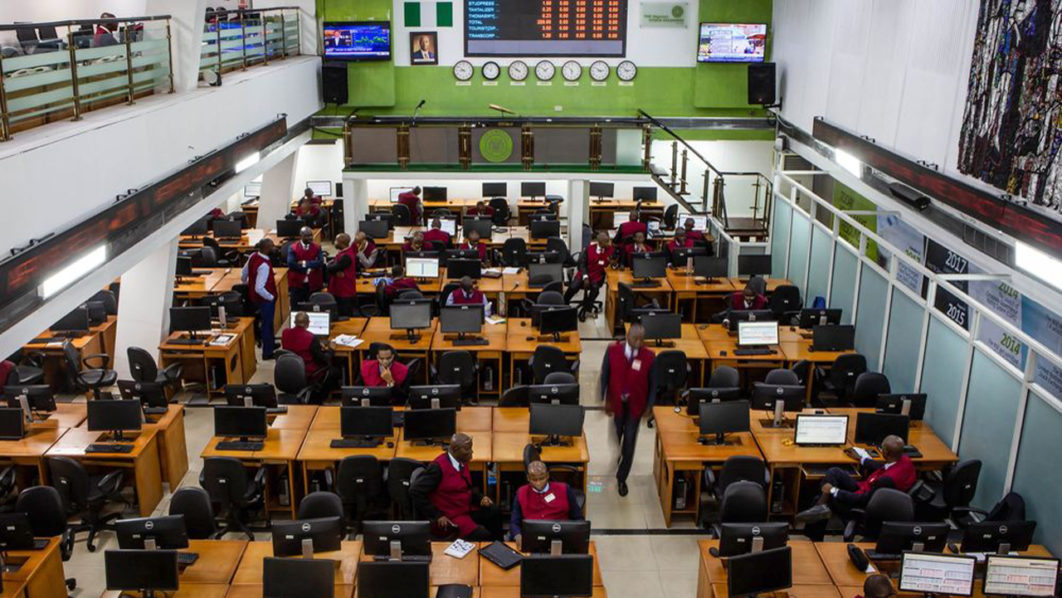
The Nigerian equity market experienced a positive surge during the reviewed week, with both the All-Share Index (ASI) and market capitalization showing significant growth. The ASI climbed by 1.22% to reach 103,598.30 points, while the market capitalization expanded by 1.26%, reaching N63.645 trillion. This growth translates to an impressive N794 billion increase in market value. Trading activity was robust, with a total turnover of 3.132 billion shares worth N76.552 billion exchanged in 61,456 deals. This represented a notable increase from the previous week’s trading volume of 2.252 billion shares valued at N58.831 billion.
Paragraph 2: Sectoral Performance and Dominant Players
The financial services industry dominated trading activity, accounting for a substantial 74.59% of the total equity turnover volume and 43.13% of the total value. Investors in this sector traded 2.336 billion shares worth N33.014 billion. The services and consumer goods industries followed, albeit with significantly lower volumes. Within these sectors, Wema Bank plc, Secure Electronic Technology plc, and Access Holdings plc emerged as the most actively traded equities, collectively contributing 45.89% of the total equity turnover volume and 20.13% of the total value.
Paragraph 3: Performance of Other Market Segments
While the equities market thrived, other segments like the exchange-traded products (ETPs) and bond markets witnessed reduced activity. The ETP market saw a decline in both volume and value compared to the previous week, with only 35,261 units valued at N4.353 million traded. The bond market also experienced a downturn, with 73,260 units worth N74.373 million traded, marking a decrease from the prior week. This suggests a potential shift in investor focus towards the buoyant equities market.
Paragraph 4: Mixed Performance Across Indices and Individual Stocks
Despite the overall market upswing, performance across various indices was mixed. While the majority of indices recorded gains, the insurance, consumer goods, oil and gas, and sovereign bond indices experienced declines. This contrasting performance highlights the sector-specific dynamics at play. Individual stock performance also varied, with 44 equities appreciating in price, while another 44 declined, and 64 remained unchanged. This balance between gainers and losers suggests a degree of market volatility and sector-specific influences.
Paragraph 5: Analysis of Top Gainers and Losers
Among the top-performing stocks, SCOA Nigeria plc led the pack with a remarkable 59.68% surge in price, followed by UPDC plc with a 19.05% gain. Coronation Insurance plc, Royal Exchange plc, and Daar Communications plc also posted double-digit percentage increases. On the other hand, Sunu Assurances Nigeria plc experienced the steepest decline, losing 25.11%, followed by Eunisell Interlinked plc and John Holt plc. These price fluctuations underscore the inherent risks and potential rewards in the equity market.
Paragraph 6: Sector-Specific Drivers and Market Developments
A closer look at sectoral performance reveals the factors driving these trends. The banking index led the gainers, boosted by strong performance in United Bank for Africa, Zenith Bank, and Access Holdings. The AFR-ICT and industrial goods indices also benefited from positive momentum in key stocks like MTNN, CWG, Lafarge Wapco, and Cutix. Conversely, the consumer goods and insurance indices faced headwinds due to sell-offs in stocks like Dangote Sugar, International Breweries, Sunu Assurance, and Cornerstone Insurance Company. The oil and gas index also retreated due to losses in Eterna plc and Aradel Holdings. In a significant development, the Nigerian Exchange Limited listed additional shares for Lasaco Assurance plc, increasing the company’s total issued and fully paid-up shares. Despite the week’s overall positive performance, a subsequent report indicated a slight dip in the all-share index, reminding investors of the market’s inherent volatility.