





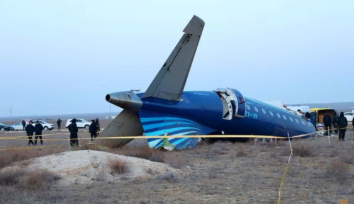
The downing of an Azerbaijan Airlines passenger jet over Russian airspace has amplified concerns regarding the safety of civilian flights in the region, prompting the European Union Aviation Safety Agency (EASA) to issue a stark warning. The incident, which tragically claimed the lives of 38 individuals on December 25, 2024, has brought into sharp focus the precarious nature of navigating the skies above Russia amidst the ongoing conflict in Ukraine. The EASA, in its safety bulletin, explicitly stated that the war poses a “high risk” to civilian aircraft due to the potential for misidentification and inadequate civil-military coordination within the Russian Federation’s airspace. This assessment underscores the volatile and unpredictable environment that has emerged as a consequence of the conflict, making it increasingly hazardous for commercial airliners to traverse the region.
The EASA’s warning reinforces its earlier recommendation for airlines to avoid overflying western Russian airspace, a precaution aimed at mitigating the risks associated with the ongoing conflict. However, Russia has vehemently rejected this advisory, labeling it as “absurd” and accusing the EASA of acting on behalf of “unfriendly states” to inflict reputational and economic damage on Russia and its civil aviation sector. Despite Russia’s counterclaims, the EASA’s assessment highlights the genuine concerns surrounding the safety of civilian flights in the area, a situation exacerbated by the ongoing military activities and the potential for misidentification of civilian aircraft as hostile targets.
The circumstances surrounding the Azerbaijan Airlines crash remain shrouded in uncertainty, although Azerbaijani President Ilham Aliyev has asserted that the aircraft was shot down “from the ground” over the Russian city of Grozny, its intended destination. While Russia has acknowledged that its air defense systems were active at the time, repelling Ukrainian drones, it has refrained from explicitly admitting responsibility for the downing of the passenger jet. This ambiguity further complicates the situation and underscores the inherent risks associated with flying over a conflict zone where military operations are ongoing.
The EASA’s safety bulletin points to the activation of Russian air defense systems to counter Ukrainian drone and missile attacks as a significant contributing factor to the heightened risk for civilian aircraft. These defensive measures, while intended to protect Russian territory, inadvertently create a hazardous environment for commercial flights, particularly in areas where civil-military coordination may be lacking. The EASA emphasizes that a majority of incidents have transpired in airspace not officially closed by the Russian Federation during these defense operations, further highlighting the unpredictable and potentially perilous nature of the situation.
The incident involving Azerbaijan Airlines flight 8243 serves as a stark reminder of the potential consequences of navigating airspace affected by armed conflict. The EASA’s assessment, coupled with the downing of the passenger jet, underscores the urgency of addressing the safety concerns and mitigating the risks for civilian aircraft operating in or near the conflict zone. The ongoing tensions and military activities in the region necessitate a cautious approach to air travel and reinforce the importance of adhering to safety recommendations issued by aviation authorities.
The international community faces a complex challenge in balancing the need for air travel with the imperative to ensure the safety of civilian flights in regions impacted by armed conflict. The EASA’s warning serves as a critical reminder of the potential dangers and the need for ongoing vigilance and enhanced safety measures to protect civilian aircraft operating in these volatile areas. The incident involving Azerbaijan Airlines flight 8243 underscores the crucial importance of international cooperation and dialogue to address these challenges and prevent future tragedies. It is essential that all parties involved work collaboratively to de-escalate the risks and create a safer environment for civilian aviation in the affected region.








