









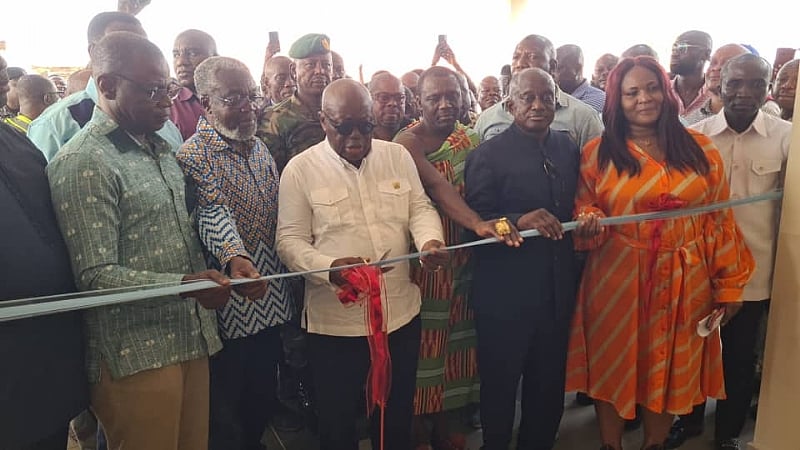
The commissioning of the 250-bed Ashanti Regional Hospital in Sewua, Ghana, on January 4, 2025, by then-President Nana Addo Dankwa Akufo-Addo, sparked a significant controversy involving the project’s contractor, Euroget De-Invest S.A. The company immediately issued a press release denouncing the commissioning as a breach of contract, citing outstanding payments and the incomplete status of the project. Euroget emphasized that they retained possession of the site until the official handover, which had not occurred, and therefore, the government’s action constituted unauthorized entry and a violation of their agreement. The timing of the commissioning, just three days before the presidential handover, further fueled suspicions of political maneuvering and disregard for legal processes.
Euroget’s statement detailed the company’s grievances, highlighting the lack of consultation and their absence at the commissioning ceremony. Dr. Said Deraz, Group Chairman of Euroget, stressed that the government’s actions were not only a contractual violation but also a breach of security. He argued that by commissioning an incomplete and unpaid-for hospital, the President implied that he could have commissioned any of Euroget’s projects cost-free, a premise Euroget vehemently rejects. Dr. Deraz expressed concern over the disregard for the rule of law and the potential negative precedent this sets for future government contracts. The company demanded a full investigation into the matter and pledged to pursue all legal avenues to protect its rights and seek compensation for damages.
The Ashanti Regional Hospital, intended to be the largest regional hospital in the country, was designed as a critical component of Ghana’s healthcare infrastructure. The facility boasts state-of-the-art equipment and comprehensive medical departments, including an administration block, out-patient department, physiotherapy, gynecology wards, sterilization unit, intensive care unit, maternity and delivery suites, laboratory, pharmacy, theatre complex, laundry, and a medical gas plant. Alongside a 50-bed Infectious Disease Centre, built with COVID-19 funding, the hospital aimed to address gaps in healthcare delivery and improve health outcomes for the region’s population, ensuring access to universal health coverage.
The Sewua hospital is part of a larger initiative involving nine hospital projects initiated by former President John Agyekum Kufuor in 2008, underwritten by Euroget. These projects include a 500-bed Military Hospital in Afari, Kumasi, a 160-bed Wa Regional Hospital, the aforementioned 250-bed Ashanti Regional Hospital in Sewua, and a 100-bed Ga East Municipal Hospital in Kwabenya. Five additional 60-bed hospitals are also planned for Tepa, Konongo, Twifo Praso, and Madina. The commissioning controversy surrounding the Sewua hospital raises broader concerns about the management and oversight of these significant infrastructural projects.
The dispute between Euroget and the outgoing government underscores the importance of transparency and accountability in public projects. The company’s insistence on due process and adherence to contractual agreements highlights the need for clear communication and respect for legal obligations when undertaking large-scale infrastructure developments. The commissioning of an incomplete hospital, without the contractor’s consent and amidst outstanding payments, raises significant questions about the government’s motivations and potentially jeopardizes the project’s ultimate success. The controversy threatens to undermine public trust and create a climate of uncertainty regarding the future of the remaining hospital projects under the Euroget agreement.
The situation demands a thorough investigation to determine the facts and address the concerns raised by Euroget. The outcome will have implications not only for the Ashanti Regional Hospital project but also for the broader relationship between the government and private contractors in Ghana. A just resolution is crucial to ensure the timely completion of vital healthcare infrastructure and to restore confidence in the government’s commitment to transparency and accountability in the management of public resources. The people of the Ashanti Region and indeed the entire nation deserve a clear and unambiguous accounting of the circumstances surrounding this contentious commissioning and assurances that future projects will be handled with greater adherence to established legal and contractual procedures.









