









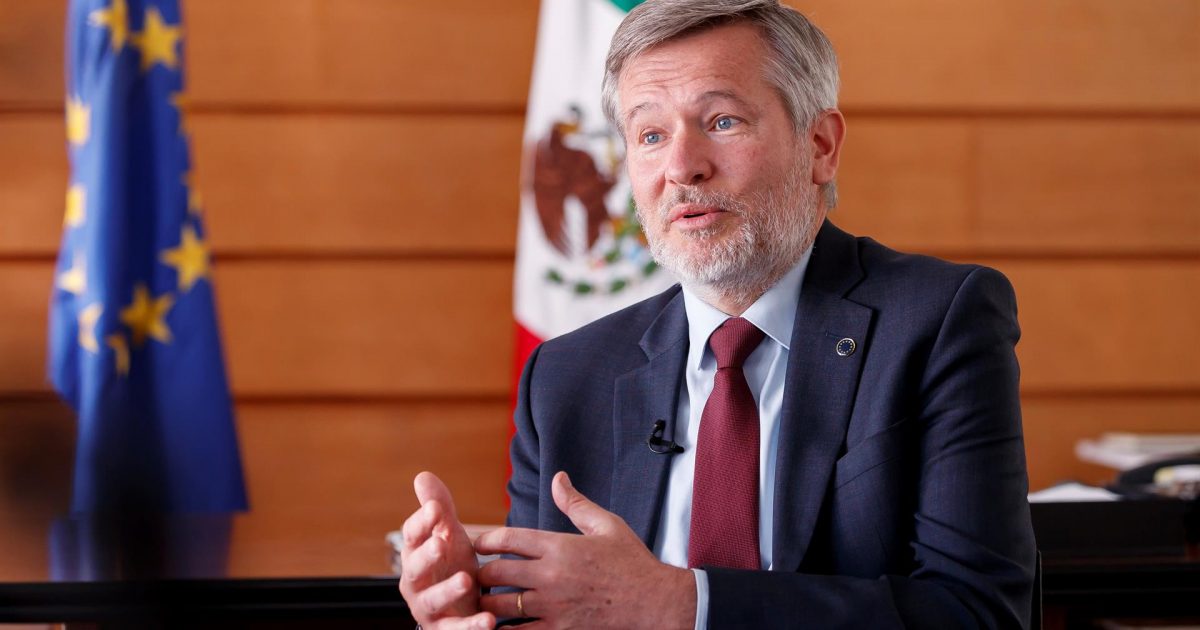
The European Union, deeply invested in the stability and prosperity of West Africa, has expressed its concern over the recent withdrawal of Burkina Faso, Mali, and Niger from the Economic Community of West African States (ECOWAS). Ambassador Gautier Mignot, Head of the EU Delegation to Nigeria and ECOWAS, has publicly advocated for a new, dialogue-centered approach to navigate this complex situation. Drawing parallels with the EU’s own experience with Brexit, Mignot underscored the enduring geographical proximity and interconnectedness of nations, regardless of their membership in regional blocs. He emphasized the necessity of establishing new frameworks for coexistence and cooperation, even after formal separation, and offered the EU’s expertise to assist ECOWAS in managing this delicate transition. Mignot stressed the importance of continued engagement with the departing nations, highlighting the EU’s ongoing humanitarian aid and adapted development cooperation strategies aimed at directly supporting vulnerable populations amidst the escalating security and humanitarian crises in the Sahel region.
The EU’s commitment to regional integration stems from a deep understanding of its benefits for peace and development. The withdrawal of these three nations, collectively known as the Alliance of Sahel States (AES), poses a challenge to the regional stability that ECOWAS aims to uphold. Mignot’s call for a revised approach reflects the EU’s belief that dialogue and negotiation are crucial for mitigating the potential negative consequences of this fragmentation. The EU’s offer of assistance to ECOWAS underscores their commitment to fostering collaboration and finding common ground, even in the face of political divergence. The EU recognizes the complex interplay of factors contributing to the current situation, including security concerns, humanitarian crises, and political instability, highlighting the need for a comprehensive and nuanced approach.
Ambassador Mignot emphasized the importance of avoiding a complete rupture in relations, arguing that even outside the formal framework of ECOWAS, continued cooperation is essential. The EU’s experience with Brexit serves as a poignant example of the complexities of disentangling intertwined relationships and the need for ongoing dialogue to manage shared interests and challenges. This pragmatic approach highlights the understanding that regional integration is not merely a matter of formal membership but also a network of interconnected relationships that persist even after formal ties are severed. The EU believes that by facilitating communication and cooperation, ECOWAS can mitigate the risks associated with the AES withdrawal and work towards a mutually beneficial future relationship.
Furthermore, the EU has reaffirmed its commitment to the people of Burkina Faso, Mali, and Niger, ensuring that the withdrawal from ECOWAS does not translate into abandonment. Maintaining humanitarian aid and adapting development cooperation to focus on supporting local populations remain priorities. This direct engagement aims to alleviate the impact of the ongoing security and humanitarian crises in the Sahel, addressing the urgent needs of displaced people, refugees, and those requiring assistance. The EU’s commitment to continued engagement seeks to minimize the negative consequences of the political upheaval on the most vulnerable populations. This approach reflects a broader EU strategy of prioritizing human security and development, even in complex political contexts.
The EU’s concern regarding the security and humanitarian situation in the Sahel region is underscored by the unprecedented levels of displacement, refugee flows, and humanitarian needs. Mignot’s statements indicate that the EU is actively working on a renewed approach to the Sahel, emphasizing the crucial role of dialogue and exchange with regional partners. This highlights the EU’s recognition that effective solutions require collaboration and a deep understanding of the complexities on the ground. The EU’s commitment to formulating a renewed strategy for the Sahel demonstrates a proactive approach to addressing the escalating challenges and preventing further deterioration of the situation. This new approach will likely involve close cooperation with regional actors like ECOWAS and national governments, as well as international partners.
In addition to addressing the complexities surrounding the AES withdrawal from ECOWAS, Ambassador Mignot also outlined his vision for strengthening the EU-Nigeria partnership. Recognizing Nigeria’s significant influence within Africa and globally, he emphasized the EU’s commitment to being a reliable partner. Key priorities include fostering structured economic relations, promoting trade and investment, and focusing on sectors like the green economy, digital technology, agri-food, and healthcare. Addressing the specific needs of Northern Nigeria, enhancing peace and security collaboration, and creating opportunities in education and research are also high on the agenda. Furthermore, the EU aims to address migration challenges comprehensively, working closely with Nigeria to develop solutions for human trafficking, migrant reintegration, and establishing legal migration pathways that benefit both parties. This multifaceted approach signifies the EU’s recognition of Nigeria’s strategic importance and its commitment to a robust and mutually beneficial partnership.









