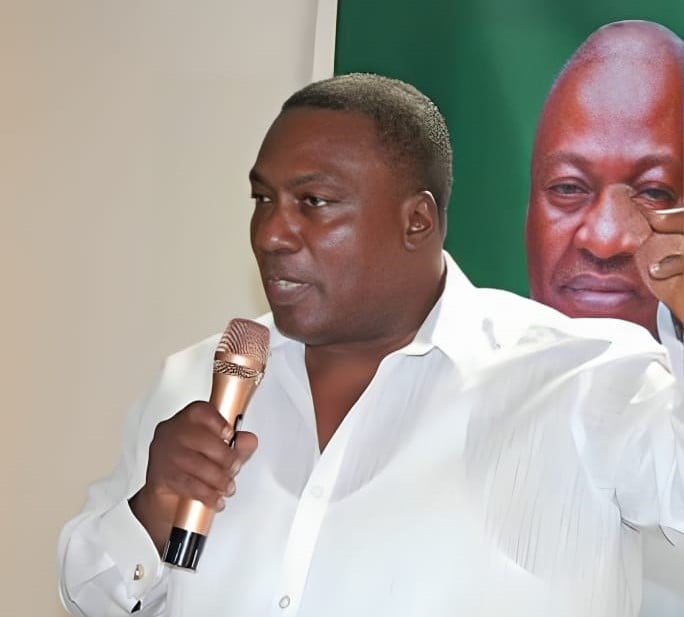
Horace Nii Ayi Ankrah, a prominent member of the National Democratic Congress (NDC), has publicly criticized President Nana Addo Dankwa Akufo-Addo, labeling him the “most decorated failure” to hold the presidency in Ghana. His remarks came in the wake of the President’s comments regarding former President John Mahama’s approach to illegal mining, known as galamsey. Ankrah expressed his disappointment with Akufo-Addo, urging him to focus on the remaining months of his presidency rather than deflecting onto his predecessor. This condemnation reflects deep-seated frustrations regarding the current administration’s track record and raises questions about the efficacy of its policies.
In his critique, Ankrah highlighted the various areas where he believes the President has not only fallen short but has also mismanaged vital aspects of governance. He specifically pointed to the economy, employment levels, corruption, food security, and the government’s increasing borrowing. Ankrah’s argument centers on the notion that Akufo-Addo has disregarded his responsibilities and has often shifted attention to insignificant issues rather than addressing the pressing problems facing Ghanaians. His rhetoric suggests a growing dissatisfaction with the government’s accountability, especially in light of rising living costs and stagnant healthcare systems, which he believes contradicts the President’s commitments to the nation.
Addressing the specific comments made by the President regarding Mahama and the issue of galamsey, Ankrah criticized what he perceives as a blatant contradiction. He questioned how Akufo-Addo could hold Mahama accountable for a crisis that his administration has failed to effectively manage over the past eight years. Ankrah pointed out that under the current government, Ghana is perceived as “weak and ashamed,” alluding to a decline in national integrity and governance standards. His remarks invoke a sense of national pride, suggesting that the administration’s failures are not merely political but have far-reaching implications for the country’s reputation.
Throughout his commentary, Ankrah has drawn parallels between Akufo-Addo’s presidency and that of Herbert Hoover, the 31st President of the United States. By referencing Hoover, a figure synonymous with economic downturn and perceived ineffectiveness during the Great Depression, Ankrah implies that similar patterns are emerging in Ghana under the current administration. This historical comparison serves to amplify his critique, framing the President’s leadership as not only inadequate but also as a failure that reflects poorly on the nation as a whole.
Moreover, the tone of Ankrah’s statements suggests a larger narrative within the NDC, which seeks to capitalize on the apparent dissatisfaction among Ghanaians regarding the NPP administration. His strategic focus on highlighting the failures of the President could serve to galvanize support for the NDC going into future elections. By positioning Mahama as a relevant figure despite his past presidency, Ankrah aims to draw attention away from the political rivalries and onto the core issues affecting citizens daily.
In conclusion, Horace Nii Ayi Ankrah’s assertions about President Akufo-Addo encapsulate a broader discourse on governance in Ghana. His critiques highlight not only the perceived failures of the current administration but also underscore the complexity of political accountability in the face of pressing national issues. As Ghanaians navigate the challenges posed by the ongoing economic and social crises, Ankrah’s comments could resonate widely, potentially influencing public opinion and the political landscape in the coming months. He calls for the President to reevaluate his approach in the remaining months of his term, suggesting that a turnaround is possible if genuine effort is applied to addressing the myriad issues that continue to plague the nation.