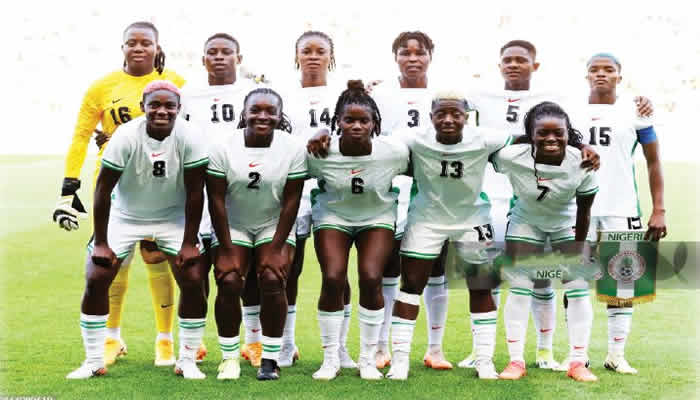
The Nigerian women’s national football team, the Super Falcons, concluded 2024 by retaining their status as Africa’s top-ranked team in the FIFA rankings. Despite their continental dominance, their global position remained stagnant at 36th, a considerable distance from their historical peak of 23rd achieved two decades prior. This final ranking of the year encapsulates a year of mixed fortunes for the Falcons, marked by both promising performances and disappointing setbacks. While they maintained their supremacy within Africa, their global standing remained unchanged, underscoring the need for continued growth and development in the coming year.
The Falcons’ position at the summit of African women’s football remained unchallenged despite the rise of other competitive teams on the continent. South Africa, Morocco, Zambia, and Ghana trailed behind in the global rankings, occupying the 53rd, 61st, 62nd, and 66th positions respectively. The Falcons’ recent results, including two victories against Algeria in friendly matches and a narrow defeat to France, a global football powerhouse, did not significantly impact their overall ranking. This highlights the competitive landscape of women’s football and the challenges the Falcons face in climbing the global ladder. They will need to consistently deliver strong performances against top-tier teams to improve their global standing.
The year 2024 presented a mixed bag of results for the Super Falcons. Their campaign at the Paris Olympics proved to be a major disappointment. Drawn into a challenging group alongside Brazil, Spain, and Japan, the Falcons struggled to find their footing and suffered three consecutive defeats, resulting in an early exit from the tournament. Despite this setback, there were glimmers of hope and individual brilliance displayed by players like Rasheedat Ajibade and Chiamaka Nnadozie, suggesting the potential for future success with the right strategic adjustments and player development.
Despite the Olympic disappointment, the Falcons managed to maintain their dominance within Africa. Their consistent performances against other African teams solidified their position as the continent’s leading force in women’s football. The challenge for the Falcons moving forward is to translate this continental dominance into global competitiveness. They need to consistently perform at a high level against teams from other regions to climb the FIFA rankings and establish themselves as a true force on the international stage.
The Super Falcons face the task of translating their continental success into global recognition. Their current ranking reflects a need to elevate their performance against top-tier competition from other continents. The team’s focus will likely shift towards strategic improvements and player development to bridge the gap between their continental dominance and their global standing. The upcoming year presents an opportunity to build on the lessons learned from the Olympic campaign and to strive for a more impactful presence on the world stage.
Looking ahead to 2025, the Super Falcons have a clear objective: to improve their global ranking and make a significant impact in upcoming tournaments. This will require a concerted effort to address the team’s weaknesses, capitalize on their strengths, and develop a more cohesive and competitive unit. The Falcons’ ability to adapt and evolve will be crucial to achieving their goals and solidifying their position as a major force in women’s football. The coming year presents a chance for redemption and an opportunity to demonstrate their true potential on the global stage.