









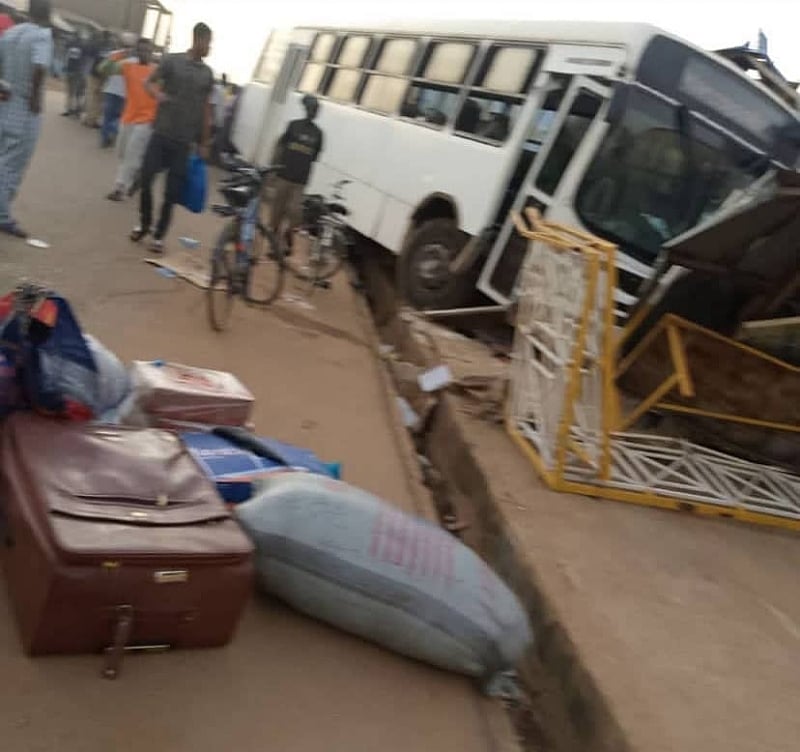
The tranquility that had tentatively settled over Bawku in recent weeks was shattered by a resurgence of violence, culminating in a deadly attack on a passenger bus on Monday, January 6, 2025. Unidentified gunmen ambushed the bus, which was traveling under security escort from Bolgatanga to Bawku, primarily carrying women traders returning from business trips. The attackers opened fire on the vehicle, killing one passenger, Nuaima Awudu, a young trader, and injuring several others who were subsequently rushed to Bawku Presbyterian Hospital for treatment. This tragic incident followed another attack on Sunday, January 5, where a resident was killed while attempting to relocate within the town, highlighting the escalating danger and pervasive fear gripping the community.
The attack on the bus underscores the precarious security situation in Bawku, where residents are effectively trapped in their own neighborhoods, fearing for their safety if they venture beyond their immediate surroundings. The risk of being targeted by unknown assailants has made even the simplest act of moving within the town a perilous undertaking. The pervasive fear has severely restricted movement and disrupted daily life, creating a climate of anxiety and uncertainty. The escalating violence is a stark reminder of the deep-seated tensions and unresolved conflicts that continue to plague the region, despite efforts to quell the unrest.
The imposition of a dawn-to-dusk curfew in November 2024, a measure intended to restore order and curb the violence, has seemingly failed to achieve its objective. The recurring incidents demonstrate the limitations of such restrictive measures in addressing the root causes of the conflict and ensuring the long-term safety of the residents. The inability of the authorities to identify the perpetrators or provide concrete updates on their investigations further fuels the sense of insecurity and raises questions about the effectiveness of the security apparatus in the region.
The continued violence in Bawku casts a long shadow over the lives of its inhabitants. The constant threat of attacks and the restrictions on movement have created an atmosphere of fear and uncertainty, hindering economic activities and disrupting social life. The inability to move freely within the town has isolated communities and impeded access to essential services, further exacerbating the already difficult situation. The prevailing climate of fear underscores the urgent need for effective and sustainable solutions to address the underlying causes of the conflict and restore peace to the region.
The recurring incidents and the lack of tangible progress in resolving the conflict highlight the complex and multifaceted nature of the challenges facing Bawku. The ongoing violence calls for a comprehensive approach that goes beyond short-term security measures and addresses the underlying socio-political issues fueling the conflict. A genuine and sustained effort is needed to build trust between communities, promote dialogue, and foster reconciliation. This requires the active involvement of all stakeholders, including local leaders, community members, and government authorities, working together to create a safe and secure environment for all residents.
The tragic events in Bawku serve as a stark reminder of the human cost of conflict and the urgent need for lasting peace. The lives lost and the suffering endured by the community underscore the importance of addressing the root causes of the violence and working towards a future where all residents can live without fear. This requires a commitment to dialogue, reconciliation, and sustainable development, ensuring that the cycle of violence is broken and that peace and stability are restored to the region. The responsibility for achieving this lies with all stakeholders, who must work together to build a future free from conflict and fear for the people of Bawku.









