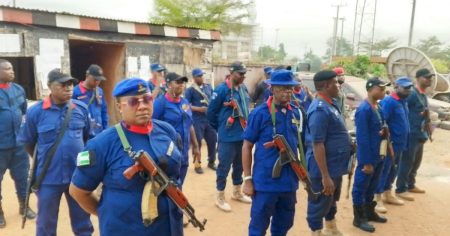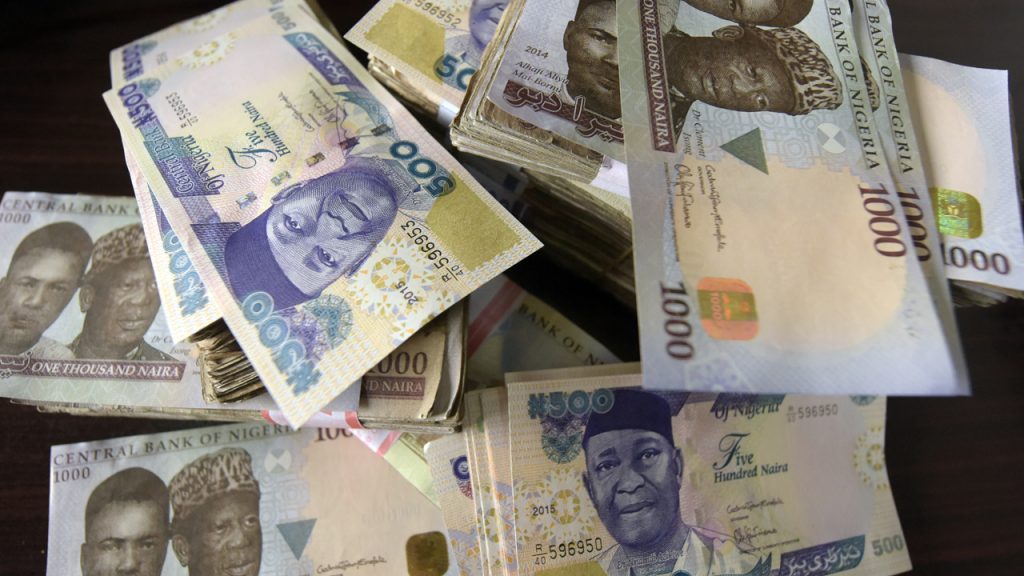
The 2025 Nigerian Federal Budget, dubbed the “Budget of Restoration,” reveals a significant financial commitment to combating crime, enhancing security, and bolstering infrastructure, particularly in road construction and rehabilitation. The Ministry of Justice is poised to receive substantial funding for various initiatives, including the prosecution of terrorism-related cases, anti-money laundering efforts, and broader criminal justice reforms. Specifically, N530 million has been allocated for managing terrorism cases, a critical investment in addressing the ongoing security challenges facing the nation. Furthermore, N100.99 million will be dedicated to strengthening anti-money laundering and counter-terrorism financing measures, essential for disrupting financial networks that support illicit activities. A further N150 million is earmarked for the prosecution of general criminal matters, demonstrating a commitment to upholding the rule of law.
Beyond these targeted allocations, the Ministry of Justice is also investing in broader systemic enhancements. A National Crime Database, allocated N50 million, aims to improve information sharing and coordination among law enforcement agencies, crucial for effective crime prevention and investigation. International legal engagements are supported by an allocation of N922 million, reflecting Nigeria’s active participation in global justice initiatives. The development of a National Anti-Corruption Strategy Framework, with a budget of N55.57 million, underscores the government’s focus on tackling corruption. Further allocations include N200 million for the Administration of Criminal Justice Monitoring Committee and N350.19 million for broader judicial sector reforms and the administration of criminal justice improvements, solidifying the government’s commitment to a more efficient and equitable justice system.
A substantial portion of the 2025 budget is devoted to infrastructure development, with a particular emphasis on road construction and rehabilitation. The Ministry of Works has outlined an ambitious plan to address the nation’s aging road network, allocating over N1.013 trillion for the construction and rehabilitation of 468 roads and highways across the country. This represents a significant increase in funding compared to the 2024 budget, despite a reduction in the number of planned projects, suggesting a shift towards prioritizing larger-scale and potentially more impactful projects. This increased investment in infrastructure aims to improve transportation networks, boost economic activity, and enhance connectivity across the country.
Several key road projects have been identified for significant investment. The Lafia road construction and the dualisation of the 9th mile (Enugu) Otukpo-Makurdi (Keffi phase two) project have received the largest allocation of N166.004 billion, highlighting the importance of these routes for regional connectivity. Other notable projects include the Kano-Maiduguri road, the Abuja-Lokoja road, the Kano-Wudil-Shuarin road, the Kano-Katsina road, and the Enugu-Port-Harcourt road, all receiving substantial allocations. The budget also targets critical infrastructure improvements such as the Ibi bridge, the Bidda-Sacci-Nupeko road and Nupeko/Patigi bridge, and the Damaturu-Biu road, reflecting a commitment to addressing vital transportation needs across various regions.
Beyond these major projects, the budget also allocates funds for numerous smaller-scale road rehabilitation and construction initiatives across various states, further demonstrating a commitment to improving transportation infrastructure throughout the country. These projects include rehabilitating the Keffi-Nasarawa-Toto road, constructing the Malando Garin Baka Ngaski Wara road in Kebbi State, constructing the Ebom road in Cross Rivers, rehabilitating and dualising the Enugu-Abakaliki Ogoja road, and constructing Maiduguri ring roads. These widespread investments aim to improve local accessibility, stimulate economic growth, and enhance the quality of life for communities across Nigeria.
In addition to the core infrastructure spending, the Ministry of Works has also budgeted for various ancillary costs. These include a N15 billion allocation for an independent engineer for the Abuja-Makurdi road, N10.25 billion for an independent engineer for pilot HDMI corridors, and funds for media consultants, public school construction, and administrative expenses. Of note, the budget also includes a N4 billion allocation for the construction of a presidential helipad and jetty in Lagos, N5 billion for judgment debts, and N5 billion for legal fees. These allocations, while smaller compared to the overall infrastructure spending, highlight the diverse range of expenditures considered within the budget. Furthermore, the Ministry of Works has allocated N77.1bn for Public Private Partnership due diligence and negotiation activities, signaling a potential focus on leveraging private sector involvement in infrastructure development.
The focus on road infrastructure reflects the government’s recognition of its critical role in economic development and national unity. Minister of Works, David Umahi, has highlighted the substantial backlog of inherited road projects, with a total cost escalating from N13 trillion to N19 trillion due to factors such as fuel subsidy removal and currency fluctuations. This underscores the significant challenge faced by the government in addressing the nation’s infrastructure needs, and the substantial financial commitment required to tackle this challenge. The 2025 “Budget of Restoration” represents a substantial investment in addressing these infrastructure needs and enhancing security, with the hope of fostering economic growth and improving the lives of Nigerians.