









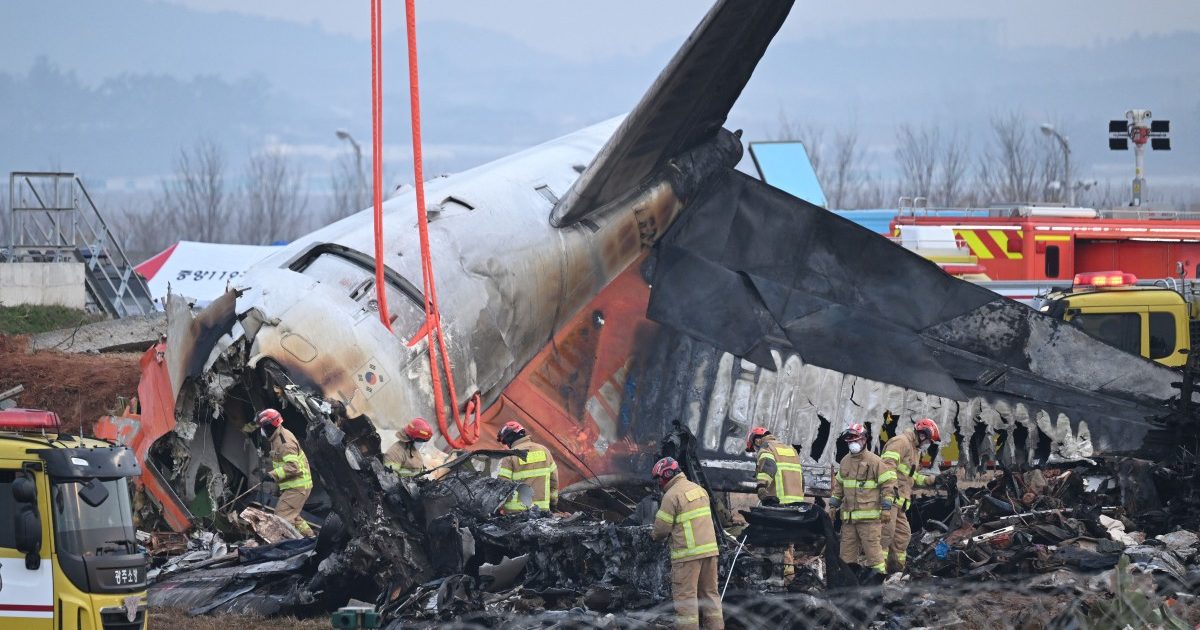
The tragic crash of Jeju Air Flight 2216 on December 29, 2024, cast a pall of grief over South Korea and reverberated across the international community. The Boeing 737-800, en route from Bangkok, Thailand, met a fiery end upon its attempted landing at Muan International Airport. The aircraft skidded off the runway, colliding with a wall and erupting into flames, resulting in the devastating loss of 179 lives out of the 181 passengers and crew on board. Only two individuals miraculously survived the catastrophic incident.
The harrowing images of the crash site, released by the South Korean National Fire Agency, depicted the mangled wreckage of the aircraft engulfed in flames, a stark testament to the magnitude of the tragedy. The incident sent shockwaves through South Korea, prompting an outpouring of grief and condolences from around the world. The Nigerian government, through its Ministry of Foreign Affairs, expressed its profound sympathy and solidarity with the South Korean government and the bereaved families.
The Nigerian government’s statement, issued by spokesperson Kimiebi Ebienfa, conveyed the nation’s heartfelt condolences and recognized the immense loss suffered by South Korea. The statement affirmed Nigeria’s unwavering support for the South Korean people during this challenging period. It underscored the shared humanity that binds nations together in times of tragedy and reiterated the importance of international cooperation and support in the face of such devastating events.
The Jeju Air Flight 2216 crash serves as a stark reminder of the inherent risks associated with air travel. While aviation boasts an impressive safety record, accidents like this underscore the need for continuous vigilance and improvement in safety protocols. The investigation into the crash will undoubtedly be thorough and extensive, aiming to identify the causal factors and prevent similar tragedies from occurring in the future. The findings will be crucial for enhancing aviation safety standards globally and ensuring the continued safety and well-being of air travelers worldwide.
The loss of 179 lives in the crash represents an immeasurable human tragedy. Each individual on board had hopes, dreams, and loved ones waiting for their return. The impact of their sudden and tragic demise will be felt deeply by their families, friends, and communities. The emotional scars of this devastating event will likely linger for years to come, a testament to the profound impact of such a catastrophic loss of life.
The international community stands united with South Korea during this period of mourning. The expressions of sympathy and support from various nations, including Nigeria, reflect the shared human experience of grief and the importance of global solidarity in times of crisis. As South Korea grapples with the aftermath of this tragedy, the collective support of the international community will be crucial in aiding the healing process and providing comfort to those affected by this devastating loss. The investigation into the crash will undoubtedly be a complex and lengthy process, but it is essential for ensuring that lessons are learned and measures are taken to prevent future tragedies of this magnitude.









