





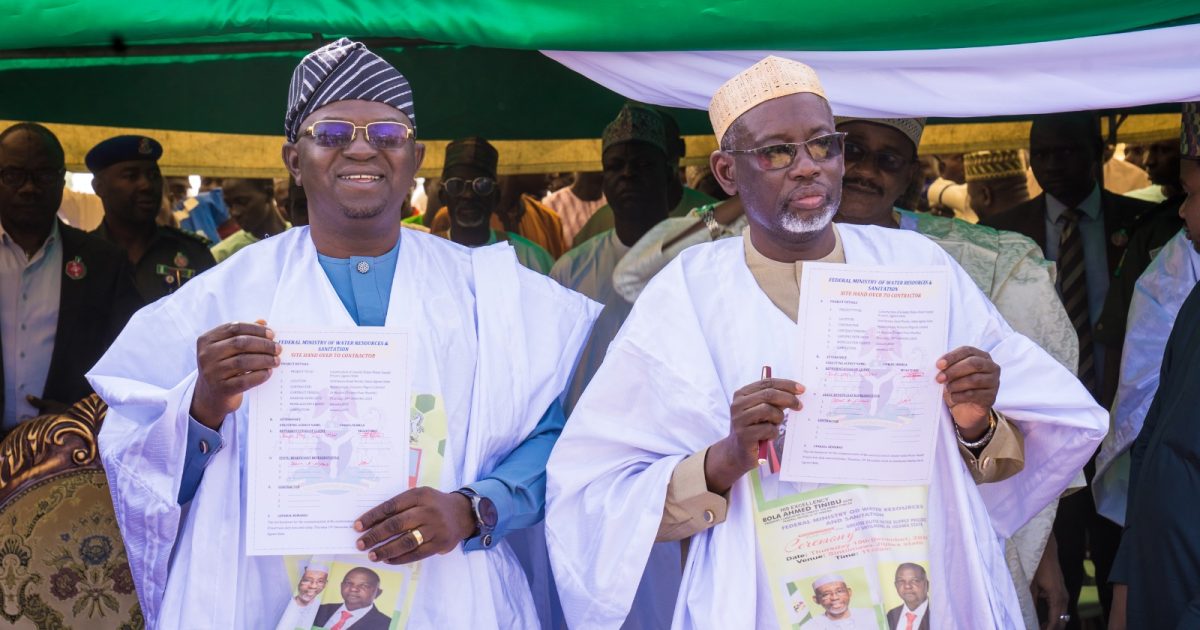
The Federal Government of Nigeria has embarked on a significant infrastructural development project aimed at alleviating the persistent water scarcity challenges faced by the residents of Dutse, the capital of Jigawa State, and its surrounding areas. This ambitious undertaking, known as the Greater Dutse Water Supply Project, represents a substantial investment of N59.46 billion and is poised to transform the lives of over 1.5 million people by providing access to clean and safe drinking water. The project, located in Sintilmawa, Jigawa State, has been lauded as a testament to the government’s commitment to improving the quality of life for its citizens and fostering sustainable development in the region. The Minister of Water Resources and Sanitation, Professor Joseph Utsev, underscored the project’s transformative potential, highlighting its alignment with the administration’s focus on addressing basic needs and driving economic growth.
The Greater Dutse Water Supply Project is designed to address a critical water deficit of 10 million liters per day, a challenge that has long plagued the region. This intervention, borne out of meticulous planning and the Federal Government’s commitment to infrastructure development, marks a crucial step towards ensuring water security for Dutse and its environs. Following approval by the Federal Executive Council, led by President Bola Tinubu, the project is anticipated to be completed within a 24-month timeframe. This expedited timeline underscores the government’s urgency in addressing the pressing water needs of the community and its commitment to efficient project execution.
The project encompasses a comprehensive range of infrastructural components designed to ensure a sustainable and reliable water supply. Central to the project is the construction of 35 industrial boreholes, each equipped with solar-powered pumps to ensure efficient and environmentally friendly water extraction. These boreholes will feed a state-of-the-art 1,000m³/hr water treatment plant, ensuring that the water supplied meets the highest standards of purity and safety. Complementing these components are strategically located reinforced concrete storage tanks and Braithwaite tanks, ensuring a consistent supply of treated water even during peak demand periods.
Furthermore, the project includes the installation of a robust water distribution network, comprising 56.6km of High-Density Polyethylene (HDPE) pipelines. These pipelines will ensure efficient water transmission to the target communities, minimizing water loss and ensuring equitable distribution. Recognizing the importance of reliable power supply, the project also incorporates the installation of solar systems, transformers, and generators, providing a diversified and resilient power source for the entire water supply scheme. To facilitate effective project management and oversight, administrative and staff facilities will also be developed at the project sites.
Beyond the immediate provision of clean water, the Greater Dutse Water Supply Project is expected to yield a multitude of socio-economic benefits. The project’s implementation will create numerous job opportunities during the construction phase, injecting much-needed economic activity into the region. Furthermore, the improved access to clean water is anticipated to stimulate economic growth by supporting various sectors, including agriculture, industry, and commerce. Access to safe drinking water will also have significant positive impacts on public health, reducing waterborne diseases and improving overall community well-being.
To ensure the project’s successful and timely completion, a dedicated Project Implementation Unit (PIU) has been established. This unit comprises representatives from the Federal Ministry of Water Resources, the Hadejia Jama’are River Basin Development Authority, and the Jigawa State Government. This collaborative approach ensures a coordinated effort, leveraging the expertise and resources of all stakeholders. The PIU will be responsible for overseeing project implementation, monitoring progress, and ensuring adherence to budgetary allocations. This structured approach reinforces the government’s commitment to transparency and accountability in project execution. The Jigawa State Governor, Umar Namadi, expressed his gratitude for the Federal Government’s intervention, recognizing the project’s transformative potential for the state. He highlighted the project’s alignment with President Tinubu’s commitment to prioritizing infrastructure development and addressing the basic needs of the Nigerian people. The Governor’s endorsement underscores the project’s significance and the collaborative spirit between the federal and state governments in driving development initiatives.








