









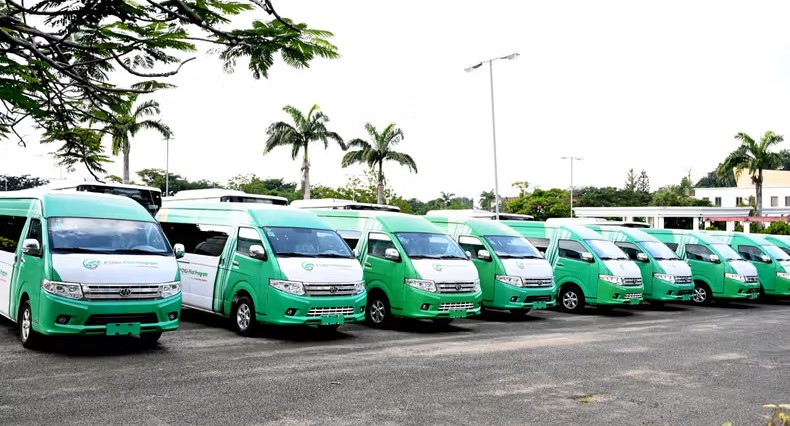
The Federal Government of Nigeria launched a free Compressed Natural Gas (CNG) bus service in Abuja on December 2, 2024, with the aim of alleviating transportation costs for residents of the capital city. This initiative, part of broader efforts to address the rising cost of living, particularly in the realm of public transportation, is set to operate for an initial 40-day period, concluding on January 6, 2025. The launch has attracted attention as a commendable measure intended to provide relief for commuters who are increasingly burdened by escalating transportation fees.
The CNG buses are designed to service several key routes connecting suburban areas to central locations in Abuja, notably from Mararaba to Eagle Square and Berger bus stop. This strategic routing aims to facilitate access for a large number of passengers, making it easier for them to navigate the city without additional costs during the promotional period. The initiative specifically targets the economic challenges faced by many residents, aiming to improve public transport availability and reliability in the capital, which is essential for many who depend on these services for their daily commutes.
To support this new service, the Ministry of Transportation officially handed over 15 CNG-powered buses to three major transport unions—namely, the National Road Transport Workers Union, the Nigerian Association of Road Transport Owners, and the Road Transport Employers Association of Nigeria. By partnering with these unions, the government seeks to leverage existing transportation structures and expertise to ensure the effective implementation of the program. This collaboration underscores the importance of involving local stakeholders in public transport initiatives to enhance their sustainability and impact.
Commuters have responded positively to the introduction of the CNG bus service, as shown in various reports and video testimonials shared on social media platforms. Many beneficiaries have expressed gratitude for the government’s initiative, highlighting how it significantly reduces their transportation expenses. One commuter, Fatima, noted her pleasant experience riding the bus free of charge and expressed hope that such services would continue beyond the initial promotional period. Another commuter, Blessing, echoed this sentiment, suggesting that the government should consider permanently lowering transportation fares following the completion of the free service to sustain the momentum of this positive change.
The response from the public indicates that the initiative has resonated well with the community, and there is optimism surrounding its potential to catalyze longer-term improvements in public transportation policy. Citizens have voiced their hopes for the government to build upon this success, advocating for ongoing efforts to make transportation more affordable and accessible to everyone, especially those in lower-income brackets. This sentiment aligns with broader national conversations about the need for sustainable transport solutions in light of various economic challenges.
In summary, the Federal Government’s introduction of the free CNG bus service signifies a proactive approach to tackling transportation woes in Abuja. As the initiative progresses, both the government and the community will be watching closely to assess its impact on transport affordability and overall quality of life for residents. The positive reception from commuters suggests that if well-managed, such initiatives can lay the groundwork for more substantial long-term changes to the public transportation landscape in Nigeria, benefiting countless citizens seeking efficient and affordable means of travel.









