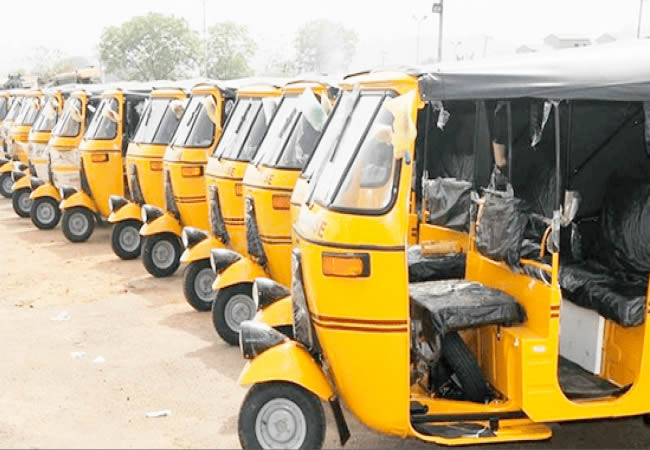
On Thursday, the Federal Government of Nigeria commenced the distribution of free Compressed Natural Gas (CNG) tricycles to cooperatives across the country, marking a significant initiative under the Presidential Natural Gas Initiative. In partnership with the Federal Ministry of Labour and Employment, the ceremony was held at the Win-Win Industrial Park near the Sagamu Interchange in Ogun State. Minister of Labour and Employment, Nkeiruka Onyejeocha, who was represented by the Director of Employment and Wages, John Nyamali, emphasized the program’s transformative nature aimed at empowering communities and bolstering economic resilience. By providing CNG-powered tricycles, the initiative seeks not only to enhance mobility but also to create economic opportunities for thousands of Nigerians who are part of selected cooperatives.
The Minister outlined the main objectives of the initiative, highlighting its commitment to inclusivity and grassroots empowerment. Each cooperative, composed of dedicated members, will utilize the donated tricycles for commercial purposes, with profits distributed equitably among members. This cooperative model encourages a fair distribution of economic benefits, uplifting both individual participants and their families. Onyejeocha showcased the government’s strategy of selecting cooperatives from all six geopolitical zones, focusing on underserved communities to equip them with essential tools for thriving. Furthermore, she emphasized that the initiative goes beyond transportation, fostering entrepreneurship, job creation, and skills development, thereby igniting local economies.
Director of the Presidential Compressed Natural Gas Initiative (PCNGI), Michael Oluwagbemi, revealed plans to donate between 1,500 and 2,000 CNG tricycles, targeting a total of 60 cooperatives— ten from each geopolitical zone. He stressed the significance of using CNG-powered tricycles, which are cheaper, safer, and more reliable than traditional fuel options. The cooperative model is pivotal for grassroots engagement, especially in rural areas that often lack banking infrastructure, making cooperatives crucial for economic activity. The initial rollout will begin in the Amuwo Odofin area of Lagos, where the first cooperative, Irewolode, is based, allowing local residents to experience free rides as part of the launch.
Starting this weekend and continuing through the end of the month, residents of Amuwo Odofin will benefit from complimentary rides on the newly deployed tricycles, allowing them to experience the advantages of CNG firsthand. Oluwagbemi expressed the hope that this initiative would not only demonstrate the reliability and affordability of CNG but also encourages communities to integrate this sustainable energy source into their daily lives. He emphasized the broader objective of this initiative: to showcase CNG as a safe transportation alternative, ultimately fostering a shift away from dependency on traditional fuels.
At the launch, Olujimi Sobayo, the Chairman of the Irewolede Cooperative Society, expressed gratitude toward the Federal Government for the initiative while also urging the authorities to establish sufficient CNG refilling stations nationwide. Sobayo emphasized the urgent need for Nigeria to reduce reliance on petrol and diesel fuels, advocating for a transition towards more sustainable energy solutions that CNG offers. His comments underscore the necessity of creating an infrastructure that can support the growth and utilization of CNG-powered vehicles, ensuring long-term viability for the cooperative members who will be operating these tricycles.
In conclusion, the Federal Government’s initiative to distribute CNG tricycles represents a groundbreaking effort to empower Nigerian communities and promote sustainable economic development. The program not only addresses mobility challenges but also fosters entrepreneurship and provides essential resources for underserved areas. As the initiative unfolds, its potential impact will depend on the establishment of necessary infrastructure and the continuous support for the cooperative model, which is critical for driving grassroots economic growth. The government’s commitment to inclusivity and sustainability positions this program as a progressive step toward building a resilient economy while ensuring that local communities thrive.