









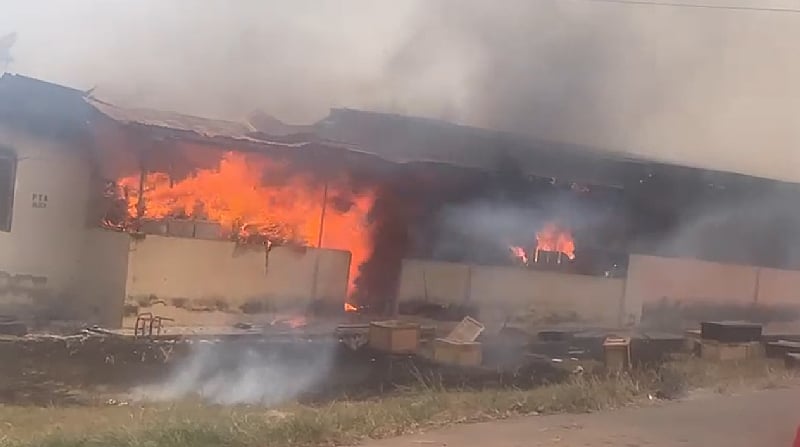
The afternoon of Friday, December 20th, witnessed a devastating fire incident at Toase Senior High School (SHS) in the Atwima Nwabiagya Municipality, Ashanti Region, Ghana. A bungalow serving as accommodation for four teachers was completely engulfed in flames, resulting in substantial property damage and displacement. The fire is reported to have originated in one of the four flats within the bungalow and rapidly spread to the adjacent units. Two of the flats were consumed so quickly that the occupants were unable to retrieve any of their belongings, while the residents of the other two units managed to salvage some items before the fire reached their apartments. Thankfully, no injuries or casualties were reported in the incident.
The rapid spread of the fire highlights the vulnerability of connected housing structures, particularly those built with materials susceptible to combustion. The proximity of the flats likely facilitated the fire’s progression, preventing effective containment before it engulfed the entire bungalow. This incident underscores the importance of fire safety measures in residential buildings, including regular inspections of electrical systems, proper maintenance of cooking appliances, and the availability of fire extinguishers and escape routes. It also raises questions about the building materials used in the construction of the bungalow and whether they adhered to fire safety standards.
The immediate aftermath of the fire has left the affected teachers without their personal belongings and homes. The school administration has stepped in to provide temporary housing for the displaced individuals, demonstrating a commendable commitment to the well-being of their staff. This immediate support is crucial in mitigating the immediate impact of the disaster and provides the affected teachers with a measure of stability as they navigate the process of recovering from their losses. While temporary accommodation addresses the immediate housing needs, it is essential to consider the long-term implications for the affected teachers, including the replacement of essential items and the emotional toll of the experience.
The incident has galvanized local community support, with the Assembly Member for the Toase Electoral Area, Ernest Opoku Mensah, confirming the complete destruction of the teachers’ belongings. His involvement highlights the important role of local authorities in responding to emergencies and coordinating support for affected individuals. The community’s response underscores the collective responsibility in addressing such tragedies and providing assistance to those in need. This type of local support is often critical in bridging the gap between the immediate aftermath of a disaster and the implementation of longer-term recovery plans.
Moving forward, a thorough investigation into the cause of the fire is essential. Determining the origin of the fire will help prevent similar incidents in the future, both at Toase SHS and other educational institutions. Understanding the contributing factors – whether faulty electrical wiring, careless handling of flammable materials, or other causes – will allow for the implementation of preventative measures. The findings of the investigation should inform fire safety protocols and building codes, enhancing the safety and security of residential structures. Furthermore, the investigation should examine the adequacy of existing fire safety measures at the school and in the surrounding community.
The fire at Toase SHS serves as a stark reminder of the devastating consequences of fire incidents and the importance of proactive fire safety measures. While the immediate response by the school administration and the local community has been commendable, the long-term recovery for the affected teachers will require continued support and assistance. The incident underscores the need for comprehensive fire safety protocols, robust building codes, and community-wide awareness campaigns to mitigate the risks of similar tragedies occurring in the future. It is hoped that the lessons learned from this unfortunate incident will lead to improvements in fire safety practices and a greater emphasis on preventing such disasters. The rebuilding process for the teachers’ accommodation should prioritize fire-resistant materials and designs, ensuring a safer living environment for future occupants. The incident’s long-term impact will depend on the comprehensive nature of the recovery efforts and the implementation of preventative measures to safeguard against future fire hazards.









